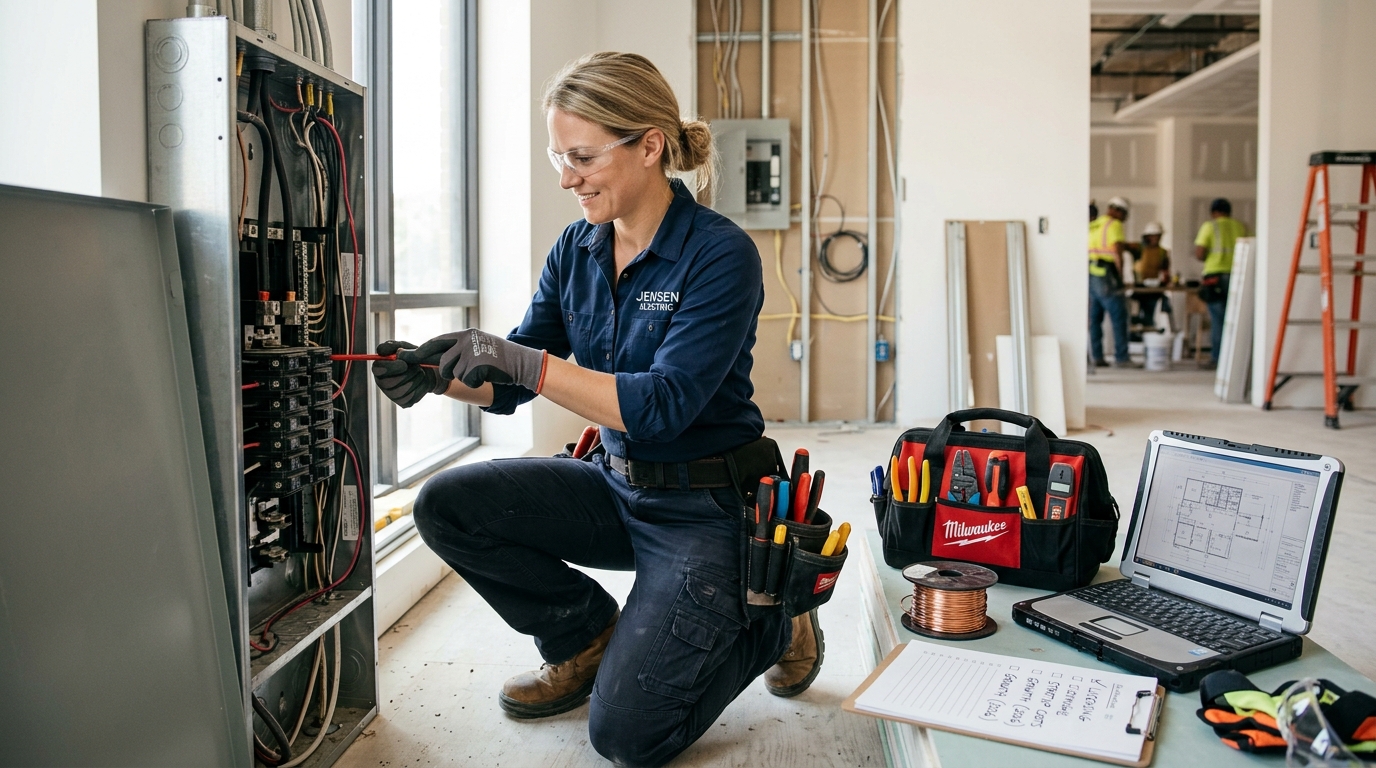
How to Start an Electrical Business: Licensing, Startup Costs & Growth (2026)
17 min read·Updated March 20, 2026The demand for licensed electrical contractors is reaching a fever pitch in 2026 as the global push for electrification and smart-home integration accelerates. With the U.S. Bureau of Labor Statistics projecting a 6% growth rate for electricians through the decade, there has never been a more lucrative time to transition from a journeyman to a business owner. However, the gap between being a master technician and a successful entrepreneur is bridged by more than just a tool belt; it requires a deep understanding of fluctuating material costs, complex state licensing, and modern digital operations. This guide provides a comprehensive roadmap for launching and scaling an electrical business that thrives in a competitive, high-tech market.
Table of Contents
Navigating Electrical Licensing and Legal Requirements

Master Electrician vs. Electrical Contractor Licenses
Understanding the distinction between a personal license and a business license is the first hurdle for any aspiring owner. While a Master Electrician license proves your technical proficiency and knowledge of the National Electrical Code (NEC) 2023 or 2026 updates, an Electrical Contractor license is what legally permits you to pull permits and sign contracts. Most states require the 'Qualifying Individual' of a business to hold a Master level certification, which typically involves 8,000 to 12,000 hours of documented field experience.
In states like California or Florida, the testing process for a C-10 or EC license includes both a technical trade exam and a law and business exam. You must be prepared to demonstrate knowledge of lien laws, workers' compensation regulations, and safety standards like NFPA 70E. Failing to distinguish between these licenses can lead to heavy fines or the inability to legally collect payment for work performed over a certain dollar amount, often as low as $500.
Maintaining these licenses requires a commitment to Continuing Education Units (CEUs) to stay current with evolving safety codes and technology. Many contractors dedicate at least 8-16 hours every two years to formal classroom or online training to ensure their credentials remain active. Keeping digital copies of these certifications in a centralized CRM like Hulo ensures you never miss a renewal deadline while managing your daily operations.
State vs. Local Reciprocity and Permitting
Licensing requirements vary wildly across state lines, making reciprocity a critical consideration if you plan to work in a tri-state area. For example, a license in North Carolina may have reciprocal agreements with several neighboring states, allowing you to bypass the trade exam but still requiring local registration fees. Always verify with the state board of examiners to see if your existing credentials allow for a streamlined application process in new jurisdictions.
Beyond the state level, individual counties and municipalities often require their own local registrations and 'privilege' licenses. In some regions, you may need to post a specific permit bond for each city where you intend to perform work, ranging from $5,000 to $25,000 in coverage. This administrative layer can be a significant time-sink for new business owners who are still working in the field full-time.
Permit management is the lifeblood of residential and commercial electrical work, particularly for service upgrades and new construction. Modern municipalities are moving toward digital permitting portals, which require contractors to upload insurance certificates and license copies before a permit is issued. Navigating these portals efficiently ensures that your projects stay on schedule and that you can provide customers with the necessary inspection 'green tags' for final sign-off.
Choosing the Right Business Structure and EIN
Selecting a legal entity—such as an LLC, S-Corp, or C-Corp—impacts everything from your personal liability to your tax obligations at year-end. Most small-to-medium electrical businesses opt for an LLC (Limited Liability Company) to protect personal assets from business-related lawsuits or debts. Consult with a CPA to determine if an S-Corp election is beneficial once your net profit exceeds a certain threshold, typically around $75,000, to save on self-employment taxes.
Once your entity is registered with the Secretary of State, you must obtain a Federal Employer Identification Number (EIN) from the IRS. This nine-digit number is essential for opening a business bank account, applying for credit with suppliers like Rexel or Graybar, and hiring your first apprentice. It serves as your business's social security number and is required on almost all official documentation, including your W-9 forms for commercial clients.
Finally, don't overlook the importance of a dedicated business bank account and a professional operating agreement. Keeping your personal and business finances strictly separated is not just good practice; it is legally required to maintain the 'corporate veil' of an LLC. This separation makes it much easier to track your overhead, calculate true job costs, and prepare for tax season without sifting through personal bank statements.
8,000–12,000
Hours of Experience
The typical field experience required to sit for a Master Electrician or Contractor exam in most U.S. states.
Key Takeaway: Always secure your Electrical Contractor license and local permit bonds before signing your first contract to avoid legal penalties and ensure your ability to pull permits.
Estimating Electrical Business Startup Costs

Essential Tools, Equipment, and Vehicle Expenses
Your initial capital investment will largely be consumed by a reliable service vehicle and a professional-grade tool kit. A new or late-model used high-roof cargo van, such as a Ford Transit or Mercedes Sprinter, can cost between $35,000 and $60,000, plus another $3,000 to $5,000 for custom shelving and a ladder rack. While it may be tempting to use a pickup truck, a van provides better security for expensive copper wire and keeps your tools protected from the elements.
Beyond basic hand tools, you will need specialized testing equipment to ensure safety and compliance. A Fluke 117 Multimeter, a Fluke 1507 Insulation Tester, and a high-quality circuit tracer like the Ideal SureTrace are non-negotiable for professional troubleshooting. Budgeting approximately $5,000 to $10,000 for a comprehensive initial tool load-out—including cordless power tools from brands like Milwaukee M18 Fuel or DeWalt 20V Max—is a realistic starting point for a solo operator.
Don't forget the 'consumable' inventory that must be stocked on your van from day one. This includes various gauges of THHN wire, Romex (NM-B), wire nuts, electrical tape, and a wide array of breakers (Square D, Eaton, and Siemens). Having a well-stocked van prevents wasted hours spent driving to supply houses for a single $15 breaker, which can kill your profit margin on small service calls.
Insurance, Bonding, and Legal Protection
General Liability (GL) insurance is the most critical policy for an electrical contractor, typically requiring a minimum coverage of $1,000,000 per occurrence and $2,000,000 aggregate. This policy protects you if you accidentally drill through a water pipe or if a faulty connection causes a structure fire months after you've left the job site. Expect to pay between $1,200 and $3,500 annually for GL insurance, depending on your location and projected revenue.
Workers' Compensation insurance is mandatory in nearly every state if you hire even one part-time apprentice or helper. Even if you are a solo operator, many commercial general contractors will require you to carry a 'ghost policy' or personal waiver before you can step onto their job site. Rates for electricians are generally moderate compared to roofers or ironworkers, but they still represent a significant overhead cost that must be factored into your hourly rate.
Surety bonds are often confused with insurance, but they serve a different purpose: they guarantee that you will follow local codes and complete the work as contracted. A $5,000 to $10,000 license bond may only cost $100 to $250 per year if you have good credit. These bonds are a prerequisite for licensing in many cities and provide your clients with an extra layer of financial security, which can be a strong selling point for your new business.
| Expense Category | Estimated Cost (Low) | Estimated Cost (High) |
|---|---|---|
| Used High-Roof Cargo Van | $25,000 | $45,000 |
| Specialized Testing Tools (Fluke/Ideal) | $2,500 | $5,000 |
| Power Tools & Ladders | $3,000 | $6,000 |
| Initial Material Inventory | $2,000 | $4,000 |
| Insurance & Licensing Fees | $2,500 | $5,500 |
| Software & Marketing (Hulo/Ads) | $500 | $2,500 |
| Total Capital Required | $35,500 | $68,000 |
Estimated Initial Startup Costs for a Solo Electrician
Pro Tip: Buying a high-roof van instead of a standard cargo van will save your back and allow you to organize up to 30% more inventory, reducing supply house runs.
Profitable Service Lines and Niche Markets

EV Charger Installation and Infrastructure
The explosion of electric vehicle (EV) sales has created a massive opportunity for residential electrical contractors. Level 2 charger installations typically range from $800 to $2,500 depending on the distance from the panel and the need for a service upgrade. Since these jobs are often standardized, you can build efficient 'kits' for your van that include 50-amp breakers, 6/3 Romex or MC cable, and NEMA 14-50 receptacles, allowing you to complete installations in under three hours.
Marketing yourself as a certified installer for brands like Tesla, ChargePoint, or Wallbox can provide a steady stream of high-quality leads. Many utility companies also offer rebates to homeowners who use a licensed contractor for EVSE (Electric Vehicle Supply Equipment) installations. By staying informed on these local incentives, you can position yourself as an expert who helps clients save money while upgrading their home's infrastructure.
Commercial EV charging is an even larger frontier, involving DC Fast Chargers (Level 3) for fleets and retail locations. These projects require sophisticated load management and often involve trenching and transformer upgrades. Transitioning into this niche allows you to command much higher project fees and long-term maintenance contracts, providing a stable recurring revenue stream that residential work sometimes lacks.
Residential Panel Upgrades and Smart Homes
Aging housing stock across the country means that thousands of homes are still running on 60-amp or 100-amp services that cannot handle modern electrical loads. A standard 200-amp service upgrade is a staple of the electrical trade, with average prices ranging from $2,500 to $5,500. These jobs are highly profitable because they are labor-intensive but use a predictable set of materials, such as a 40-space main lug panel and a new meter socket.
Smart home integration is no longer a luxury; it is becoming a standard expectation for modern renovations. Installing smart breakers (like the Leviton Load Center or Schneider Pulse), Wi-Fi-enabled dimmers, and integrated video doorbells allows you to upsell existing service calls. A simple outlet replacement can easily turn into a $1,500 'smart home starter package' if you educate the customer on the benefits of energy monitoring and remote lighting control.
Focusing on 'electrification' also includes heat pump water heater circuits and induction cooktop conversions. As more cities move toward banning natural gas in new construction, homeowners are looking for electricians who can safely navigate the increased demand on their home's electrical system. Positioning your business as an 'Electrification Specialist' captures this growing market segment of eco-conscious homeowners.
$1,200–$2,500
Avg. EV Charger Install
Labor and materials for a standard residential Level 2 charging station installation.
Key Takeaway: Niche services like EV charging and smart panel upgrades offer higher margins and less price competition than basic residential service calls.
Managing Operations and Field Service Logistics

Dispatching Journeymen and Apprentices
As your business grows, the complexity of matching the right technician to the right job increases exponentially. You shouldn't send a high-priced Master Electrician to change out a dozen GFCI outlets when an apprentice can handle it under supervision for half the labor cost. Conversely, sending an inexperienced helper to troubleshoot a complex three-way dimming system in a commercial lobby will result in wasted hours and a frustrated client.
Effective dispatching requires a clear understanding of your team's individual strengths and certifications. Use a centralized platform to track which technicians are licensed for specific tasks or have specialized training in areas like fire alarm systems or PLC programming. This ensure that every job is handled by the most cost-effective, qualified person, maximizing your overall net profit on every service ticket.
Managing 'emergency' calls alongside pre-booked project work is a constant balancing act for electrical contractors. It is wise to leave at least 15-20% of your daily schedule open for high-priority calls, which usually command a premium 'emergency' or 'after-hours' rate. Having a flexible scheduling tool allows you to drag-and-drop appointments as priorities shift throughout the day without losing track of your technicians' locations.
Software Stacks for Small Electrical Shops
In the early stages, many electricians attempt to manage their business using paper invoices, Google Calendar, and a basic website builder. However, this fragmented approach often leads to missed appointments, unbilled materials, and a slow cash flow. Transitioning to a unified system is the most effective way to professionalize your image and reclaim your time from administrative tasks.
All-in-one platforms like Hulo are specifically designed to solve these headaches for trade professionals. For $49.99/mo, Hulo combines your professional website, CRM, scheduling, and invoicing into a single dashboard. This allows you to capture a lead from your website, schedule the estimate, and send the final invoice without ever re-entering the customer's data, which significantly reduces the risk of clerical errors.
Using professional software also changes the customer's perception of your business. When a client receives a digital estimate with clear line items and a 'Click to Accept' button, they are more likely to approve the work quickly compared to a handwritten quote on a carbon-copy pad. Modern software also facilitates faster payments through integrated credit card processing, ensuring you aren't waiting weeks for a check to arrive in the mail.
Pro Tip: Implement a 'van stock' checklist that is audited weekly. Missing a $5 connector can cost you $150 in lost labor time if a technician has to leave the job site.
Ready to put this into action?
Hulo gives you everything to run your electrical business — website, CRM, scheduling, and invoicing. Join the waitlist for V2.
Join the WaitlistBuilding a Residential and Commercial Client Base

Local SEO and Professional Web Presence
In 2026, your website is your digital storefront; if it looks outdated or isn't mobile-friendly, potential customers will scroll right past you to the next contractor. Your site needs to load fast and clearly display your services, service area, and license number to build immediate trust. Tools like Hulo can generate a professional, high-converting website for your electrical business in minutes, ensuring you have a strong foundation for your local SEO efforts.
Local SEO is the process of ensuring your business appears in the 'Map Pack' when someone searches for 'electrician near me.' This is achieved by optimizing your Google Business Profile, gathering consistent 5-star reviews, and ensuring your Name, Address, and Phone number (NAP) are identical across the web. High-quality photos of your clean vans and finished panel installs can significantly increase your click-through rate from search results.
Content marketing also plays a role in building authority. Writing short blog posts about 'Signs Your Electrical Panel is Overloaded' or 'How to Prepare for a Generator Installation' helps you rank for long-tail keywords. This strategy positions you as the local expert before the customer even picks up the phone, making the eventual sales process much smoother because the trust has already been established.
Lead Generation and Referral Networks
While digital marketing is essential, the electrical trade still relies heavily on word-of-mouth and professional referrals. Building relationships with local HVAC contractors, plumbers, and general contractors can lead to a steady stream of rough-in and trim-out work. These trades often need an electrician to wire a new furnace or reconnect a water heater, and being the 'reliable guy' they can call is invaluable.
Joining a local BNI (Business Network International) or Chamber of Commerce can also yield high-quality residential leads. These groups allow you to network with realtors and property managers who frequently need electrical inspections or repairs for their clients. A single property management contract can provide dozens of service calls per year, creating a predictable baseline of revenue for your growing company.
Don't ignore the power of 'truck branding.' A clean, professionally wrapped van acts as a rolling billboard that can generate leads while you are parked at a job site or stuck in traffic. Ensure your phone number and website URL are easily readable from a distance. Many contractors find that a well-designed wrap pays for itself within the first six months through passive lead generation alone.
78%
Local Search Leads
The percentage of consumers who use local search to find a service provider at least once a week.
Key Takeaway: A professional digital presence combined with strong local referral partnerships creates a diversified lead funnel that protects you from market fluctuations.
Accurate Estimating for Electrical Projects

Unit Pricing vs. Time and Materials
Choosing the right pricing model is the difference between a profitable job and one that costs you money. Unit pricing (or flat-rate pricing) is ideal for standard tasks like installing a ceiling fan, replacing a receptacle, or a standard service upgrade. This model allows you to bake in your overhead and profit margin upfront, providing the customer with a clear price that doesn't change regardless of how long the task takes.
Time and Materials (T&M) pricing is often better suited for complex troubleshooting or large-scale commercial projects where the scope of work is difficult to define. In a T&M scenario, you charge a set hourly rate for labor plus a markup on all materials used. While this protects you from 'scope creep,' it can sometimes lead to disputes with customers who feel the job is taking longer than expected, so clear communication is vital.
Regardless of the model, you must know your 'burdened labor rate.' This is not just what you pay yourself or your technicians; it includes payroll taxes, insurance, fuel, vehicle maintenance, and office overhead. If your technician earns $35/hour, your actual cost to have them on the job site might be $65/hour or more. Failing to account for this 'burden' is the most common reason new electrical businesses fail within their first three years.
Accounting for Copper and Material Volatility
Copper prices can fluctuate significantly based on global market conditions, directly impacting the cost of Romex, THHN, and MC cable. A quote you gave 30 days ago for a large commercial rough-in might be a loser today if wire prices have spiked by 15%. To protect yourself, include a 'material price escalation' clause in your contracts for any project that won't start for more than 14 days.
Buying in bulk when prices are low can provide a competitive advantage, but it requires liquid capital and storage space. Many successful contractors maintain a 'base stock' of common wire gauges and conduit to hedge against short-term price swings. Building strong relationships with your local supply house counter pros can also give you a 'heads up' on upcoming price increases, allowing you to buy in before the hike takes effect.
Using estimating software that integrates with live supplier pricing is the gold standard for accuracy. If you are still using spreadsheets, make it a habit to update your material costs at least once a month. Even a $0.20 increase per foot of 12/2 Romex can add up to hundreds of dollars in lost profit on a standard residential new-build if you are working on thin margins.
| Material Item | Unit | Estimated Cost (2026) |
|---|---|---|
| 14/2 Romex (250' Roll) | Each | $110.00 - $135.00 |
| 12/2 Romex (250' Roll) | Each | $165.00 - $195.00 |
| 200 Amp Main Breaker Panel | Each | $350.00 - $550.00 |
| 1/2" EMT Conduit (10' Stick) | Each | $8.50 - $12.00 |
| Single Pole 20A Breaker | Each | $6.50 - $11.00 |
| 6/3 NM-B (for EV/Range) | Per Foot | $4.50 - $6.50 |
Common Electrical Material Price Benchmarks (Estimated)
Scaling Your Electrical Business for Long-Term Growth

Hiring and Retention in a Tight Labor Market
Finding skilled journeymen is the biggest bottleneck to growth for most electrical contractors. To attract top talent, you must offer more than just a competitive hourly wage; consider providing health insurance, a 401(k) match, and a tool allowance. Many technicians are also looking for a better work-life balance, so offering flexible scheduling or a four-day work week can make your small shop more attractive than a large union firm.
Investing in an apprenticeship program is a long-term strategy for building a loyal workforce. By hiring 'green' helpers and sponsoring their schooling, you can train them in your specific way of doing things while they work toward their license. This creates a pipeline of technicians who are familiar with your safety standards, customer service expectations, and software systems from day one.
Retention is just as important as hiring. Regularly scheduled 'toolbox talks' and performance reviews show your team that you are invested in their professional growth. Providing high-quality uniforms, well-maintained vehicles, and the latest power tools sends a message that you value their work and safety, which reduces turnover and the high costs associated with training new employees.
Fleet Management and GPS Tracking
As you grow from one van to five or ten, managing your fleet becomes a full-time job. Implementing GPS tracking (like Samsara or Verizon Connect) allows you to monitor fuel consumption, driving behavior, and real-time technician locations. This data helps you optimize routes to reduce windshield time and provides proof of arrival/departure times if a customer ever disputes a labor charge.
Preventative maintenance is the key to avoiding costly breakdowns that sideline a crew for a full day. Set up a schedule for oil changes, tire rotations, and brake inspections for every vehicle in your fleet. A single engine failure on an older van can cost $8,000+, which is far more than the cost of proactive maintenance over the life of the vehicle.
Branding and cleanliness are non-negotiable for a professional fleet. Establish a policy that all vans must be washed weekly and that interiors must be organized every Friday afternoon. A messy, disorganized van not only wastes time on the job site but also projects a poor image to the customer, potentially costing you future referrals and high-end residential work.
Wrapping Up
Starting an electrical business in 2026 is a massive undertaking that requires technical mastery, financial discipline, and a modern approach to operations. By focusing on high-growth niches like EV charging and panel upgrades, and by maintaining a tight grip on your material costs, you can build a highly profitable company that stands the test of time. Remember that the most successful contractors are those who work *on* their business as much as they work *in* it. To simplify your journey, consider using an all-in-one tool like Hulo to manage your website, scheduling, and invoicing from day one, allowing you to focus on what you do best: keeping the lights on for your community.
Frequently Asked Questions
How much does it cost to start an electrical business?
Starting an electrical business typically requires between $15,000 and $50,000 in initial capital. This covers a reliable service van, professional-grade tools like Fluke testers, licensing fees, and initial insurance premiums. Using affordable all-in-one software like Hulo for $49.99/mo can help keep your early administrative overhead low.
Do I need a separate website and CRM for my electrical business?
No, you don't need to juggle multiple subscriptions. Platforms like Hulo provide a professional website, CRM, scheduling, and invoicing all in one place for $49.99/mo. This integration saves you time and ensures that your customer data flows seamlessly from the first lead to the final payment.
What is the most profitable niche for an electrician in 2026?
EV charger installations and residential panel upgrades are currently among the most profitable niches due to high demand and standardized labor. Additionally, specializing in 'smart home' electrical infrastructure and generator installs allows for higher margins than basic repair work.
How do I get more electrical leads without spending a fortune on ads?
Focus on optimizing your Google Business Profile and building a professional website that ranks for local searches. Tools like Hulo help you launch a high-converting site quickly, while gathering consistent 5-star reviews from satisfied clients will naturally improve your local SEO and organic lead flow.
Is an electrical business hard to scale?
Scaling is challenging due to the shortage of licensed journeymen, but it is highly achievable with the right systems in place. By using software to automate scheduling and invoicing, and by investing in an apprenticeship program, you can grow your team while maintaining high standards of quality and safety.
What kind of insurance does an electrical contractor need?
At a minimum, you need General Liability insurance ($1M/$2M limits) and Workers' Compensation if you have employees. You may also need Commercial Auto insurance for your vans and a License Bond as required by your local municipality or state board.
Ready to Launch Your Electrical Business?
Join thousands of trade pros using Hulo to manage their website, CRM, and invoicing for just $49.99/mo. Start your professional journey today.
Join the WaitlistMore from the Blog
7 Real Factors Influencing How Much Do Electricians Make for Electrical Contractors (2026)
Electricians make an average of $61,590 per year or $29.61 per hour, with the top 10% of earners exceeding $104,180 annu...
7 Expert Steps on How to Become an Electrician for Aspiring Tradespeople (2026)
To become an electrician, you must earn a high school diploma, complete 4 to 5 years of technical training, and document...

9 Simple Contractor Invoice Template Tips for Plumbers (2026)
A professional contractor invoice template for plumbers must include your business details, the client's information, a ...