How to Grow a Plumbing Business: Marketing, Hiring & Scaling (2026)
14 min read·Updated March 20, 2026The plumbing industry in 2026 has evolved into a $130 billion powerhouse, yet many owners remain trapped under the weight of manual scheduling and stagnant lead flow. To scale from a 'man-in-a-van' operation to a multi-truck fleet, you must transition from being the primary technician to a strategic CEO who masters marketing, recruitment, and systems. This guide provides a comprehensive roadmap for plumbing professionals ready to dominate their local market using modern digital tools and proven operational frameworks. By implementing these high-growth strategies, you can stop trading your time for hourly wages and start building a sellable asset that generates consistent revenue regardless of your physical presence on the job site.
Table of Contents
Developing a High-Growth Business Model for Plumbing Services
Identifying High-Margin Niche Services
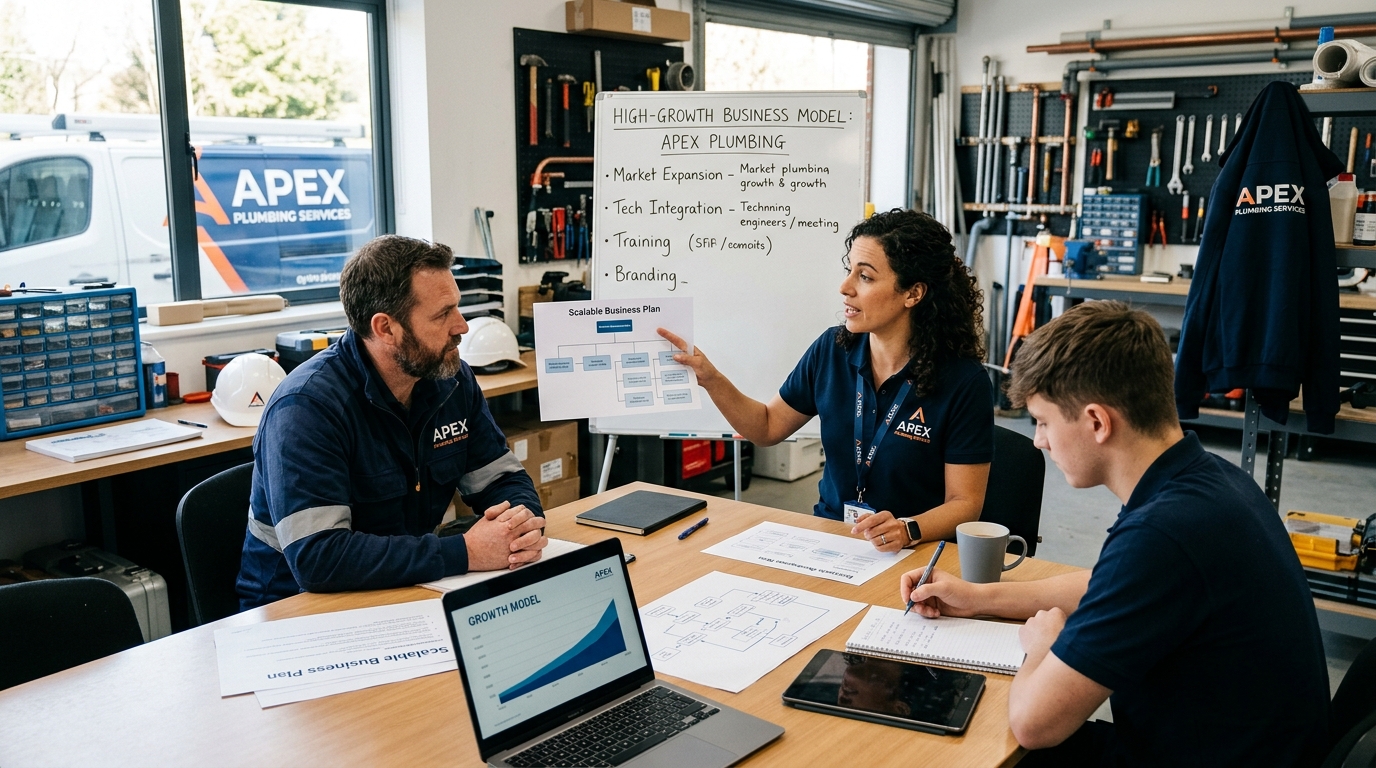
To achieve rapid growth, you must move beyond low-margin repair work like simple faucet replacements and focus on high-ticket installations. Specializing in tankless water heater conversions, such as Navien or Rinnai units, can yield gross margins of 40% to 60% with the right upsell strategy. Similarly, trenchless sewer line replacements using pipe-bursting or CIPP (Cured-In-Place Pipe) technology allow you to charge premium rates—often between $150 and $250 per linear foot—while minimizing restoration costs for the homeowner.
By narrowing your focus to these specialized areas, your marketing spend becomes more efficient and your technicians become faster at specific installs. You should aim for a service mix where at least 30% of your revenue comes from emergency services and 70% from high-ticket planned projects or maintenance. This balance ensures that your crews stay busy during seasonal lulls while capturing the high-urgency, high-dollar calls that come in after hours or during extreme weather events.
Consider the long-term value of backflow prevention testing and certification for commercial clients as a baseline for recurring revenue. While the individual test fee might only be $150 to $300, it gets your foot in the door for larger commercial repair contracts. Building a diverse portfolio of services protects your cash flow from market volatility and allows you to cross-sell different solutions to your existing residential database.
Transitioning from Hourly to Flat-Rate Pricing
One of the biggest obstacles to scaling a plumbing business is the 'time and materials' trap, which penalizes your most efficient technicians. Implementing a flat-rate pricing system ensures that your profit margins are protected regardless of how long a job takes to complete. Use a tiered pricing model—Standard, Value, and Premium—to give customers options while anchoring your desired price point in the middle. For example, a standard toilet rebuild might be $285, while a premium upgrade including a new high-efficiency unit like a TOTO Drake could be $850.
Flat-rate pricing also simplifies the quoting process for your field technicians, allowing them to provide firm estimates on-site without calling the office. This increases your closing rate because customers appreciate the transparency and the lack of 'hidden' hourly fees. To ensure accuracy, your price book should be updated quarterly to reflect the rising costs of copper, PEX-B piping, and PVC fittings, which have seen 5-10% fluctuations in recent years.
When you present a flat-rate price, you are selling the solution and the warranty, not just the labor hours. This shift in perception allows you to build in 'safety margins' for unexpected complications that often arise in older homes with galvanized or cast iron pipes. By standardizing your prices, you also make it easier to track your Key Performance Indicators (KPIs) and determine exactly how much revenue each truck needs to generate daily to meet your growth targets.
45%–60%
Target Gross Margin
Successful plumbing companies aim for this margin on specialized installation projects to cover overhead and growth.
Key Takeaway: Shift your service mix toward high-ticket installs like tankless water heaters and trenchless sewer repair to maximize margins and fuel your marketing budget.
Mastering Plumbing Marketing and Lead Generation
Dominating Google Local Services Ads (LSA)
In 2026, the 'Google Guaranteed' badge is the single most important trust signal for a plumbing business. Local Services Ads (LSA) appear at the very top of search results, even above traditional PPC ads, and you only pay for actual phone calls or leads received. Expect to pay anywhere from $35 to $95 per lead depending on your market's competitiveness, but the conversion rate is significantly higher than standard search ads because the leads are pre-vetted.
To optimize your LSA performance, you must answer the phone every time it rings and maintain a review rating of at least 4.7 stars. Google's algorithm favors companies that respond quickly and have a high volume of recent, positive feedback. If you miss too many calls or fail to mark leads as 'booked' in the LSA dashboard, your ranking will drop, and your cost-per-lead will increase. This is why having a dedicated dispatcher or a 24/7 answering service is critical as you scale.
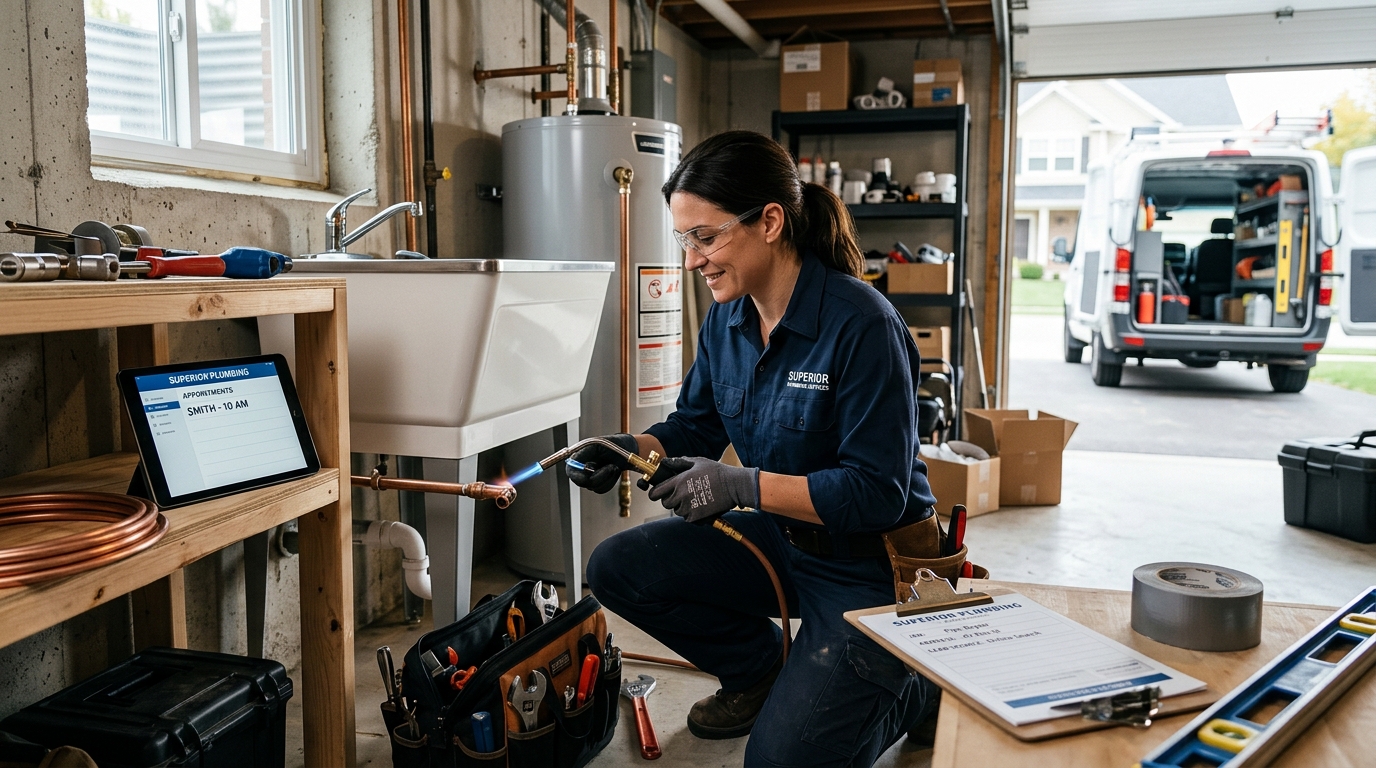
Don't rely solely on LSA; use it as a catalyst to build your organic presence. While LSA provides immediate leads, your long-term goal is to rank in the 'Map Pack' through Search Engine Optimization (SEO). Ensure your Google Business Profile is fully optimized with high-quality photos of your branded vans, team members in uniform, and completed projects like manifold installations or neatly plumbed mechanical rooms.
Building a Conversion-Focused Website
Your website should not just be a digital brochure; it needs to be a 24/7 sales machine that captures leads while you sleep. Modern customers expect to see online booking options, clear service descriptions, and visible social proof immediately upon landing on your page. Having a professional website is non-negotiable in 2026—tools like Hulo can generate one for your plumbing business in minutes, ensuring you have a mobile-responsive platform that looks great on every device.
Incorporate 'Click-to-Call' buttons and lead capture forms on every page to minimize friction for the user. A common mistake is burying your contact information or using generic stock photos that don't build trust. Instead, feature real photos of your technicians using Ridgid SeeSnake cameras or Milwaukee M18 Press Tools to demonstrate your professional equipment and expertise. This visual evidence justifies your premium pricing and sets you apart from 'handyman' competitors.
Platforms like Hulo combine your website, CRM, scheduling, and invoicing in one place for under $50/mo, making it an ideal choice for growing trades. By integrating your booking system directly into your site, you allow customers to see your availability and schedule drain cleanings or water heater inspections without needing a phone call. This automation reduces administrative overhead and ensures you never miss a lead, even if it comes in at 2:00 AM.
| Channel | Avg. Cost Per Lead | Intent Level | Speed to Results |
|---|---|---|---|
| Google LSA | $40 - $100 | Very High | Immediate |
| SEO / Organic | $15 - $30 (Long-term) | High | 6 - 12 Months |
| Facebook Ads | $20 - $50 | Medium | 1 - 2 Weeks |
| Direct Mail | $50 - $150 | Low/Medium | 3 - 4 Weeks |
Marketing Channel Comparison for Plumbers
Operational Efficiency and Field Management Systems
Streamlining Scheduling and Dispatching
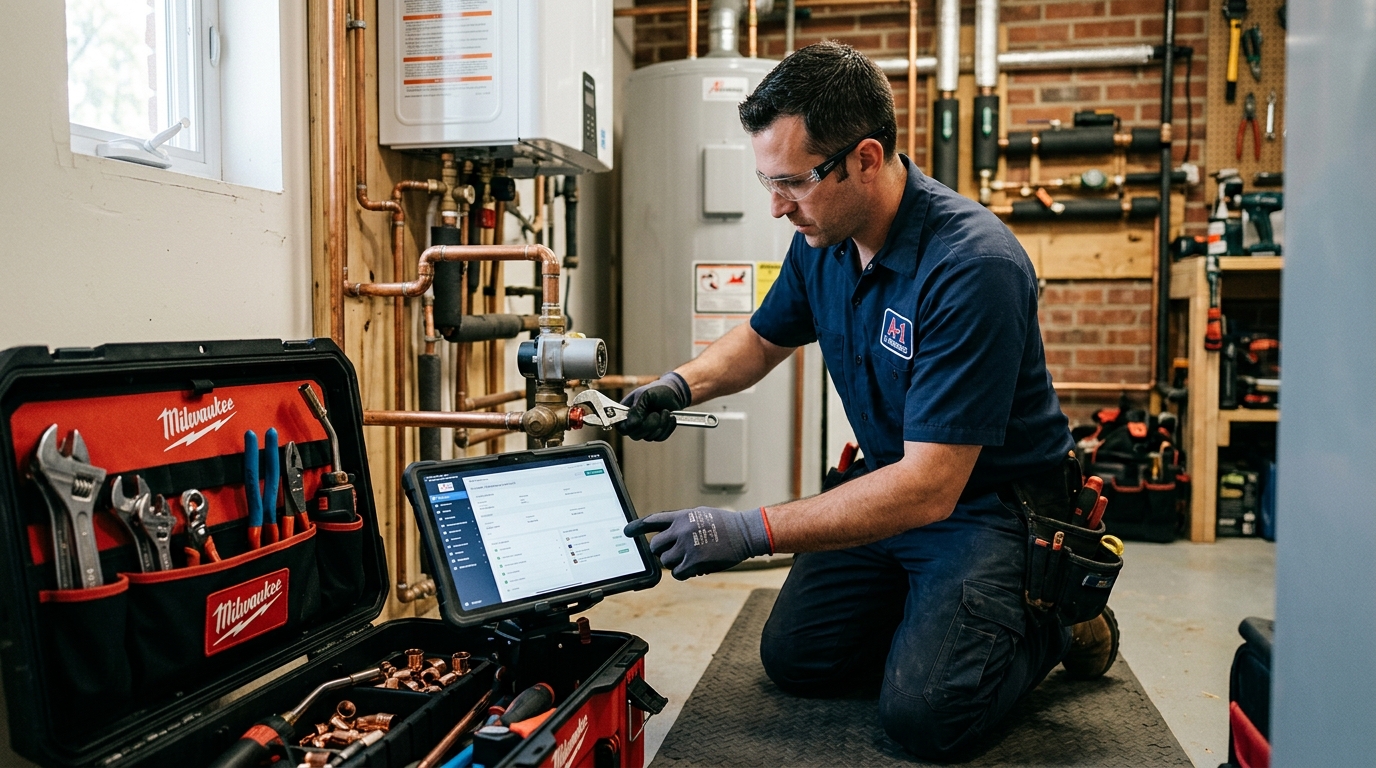
As your fleet grows from two trucks to five or more, manual scheduling on a whiteboard or spreadsheet will lead to missed appointments and wasted fuel. You need a centralized system that tracks your technicians in real-time and optimizes their routes based on their current location and skill set. Instead of juggling separate tools for your website, client management, and invoicing, all-in-one platforms like Hulo let you run everything from a single dashboard.
Effective dispatching is about more than just getting a plumber to a house; it's about matching the right tech to the right job. You don't want to send your senior journeyman to a simple drain snake call when there is a complex boiler repair across town. Modern field service software allows you to tag technicians with specific skills (e.g., Gas Certified, Backflow Specialist) so the dispatcher can make informed decisions that maximize the revenue potential of every service call.
Implementing GPS tracking on your fleet—using systems like Samsara or Verizon Connect—provides data-driven insights into drive times and idle periods. This transparency helps you hold technicians accountable and provides customers with accurate 'On My Way' notifications. Reducing travel time by just 15 minutes per job can allow a technician to fit one extra service call into their day, which could represent an additional $30,000 to $50,000 in annual revenue per truck.
Inventory Control and Van Stocking
A 'rolling warehouse' strategy is essential for maintaining high first-call resolution rates. Every time a technician has to leave a job site to visit a supply house like Ferguson or Winsupply, you lose at least $150 in billable time and fuel. Each van should follow a standardized stocking list that includes common PEX fittings, SharkBite couplings for emergencies, various flappers, and a selection of supply lines. Use a bin-labeling system so technicians can quickly identify when they are low on specific items.
Conduct weekly inventory audits to ensure that parts used on jobs are being properly recorded in your invoicing software. If a plumber uses a $200 Grundfos recirculating pump but forgets to add it to the bill, your net profit on that job evaporates. Integrating your inventory management with your field service software ensures that every part is accounted for and that stock levels are automatically updated when an invoice is generated.
Standardizing your fleet on a specific vehicle model, such as the Ford Transit 250 or Mercedes Sprinter, simplifies maintenance and allows you to swap shelving units between vans if necessary. Invest in high-quality internal racking systems like Adrian Steel or Weather Guard to keep tools organized and protected. An organized van not only makes the technician more efficient but also projects a professional image to the customer, which is vital for securing high-end residential work.
Pro Tip: Equip every van with a 'Small Parts Kit' containing every O-ring and washer imaginable. It costs less than $100 to build but saves thousands in lost time searching for a 50-cent part.
Key Takeaway: Centralize your scheduling and inventory to eliminate 'supply house runs' and maximize the number of billable hours each truck produces daily.
Recruiting and Retaining Top-Tier Plumbing Talent
Creating a Competitive Compensation Package
The shortage of skilled tradespeople means you are competing for talent just as much as you are for customers. In 2026, a competitive wage for a licensed journeyman plumber ranges from $35 to $55 per hour, but salary is only part of the equation. To attract the best, offer a comprehensive benefits package that includes 100% employer-paid health insurance, a 4% 401(k) match, and performance-based bonuses based on upsells or customer reviews.
Consider implementing a 'Performance Pay' or 'Commission' model where technicians earn a base salary plus a percentage of the total job value. This incentivizes them to find additional issues that need repair, such as a failing expansion tank or an aging shut-off valve, which increases the average ticket size. However, ensure you have strict quality control measures in place to prevent 'over-selling' and maintain your company's reputation for integrity.
Don't overlook the importance of work-life balance in your recruitment efforts. Many plumbers are burnt out by constant on-call rotations and 60-hour work weeks. Offering a 4-day work week (four 10-hour shifts) or a rotating on-call schedule that ensures technicians get at least two full weekends off per month can be a more powerful recruiting tool than a slightly higher hourly rate.
Investing in Apprentice Training Programs
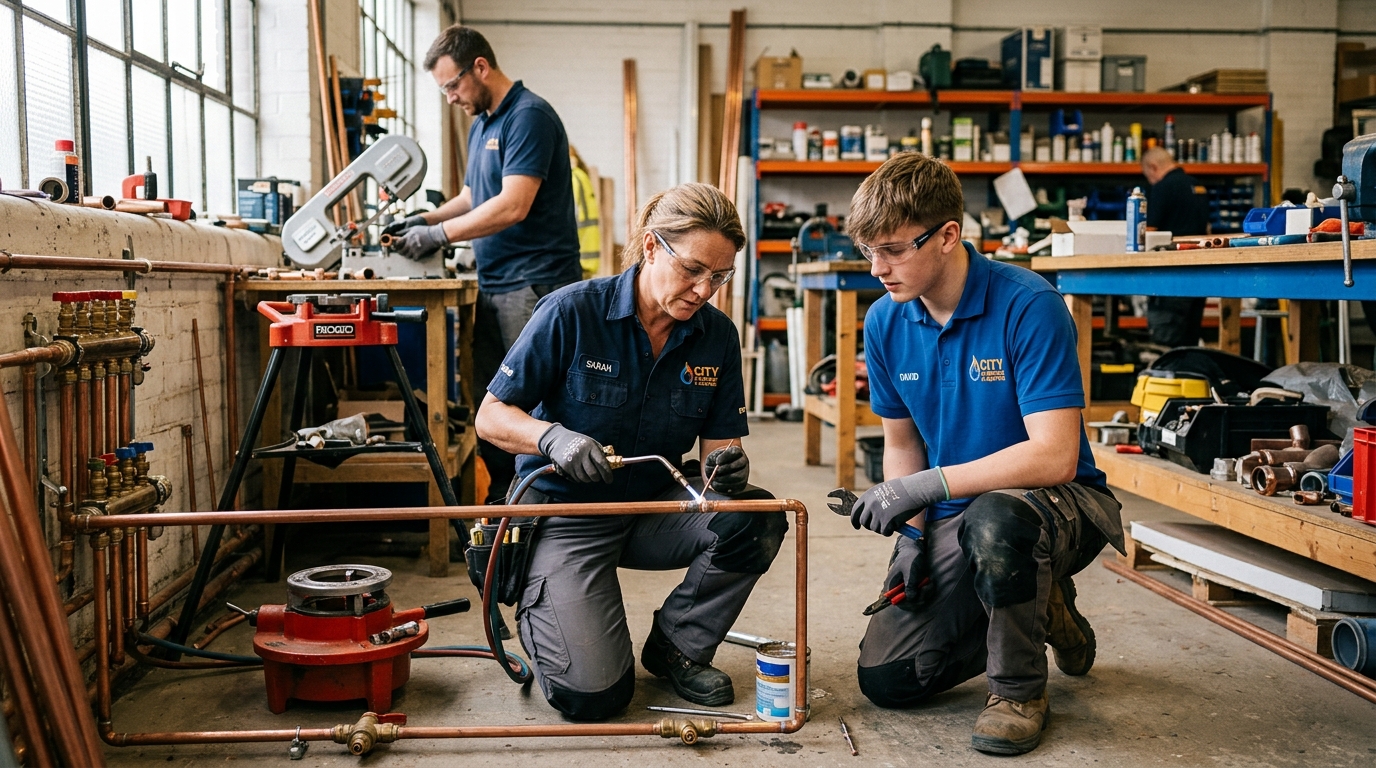
Since experienced plumbers are hard to find, the most sustainable growth strategy is to 'grow your own' talent through a formal apprenticeship program. Partner with local trade schools or community colleges to identify promising students who are eager to learn. By hiring helpers at $18-$22 per hour and providing them with a clear path to licensure, you build long-term loyalty and ensure your company's culture is instilled in them from day one.
Provide your apprentices with a 'Tool Allowance' or a starter kit of essential hand tools to help them get started. This small investment—roughly $500 to $1,000—shows that you are invested in their success and reduces the financial barrier to entry for young workers. Pair each apprentice with a senior lead technician who receives a 'Mentorship Bonus' for every milestone the apprentice reaches, ensuring that the training is taken seriously.
Regular training sessions are vital for both new and experienced staff. Dedicate one morning a month to 'Toolbox Talks' where you review new technologies, such as smart leak detection systems like Flo by Moen, or practice difficult techniques like soldering in tight spaces. A culture of continuous learning not only improves the quality of your work but also makes your company a more attractive place for ambitious professionals to build their careers.
$10,000–$15,000
Cost to Replace a Tech
This includes recruiting, onboarding, and the lost revenue during the transition period. Retention is cheaper than hiring.
Ready to put this into action?
Hulo gives you everything to run your plumbing business — website, CRM, scheduling, and invoicing. Join the waitlist for V2.
Join the WaitlistScaling Your Plumbing Business to Multiple Trucks
Financial Planning and Cash Flow Management
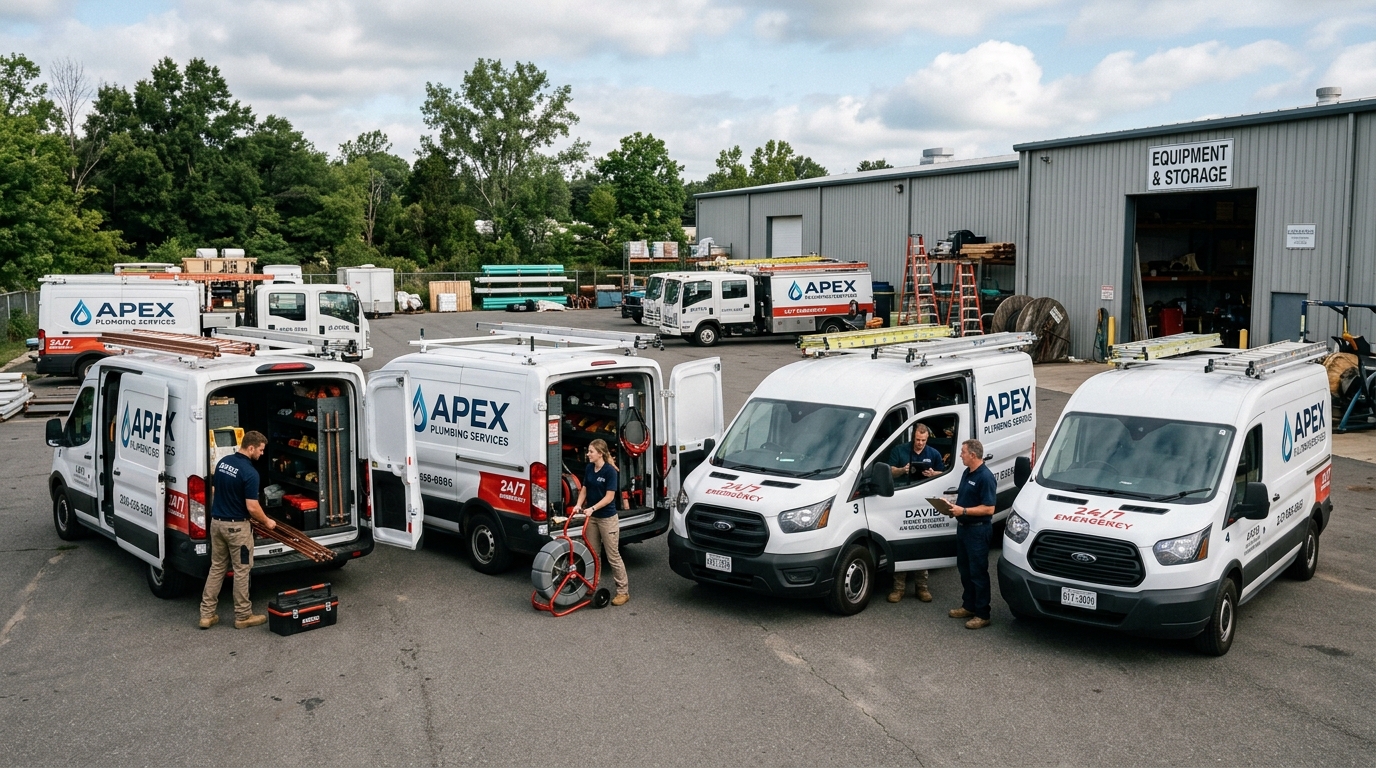
Scaling requires a significant capital injection for new vehicles, equipment, and marketing. Before adding a second or third truck, ensure you have at least three to six months of operating expenses in a reserve fund. A new fully-equipped plumbing van can cost between $65,000 and $85,000, including the wrap and specialized tools like a Milwaukee M18 Fuel pipe threader or a high-end drain camera.
Monitor your Debt-to-Equity ratio closely. While financing vans is common, avoid over-leveraging your business to the point where a slow month puts you at risk of default. Aim for a 'Break-Even' point where each truck pays for its own overhead, including the driver's salary, fuel, insurance, and vehicle payment, within the first 10 days of the month. Everything generated after that point contributes to the company's net profit and expansion fund.
Use detailed financial reporting to track your 'Customer Acquisition Cost' (CAC) versus the 'Lifetime Value' (LTV) of that customer. If you spend $100 to acquire a customer who only spends $150 once, your business will struggle. However, if that $100 lead turns into a $5,000 sewer replacement or a $200/year maintenance agreement, your ROI is exceptional. Understanding these numbers allows you to scale your marketing spend confidently.
Implementing Standard Operating Procedures (SOPs)
To maintain quality across multiple trucks, you must document every process in your business. This includes how the phone is answered, how the van is cleaned, and exactly how a water heater installation should look (e.g., proper use of dielectric unions and sediment traps). Without SOPs, your brand's reputation is at the mercy of each individual technician's habits, which leads to inconsistent service and increased callbacks.
Create a 'Brand Standards' guide that dictates uniform requirements, shoe cover usage inside homes, and the specific way technicians should present quotes to customers. Consistent branding builds trust and allows you to charge premium prices. When a customer sees a clean, uniformed plumber arrive in a branded van with a digital tablet for invoicing, they are much more likely to accept a higher quote than they would from a disheveled contractor.
Regularly review your SOPs based on feedback from the field and customer reviews. If you notice a recurring issue with a specific type of installation, update your training and documentation to address it. Scaling is not just about doing more work; it's about doing work more consistently. As the owner, your job shifts from fixing pipes to fixing the systems that fix the pipes.
| Item | Estimated Cost | Notes |
|---|---|---|
| Van (Ford Transit/Sprinter) | $45,000 - $55,000 | New or low-mileage used |
| Vehicle Wrap & Branding | $3,000 - $5,000 | High-quality vinyl wrap |
| Specialized Tools | $10,000 - $15,000 | Press tools, cameras, threaders |
| Initial Marketing Push | $5,000 - $10,000 | LSA and PPC boost |
| Total Startup Capital | $63,000 - $85,000 | Per additional truck |
Estimated Costs for Adding a New Truck (2026)
Key Takeaway: Scaling is a systems game. Document every process from lead intake to final payment to ensure consistency as you add more trucks to your fleet.
Maximizing Revenue through Maintenance Agreements
The Power of Recurring Revenue
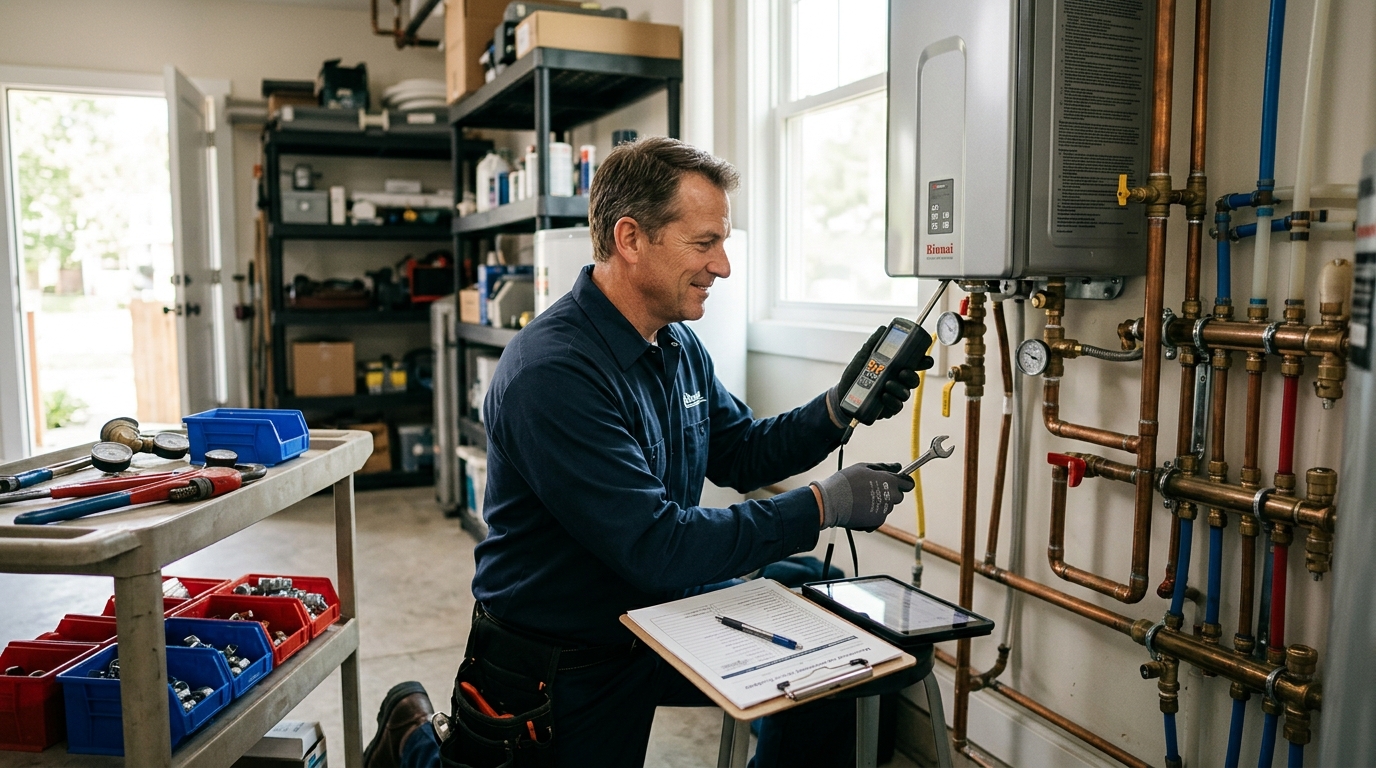
Maintenance agreements, often called 'Home Shield' or 'Plumbing Protection' plans, are the secret weapon of high-growth plumbing companies. By charging a small monthly fee (e.g., $15.99 - $24.99), you provide customers with an annual water heater flush, a whole-home plumbing inspection, and a discount on future repairs. This creates a predictable stream of recurring revenue that covers your fixed overhead during slow seasons.
Beyond the monthly fee, the real value of these plans is the 'first right of refusal' they give you. When a member has a plumbing emergency, they are 90% more likely to call you because they already have a relationship and receive a 'member-only' discount. These inspections also allow your technicians to identify potential issues—like a rusted shut-off valve or a high-pressure reading—before they become emergencies, leading to planned, high-margin repair work.
Selling these plans should be a core KPI for your service technicians. Offer a small commission (e.g., $25 - $50) for every maintenance agreement they sell in the field. This aligns their interests with the company's growth and ensures that every service call has the potential to become a long-term customer relationship rather than a one-off transaction.
Leveraging CRM Data for Seasonal Campaigns
Your customer database is your most valuable asset. Use your CRM to segment customers based on their service history and equipment age. For example, if you know a customer has a 10-year-old Bradford White water heater, you can send them a targeted email or SMS offer for a proactive replacement before it leaks. All-in-one platforms like Hulo make it easy to manage these client relationships and automate your outreach.
Seasonal campaigns are highly effective for filling the gaps in your schedule. In the fall, run a 'Sump Pump Readiness' check or a 'Outdoor Spigot Winterization' special. In the spring, focus on drain cleaning and main line inspections to prepare for heavy rains. By being proactive with your communication, you stay top-of-mind for your customers and prevent them from searching for a competitor when a problem eventually arises.
Track your 'Membership Churn Rate' and 'Plan Penetration' to measure the health of your recurring revenue program. A healthy plumbing business should aim to have at least 20% of its active customer base on a maintenance plan. This level of loyalty provides a 'moat' around your business that protects you from new competitors entering the market with aggressive pricing.
Pro Tip: Offer 'Front-of-the-Line' priority service as a key benefit of your membership plan. In a plumbing emergency, customers value speed more than a 10% discount.
Key Takeaway: Build a maintenance agreement program to stabilize your cash flow and ensure your trucks stay busy year-round with proactive inspections.
Wrapping Up
Scaling a plumbing business from a single truck to a regional leader requires a shift in mindset from 'technician' to 'operator.' By mastering Google LSA, implementing flat-rate pricing, and building a team through apprenticeship programs, you can create a business that serves your life rather than consuming it. Remember that technology is your greatest ally in this journey. Leveraging an all-in-one platform like Hulo allows you to manage your website, CRM, and scheduling in one place, giving you the professional edge needed to outpace the competition. Start small, systemize everything, and stay focused on providing the high-quality service that your community relies on.
Frequently Asked Questions
How much does it cost to start a plumbing business in 2026?
Starting a professional plumbing business typically requires between $15,000 and $50,000 if you already own a vehicle. This covers licensing, insurance, essential tools like a Ridgid K-45 drain cleaner, and initial marketing. To keep overhead low, many new owners use all-in-one platforms like Hulo to handle their website, scheduling, and invoicing for just $49.99/mo, avoiding the need for expensive office staff early on.
Do I need separate software for scheduling, invoicing, and my website?
No—modern tradespeople are moving away from 'software sprawl.' All-in-one platforms like Hulo bundle your professional website, CRM, scheduling, and invoicing into a single $49.99/mo subscription. This is far more cost-effective than paying for 3-4 separate tools and ensures all your data stays in one place, making it easier to scale your operations.
What is the best way to get plumbing leads quickly?
Google Local Services Ads (LSA) is the fastest way to generate high-intent plumbing leads. By earning the 'Google Guaranteed' badge, you appear at the very top of search results and only pay when a customer calls you. Combining LSA with a high-converting website built on a platform like Hulo ensures you capture and book those leads efficiently.
How do I know when it's time to hire my first employee?
You should consider hiring when you are consistently booked out more than two weeks in advance and are turning down emergency calls. If your administrative tasks—like invoicing and follow-ups—are taking up more than 10 hours of your week, it's a sign you need help. Using automation tools can delay the need for an office hire, but a field helper is usually the first step to increasing your daily revenue.
What are the most profitable plumbing services to offer?
High-margin services include tankless water heater installations, trenchless sewer replacements, and whole-home filtration systems. These projects have higher material costs but allow for significant labor markups and specialized equipment fees. Emergency drain cleaning is also highly profitable due to the urgency and the opportunity to upsell main line repairs via camera inspections.
How do I compete with large national plumbing franchises?
Compete by offering a superior customer experience and local expertise that franchises often lack. Use professional software like Hulo to provide the same 'big company' features—like online booking and professional digital invoices—at a fraction of the cost. Focus on building local reviews and community trust, which are often more influential than a national brand name.
Ready to Scale Your Plumbing Empire?
Stop juggling spreadsheets and missed calls. Get your professional website, CRM, and scheduling all in one place with Hulo for just $49.99/mo.
Join the WaitlistMore from the Blog
9 Simple Contractor Invoice Template Tips for Plumbers (2026)
A professional contractor invoice template for plumbers must include your business details, the client's information, a ...
7 Real Factors Determining How Much Do Plumbers Make for Business Owners (2026)
Plumbers make an average of $63,420 per year or $30.49 per hour according to 2026 labor statistics, with top-tier master...
How to Start a Plumbing Business: From Apprentice to Owner (2026)
In 2026, the demand for skilled plumbing professionals has reached an all-time high, with the industry projected to grow...