7 Expert Ways to Price Plumbing Services for Residential Contractors (2026)
15 min read·Updated March 20, 2026To price plumbing services effectively, most residential contractors charge between $75 and $150 per hour or use a flat-rate pricing model that includes a 25-40% markup on materials. Successful plumbing businesses typically aim for a 50-60% gross profit margin and a 15-20% net profit margin to cover overhead costs like insurance, fuel, and vehicle maintenance. Pricing correctly is the difference between a struggling side-hustle and a scalable enterprise that can afford high-quality technicians. In this guide, you will learn the exact formulas for labor burden, the '135 Rule,' and specific price benchmarks for the 12 most common plumbing calls in 2026.
Table of Contents
How Much Should You Charge for Plumbing Services in 2026?
Understanding National and Regional Labor Averages
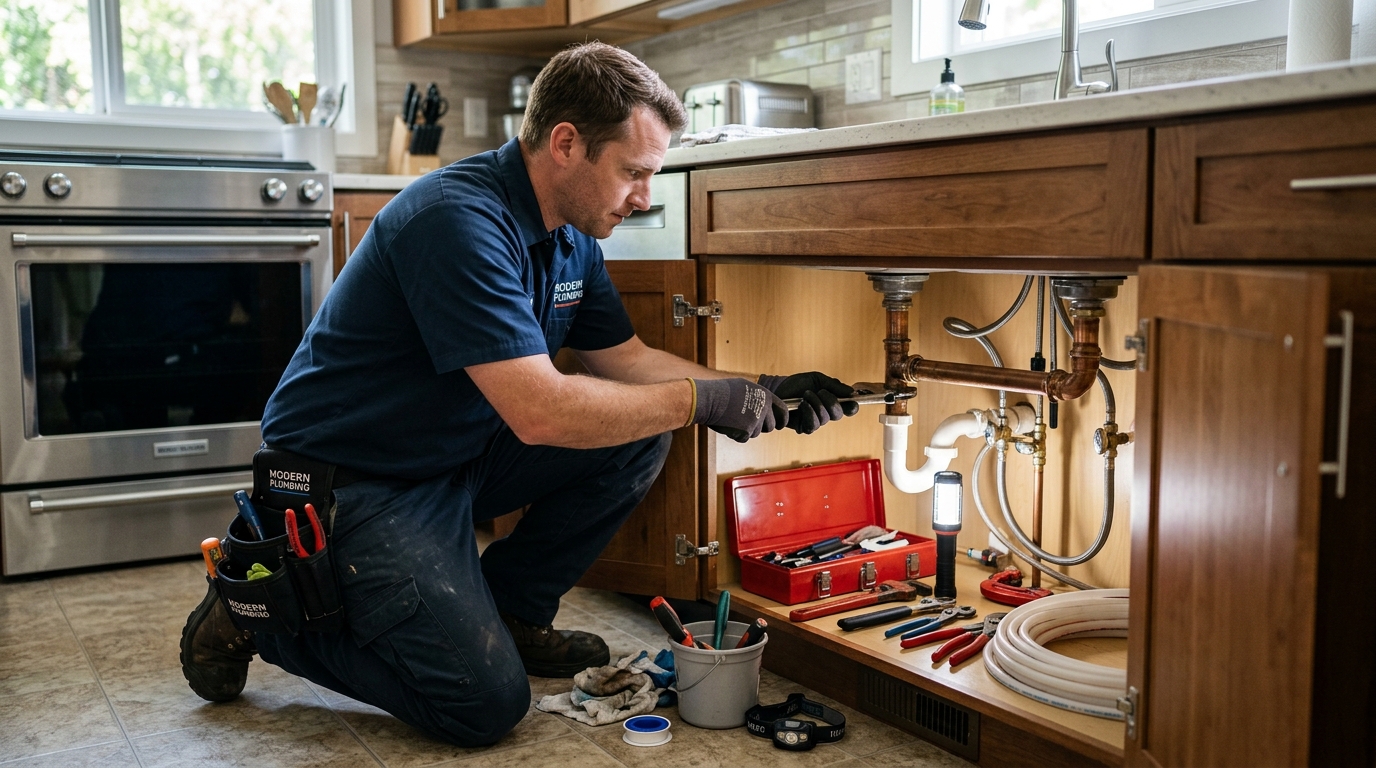
In 2026, the national average for plumbing labor ranges from $85 to $165 per hour, though high-cost-of-living areas like San Francisco or New York City often see rates exceeding $225 per hour. For a standard service call, most licensed journeyman plumbers charge a minimum dispatch fee of $49 to $99 just to arrive at the property and diagnose the issue. This fee is frequently waived if the customer agrees to the proposed repair, ensuring your time is compensated even if no work is performed.
Market competition plays a significant role in your rate setting, but your internal costs should always be the primary driver of your pricing structure. If you are operating in a suburban market, a competitive yet profitable rate for a lead technician is typically $110 per hour, while apprentice-level work might be billed at $65 to $80 per hour. You must also account for emergency services, which usually command a 1.5x or 2x premium for nights, weekends, and federal holidays.
Professional associations like the Plumbing-Heating-Cooling Contractors Association (PHCC) provide annual benchmarks that help contractors stay aligned with industry standards while maintaining profitability. By analyzing these reports, you can see that top-performing plumbing firms allocate no more than 25% of their total revenue to direct labor costs. If your labor costs exceed 35% of your billable revenue, your pricing is likely too low to sustain long-term business growth in 2026.
Setting Your Minimum Service Call Fee
Your minimum service call fee must cover the cost of the technician's travel time, vehicle fuel, and the initial 30 minutes of diagnostic work. For most plumbing companies, a service call costs roughly $65 in overhead before the van even leaves the shop, considering insurance, GPS tracking, and vehicle depreciation. Setting a minimum fee of $89 to $125 ensures that small jobs, such as replacing a single O-ring or clearing a minor sink clog, remain profitable for the company.
Many contractors use a 'trip charge' model where the diagnostic fee is a fixed price, regardless of the time spent on the initial assessment. This approach provides transparency to the homeowner and prevents disputes over 'travel time' billing which can lead to negative Google reviews. In 2026, transparency in pricing is a key differentiator, and clearly stating your $99 diagnostic fee upfront builds trust with high-intent customers who are ready to pay for quality.
To optimize these fees, many modern plumbers use platforms like Hulo to automate the invoicing process and collect payments on-site immediately after the diagnostic is complete. This reduces the administrative burden of chasing $100 payments and improves your overall cash flow by 15-20% month-over-over. When your dispatch fee is integrated into a digital booking system, customers are 30% more likely to book because they understand the financial commitment before the plumber arrives.
$115/hr
Average Labor Rate
Based on 2026 residential plumbing data for mid-market suburban regions.
Key Takeaway: Always charge a diagnostic fee between $75 and $125 to ensure every truck roll is profitable, regardless of the final job size.
What is the 135 Rule for Plumbing and How Do You Use It?
Breaking Down the Three Pillars of the 135 Rule
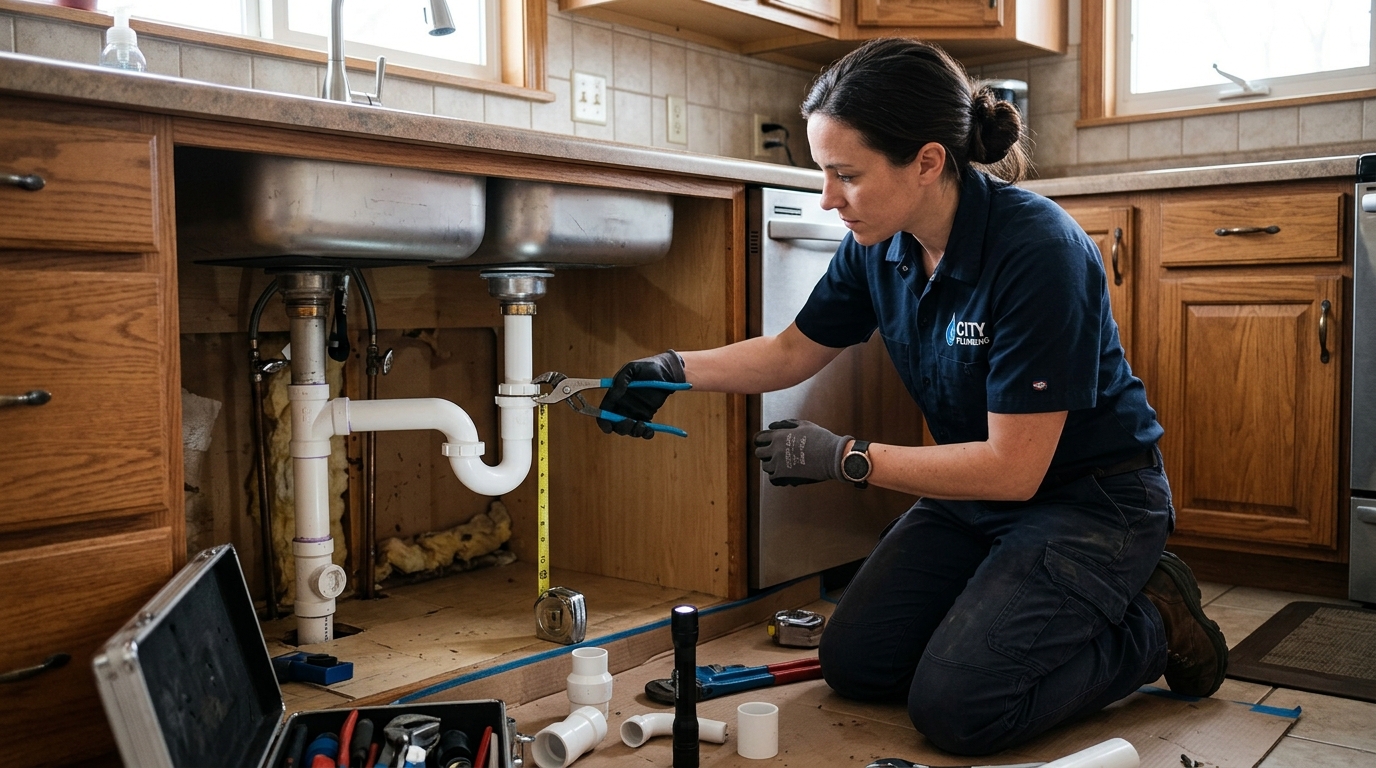
The 135 Rule is a classic industry formula where for every $1 you pay a technician, you must bill at least $3 to $5 to the customer to maintain a healthy business. If you pay a journeyman plumber $35 per hour, your target billable rate should be between $105 and $175 per hour to cover all associated business costs. This multiplier ensures that one-third of the revenue goes to labor, one-third to overhead, and the final third to the company's net profit margin.
Applying this rule requires a deep understanding of your 'labor burden,' which includes payroll taxes, workers' compensation insurance, and health benefits. A technician earning $35 per hour actually costs the company roughly $48 per hour once these additional expenses are factored in. Using the 135 Rule helps you account for these hidden costs without getting bogged down in complex spreadsheets every time you need to quote a simple repair job.
In 2026, many contractors are shifting toward a 1-4 or 1-5 multiplier due to the rising costs of specialized tools like thermal imaging cameras and hydro-jetting equipment. A hydro-jetting machine can cost upwards of $15,000, and the pricing for that specific service must reflect the equipment's depreciation and maintenance. If you stick strictly to a 1-3 rule without accounting for high-tech tool investments, you will find your net profit shrinking as your equipment ages.
Adjusting the Multiplier for Material Costs
While the 135 Rule primarily focuses on labor, it is essential to apply a consistent markup to materials, typically ranging from 25% to 100% depending on the item's cost. For small items like PVC fittings or wax rings that cost under $10, a 100% markup is standard to cover the time spent sourcing and stocking the parts. For large-ticket items like a $1,200 tankless water heater, a 25% to 35% markup is more appropriate to remain competitive while still covering your handling and warranty risks.
Warranty reserves are a critical component of your pricing that many new plumbing contractors overlook when setting their rates. You should allocate roughly 2-3% of every job's total price into a dedicated warranty fund to cover the cost of 'call-backs' and defective parts. If you install 100 water heaters a year and two of them fail, having that 3% buffer ensures you can replace them for the customer at no additional cost to your bottom line.
Modern plumbing software like Hulo allows you to pre-set these markups into your digital price book, so your technicians don't have to do math in the field. This consistency prevents 'pricing drift' where different techs charge different amounts for the same job, which can lead to customer confusion and brand erosion. By automating your 135 Rule calculations, you ensure that every estimate sent to a client is mathematically guaranteed to meet your profit targets.
Pro Tip: Use a 1-4 multiplier for specialized services like leak detection or sewer camera inspections to account for the high cost of equipment maintenance.
How Do Plumbers Determine Pricing for Residential Jobs?
The Difference Between Estimating and Quoting
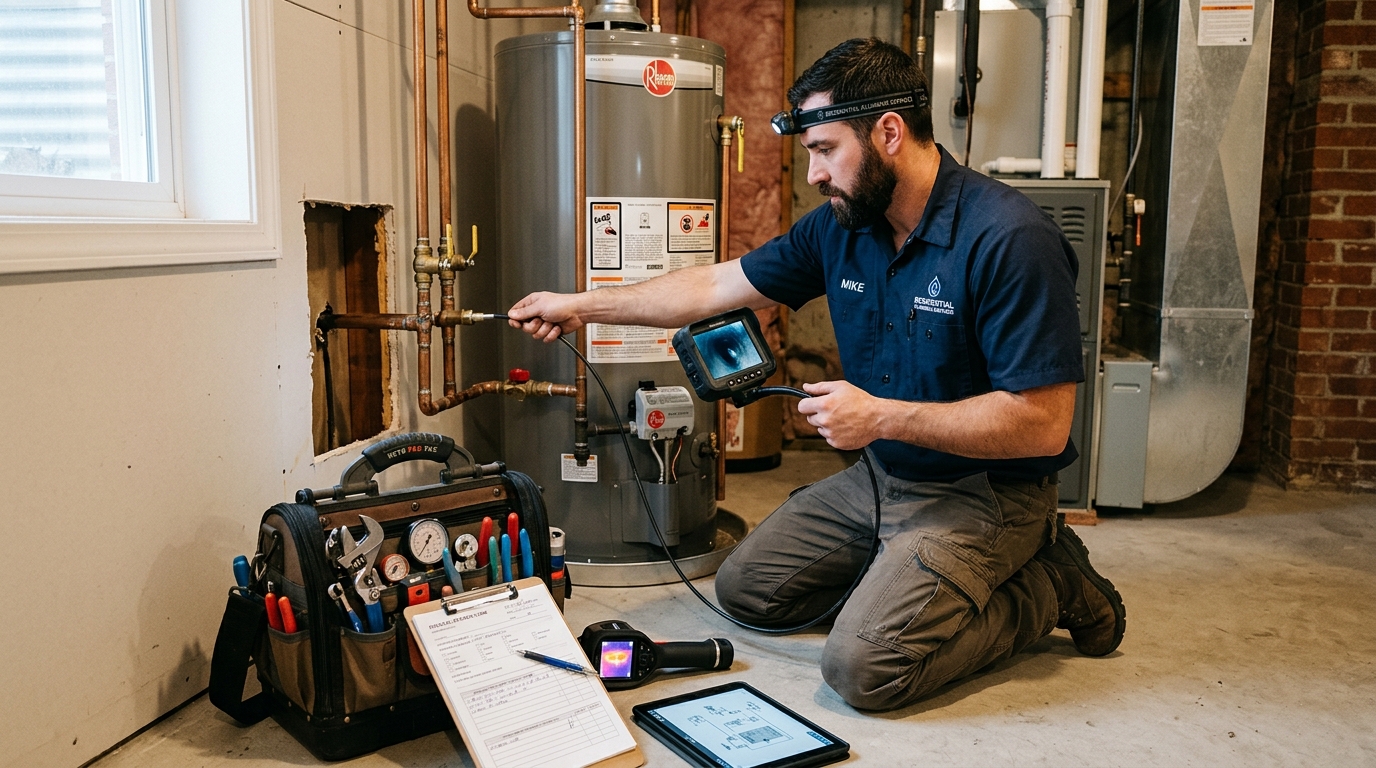
Determining the price for a residential job starts with a clear distinction between a rough estimate and a firm, binding quote. An estimate is a ballpark figure given over the phone, whereas a quote is a detailed breakdown provided after an on-site inspection of the home's specific plumbing layout. In 2026, top-tier plumbers avoid giving firm prices over the phone because unforeseen issues like corroded galvanized pipes or non-permitted previous work can double the labor time.
To determine a firm price, you must calculate the 'Total Job Cost,' which equals (Estimated Hours x Hourly Rate) + (Material Cost x Markup) + (Permit Fees). For a standard kitchen sink replacement, you might estimate 2 hours of labor at $125/hr ($250), $150 in materials marked up to $225, and a $50 disposal fee, totaling $525. Adding a 10% 'slush fund' for unexpected fittings or longer-than-expected drain cleaning is a smart way to protect your margins on older homes.
Permit fees are another variable that must be passed through to the customer, often with a small administrative fee for the time spent filing paperwork with the local building department. In many jurisdictions, a water heater permit costs $75 to $150, and failing to include this in your initial price can wipe out your entire profit for that job. Always check the current fee schedule for your specific city or county before finalizing a quote for major installations or repiping projects.
Factoring in Local Market Competition
While your internal costs dictate your floor, the local market often dictates your ceiling for common services. In a competitive market with 50+ plumbing companies, you cannot charge $800 for a basic toilet installation if the local average is $450, unless you provide a significantly higher level of service or a 10-year warranty. You should perform a 'secret shopper' analysis of your top five local competitors every six months to ensure your pricing remains in the 60th to 75th percentile of your market.
Positioning yourself as the 'premium' option allows you to charge 20% more than the market average, provided your branding and customer experience reflect that value. This includes wearing boot covers in the home, providing digital 'on-the-way' alerts, and offering 0% financing options for larger repairs. High-value customers are often more concerned with reliability and cleanliness than they are with finding the absolute lowest price for a burst pipe in their basement.
For those just starting out, check out our guide on how to start a plumbing business to learn how to build a brand that justifies higher pricing from day one. Your pricing strategy is a reflection of your brand's promise; if you price like a 'handyman,' you will attract customers who treat you like one. If you price like a professional engineering firm, you will attract clients who value expertise and are willing to pay for the peace of mind that comes with a licensed and insured contractor.
| Service Type | Average Price Range | Estimated Time |
|---|---|---|
| Water Heater Installation (Tank) | $1,400 - $2,800 | 3 - 5 Hours |
| Sewer Line Camera Inspection | $250 - $450 | 1 - 1.5 Hours |
| Main Line Drain Cleaning | $300 - $600 | 1.5 - 2 Hours |
| Toilet Repair (Flapper/Fill Valve) | $175 - $325 | 0.5 - 1 Hour |
| Garbage Disposal Replacement | $350 - $550 | 1 - 2 Hours |
2026 Residential Plumbing Price Benchmarks
Should You Use Hourly or Flat-Rate Pricing for Your Plumbing Business?
The Pros and Cons of Hourly Billing
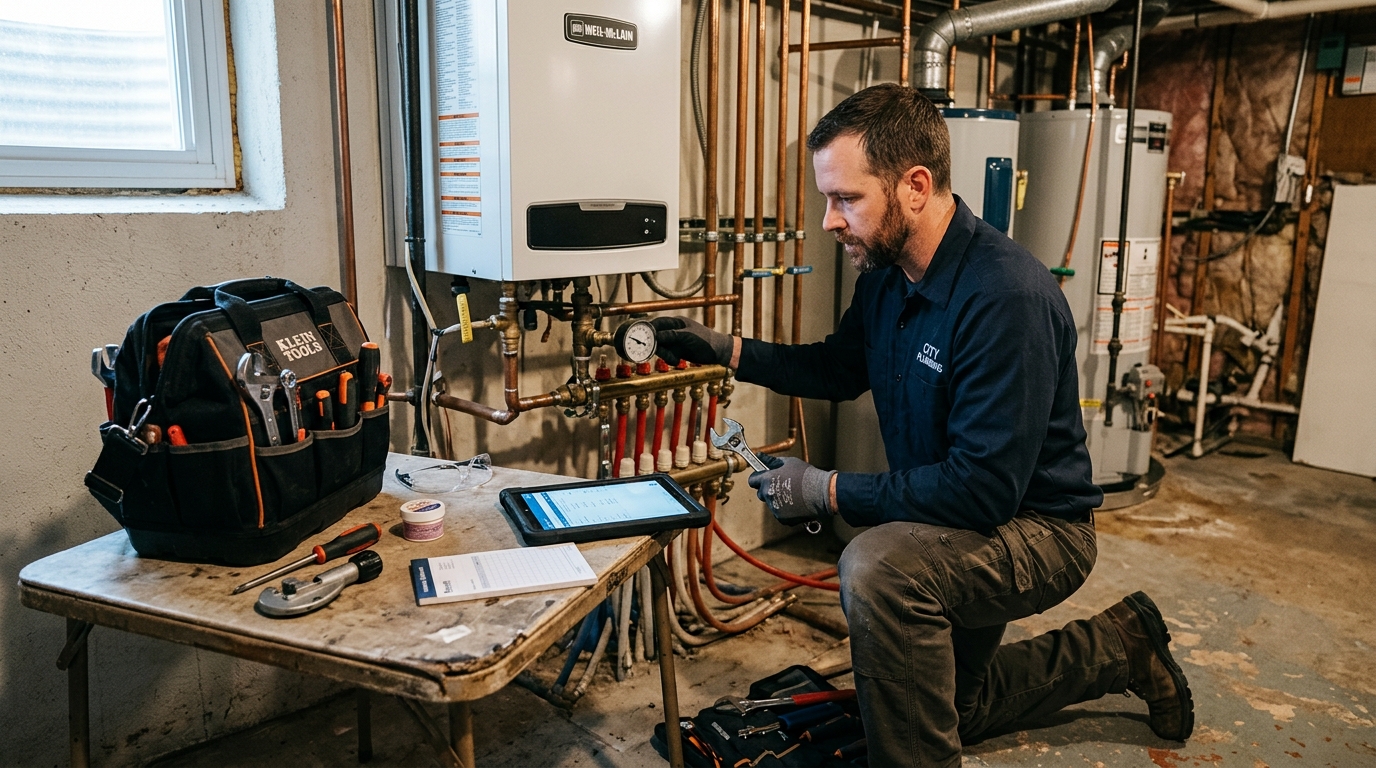
Hourly billing is the traditional method for plumbing services, where the customer pays for the exact amount of time the technician is on-site. This model is highly beneficial for complex, unpredictable jobs like leak detection or old-home renovations where the scope of work can change by the hour. However, it can lead to 'efficiency penalties' where your best, fastest plumbers earn less revenue for the company than your slower, less experienced technicians.
Customers often dislike hourly billing because it creates an 'open checkbook' scenario that leads to anxiety during the repair process. In 2026, the trend is moving away from hourly rates for standard residential repairs because it lacks the transparency and predictability that modern consumers demand. If you do use hourly rates, ensure you provide a 'not-to-exceed' cap on the estimate to give the homeowner a sense of financial security and prevent disputes during the final invoicing stage.
For service businesses, tracking hourly efficiency is still vital even if you bill a flat rate, as it helps you identify which technicians need more training. Using a tool like Hulo to track 'time-on-job' versus 'estimated-time' allows you to refine your pricing book based on real-world performance data. If your team consistently takes 3 hours for a job you priced for 2 hours, you know it is time to raise your flat-rate price or improve your installation processes.
Why Flat-Rate Pricing is Dominating in 2026
Flat-rate pricing involves giving the customer a single, all-inclusive price for a specific task before the work begins. This model rewards efficiency; if your technician finishes a 2-hour job in 1 hour, your profit margin effectively doubles without the customer feeling cheated. Flat-rate pricing also simplifies the sales process, as technicians can show customers a standardized price book rather than trying to calculate labor and parts markups on a notepad in a dark crawlspace.
To implement flat-rate pricing, you must create a comprehensive price book that covers at least 150 of your most common plumbing tasks. Each task should include the average labor time, the cost of standard materials, and your required profit margin based on your overhead. Many plumbing companies purchase pre-made flat-rate books from industry consultants and then adjust the labor rates to match their local market conditions and specific overhead requirements.
A major advantage of flat-rate pricing is the ability to offer 'Good, Better, Best' options to the customer during the presentation. For a leaky faucet, you might offer a 'Good' repair (new washers/seats), a 'Better' replacement (standard Delta faucet), and a 'Best' upgrade (premium Moen with touchless features). This 'choice architecture' typically increases the average ticket size by 25-35% as customers often opt for the middle or high-end solutions when presented with clear options.
Key Takeaway: Switching to flat-rate pricing typically increases gross profit by 15% by rewarding technician efficiency and eliminating hourly rate disputes.
Ready to put this into action?
Hulo gives you everything to run your plumbing business — website, CRM, scheduling, and invoicing. Join the waitlist for V2.
Join the WaitlistHow Do You Calculate Your Plumbing Overhead and Profit Margins?

Identifying Your Fixed and Variable Overhead Costs
Overhead is the total cost of keeping your plumbing business running before you even perform a single job. Fixed overhead includes expenses that don't change based on your volume of work, such as your shop rent ($1,500-$4,000/mo), office staff salaries, and software subscriptions like Hulo. Variable overhead includes costs that fluctuate with your workload, such as fuel, vehicle maintenance, and credit card processing fees, which typically average 2.5% to 3.5% of your total revenue.
In 2026, a typical one-truck plumbing operation should expect an annual overhead of $45,000 to $70,000 depending on the age of the vehicle and the local insurance market. To find your 'break-even' point, you must divide your total annual overhead by the number of billable hours you expect to work (usually 1,200 to 1,500 hours for a solo plumber). If your overhead is $60,000 and you work 1,500 billable hours, your overhead burden is $40 per hour, which must be added to your labor and material costs.
Failing to account for small, recurring costs like tool replacement and uniform laundering can lead to 'death by a thousand cuts.' A high-quality cordless drill set costs $400 and may only last 18 months in a heavy-use plumbing environment; these depreciation costs must be factored into your hourly rate. For more detailed financial planning, refer to our hvac-business-plan guide, which uses similar financial modeling for service-based trade contractors.
Setting Targets for Gross and Net Profit
Gross profit is the money left over after paying for direct job costs (labor and materials), and it should ideally hover around 50-60% for a healthy plumbing company. If a job costs you $200 in labor and $100 in parts, you should be billing at least $600 to achieve a 50% gross profit margin. This margin is what pays for your overhead and ultimately provides the net profit that allows the business owner to take home a dividend or reinvest in new equipment.
Net profit is the 'actual' profit left after every single expense—including overhead—has been paid, and 15% to 20% is considered the gold standard for the plumbing industry. Many new contractors confuse gross profit with net profit and end up wondering why they have no money in the bank at the end of the year despite being busy. If your net profit is consistently below 10%, you are one major truck repair or slow month away from financial trouble, and you must raise your prices immediately.
Tracking these margins weekly is essential for catching pricing errors before they become catastrophic for your business. Using integrated software like Hulo allows you to see your real-time profit margins on every single invoice, giving you the data needed to adjust your price book on the fly. When you can see that your margin on water heater installs dropped by 5% due to a rise in copper prices, you can update your pricing immediately rather than waiting for your accountant to tell you six months later.
20%
Target Net Profit
The industry benchmark for a highly efficient, multi-truck plumbing company.
How to Raise Your Plumbing Rates Without Losing Existing Customers?
Communicating Value Instead of Cost
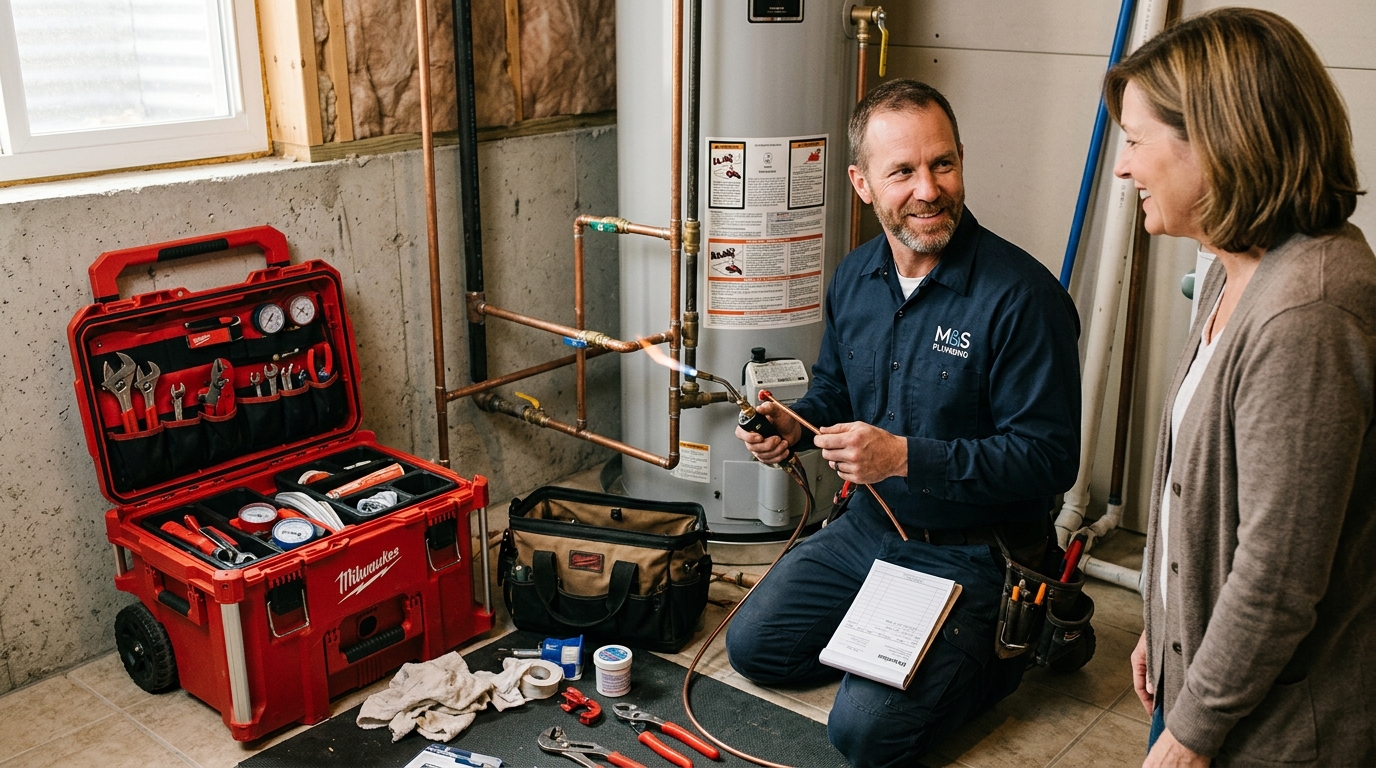
Raising rates is a necessary part of business, especially in 2026 as inflation and supply chain issues continue to impact the cost of brass and copper. When announcing a price increase, focus on the 'why'—such as your commitment to ongoing technician training, the purchase of new leak detection technology, or expanded 24/7 emergency coverage. Customers are generally understanding of 5% to 8% annual increases if they feel they are receiving a premium, reliable service in return.
Instead of a mass email to all clients, consider implementing your new pricing for new customers first while 'grandfathering' in your most loyal clients for an additional 90 days. This staggered approach allows you to test the market's reaction to your new rates without risking the core recurring revenue that keeps your business stable. Most plumbing contractors find that they lose fewer than 2% of their customers during a price hike, and the increased revenue from the remaining 98% far outweighs the loss.
For advice on how to keep your schedule full even at higher price points, read our article on how to grow a plumbing business. Growing your business requires a shift in mindset from 'selling labor' to 'selling solutions and peace of mind.' When you solve a customer's basement flooding problem at 2:00 AM, they are much less likely to quibble over a 10% rate increase than someone looking for a simple faucet washer replacement.
Bundling Services to Mask Price Increases
One of the most effective ways to raise your effective hourly rate is to bundle services into 'Value Packages' or 'Maintenance Memberships.' For example, instead of just raising the price of a drain cleaning, offer a 'Whole Home Protection Plan' for $199/year that includes a free annual inspection, a 10% discount on all repairs, and priority scheduling. These memberships create 'sticky' customers who are less likely to shop around based on price because they feel they are part of an exclusive club.
Bundling also allows you to hide the cost of individual items that might be sensitive to price comparisons, such as the hourly rate. If a customer sees a 'Kitchen Refresh Package' for $850 that includes a new disposal, a faucet install, and a drain treatment, they are looking at the total value rather than the $150/hour labor rate. In 2026, the psychological shift from 'cost-plus' pricing to 'value-based' pricing is the hallmark of the most successful plumbing enterprises.
Using a digital sales tool to present these bundles makes the process seamless and professional, significantly increasing your 'close rate' on larger projects. When a technician can show a customer a side-by-side comparison of a basic repair versus a comprehensive system upgrade on a tablet, the customer feels empowered to choose the level of service that fits their budget. This transparency reduces sales pressure and positions your plumbing company as a consultant rather than just a service provider.
Pro Tip: Increase your rates by 3-5% every January 1st automatically to keep up with inflation without needing a major 're-pricing' event.
Wrapping Up
Pricing your plumbing services correctly is the foundation of a sustainable, profitable business that can survive the market fluctuations of 2026. By utilizing the 135 Rule, implementing flat-rate pricing, and consistently tracking your overhead, you can ensure that every service call contributes to your long-term growth. Stop guessing at your rates and start using data-driven pricing models to build the plumbing company you've always envisioned.
Frequently Asked Questions
How do I figure out how much to charge people for my plumbing services?
To determine your pricing, add your hourly labor cost (e.g., $35) to your hourly overhead burden (e.g., $45) and then add your desired net profit margin (e.g., 20%). In 2026, this typically results in a billable rate between $110 and $160 per hour for residential service. For a more simplified approach, many plumbers use the 135 Rule, which dictates that you should bill 3 to 5 times the technician's hourly wage to ensure all business expenses and profits are covered.
What is the 135 rule for plumbing?
The 135 rule is a pricing strategy where for every $1 you pay your plumber in wages, you bill the customer $3 to $5. This breakdown allocates $1 to the technician's pay, $1-$2 to company overhead (trucks, insurance, fuel), and $1-$2 to the business's net profit. For example, if you pay a tech $30/hour, you should bill out at $90-$150/hour to remain a sustainable and profitable enterprise in 2026.
How do plumbers determine pricing for common jobs?
Most professional plumbers use a flat-rate price book that calculates the 'Total Job Cost' based on national labor averages and material markups. For instance, a water heater installation is typically priced between $1,400 and $2,800, which accounts for 4 hours of labor, the unit cost, a 30% material markup, and permit fees. This standardized approach ensures consistency across the company and provides customers with a firm price before work begins, reducing billing disputes.
How much does a water heater installation cost in 2026?
In 2026, a standard 40-gallon gas water heater installation typically costs between $1,500 and $2,500, including the unit, labor, and disposal of the old tank. Tankless water heater installations are significantly more expensive, often ranging from $3,500 to $6,000 due to the complex venting and gas line upgrades required. Prices vary based on local permit requirements, which can add $75 to $200 to the final invoice depending on your municipality.
What certifications do I need to set my own plumbing prices?
To legally set prices and operate a plumbing business, you generally need a Master Plumber license or a Plumbing Contractor license issued by your state's licensing board. Additionally, certifications from the PHCC or NATE (for hydronic heating) can help justify higher premium pricing to your customers. Most states also require a minimum of $500,000 in general liability insurance and a surety bond to pull permits for residential and commercial projects.
How do I get paid faster as a plumbing contractor?
The fastest way to get paid is to use mobile invoicing software like Hulo that allows technicians to accept credit cards, ACH, and Apple Pay on-site immediately after a job is completed. Implementing a 'payment due upon completion' policy for all residential service calls can reduce your Accounts Receivable (AR) by up to 90%. For larger projects over $2,500, it is standard industry practice to require a 30-50% deposit before work begins to cover material costs.
Is flat-rate pricing software worth it for small plumbing businesses?
Yes, flat-rate pricing software like Hulo is highly worth it because it eliminates the 'math errors' that often lead to undercharging on complex jobs. For a small monthly fee (often under $100), these platforms provide a professional digital price book that increases your average ticket size through 'Good, Better, Best' options. Small businesses using digital pricing tools typically see a 15-20% increase in gross revenue within the first six months of implementation.
What is a good profit margin for a plumbing company?
A healthy plumbing company should aim for a gross profit margin of 55-65% and a net profit margin of 15-22%. If your net profit is below 10%, your business is at risk of failing during a market downturn or if you face unexpected equipment repairs. Tracking these margins monthly using your CRM or accounting software is critical to ensuring your pricing strategy is keeping up with the rising costs of labor and materials in 2026.
Stop Leaving Money on the Table—Automate Your Plumbing Pricing Today
Hulo provides the all-in-one platform you need to manage your price book, send professional estimates, and get paid instantly. Join thousands of trade contractors who use Hulo to boost their profit margins and reclaim their time.
Join the WaitlistMore from the Blog
9 Simple Contractor Invoice Template Tips for Plumbers (2026)
A professional contractor invoice template for plumbers must include your business details, the client's information, a ...
9 Expert Tips for the Best Pressure Washer for Starting a Business (2026)
The best pressure washer for starting a business is a gas-powered unit delivering at least 4.0 GPM (gallons per minute) ...
7 Smart Ways to Evaluate Housecall Pro vs Jobber for HVAC Contractors (2026)
Housecall Pro is generally the superior choice for HVAC businesses focusing on advanced sales automation and detailed pe...