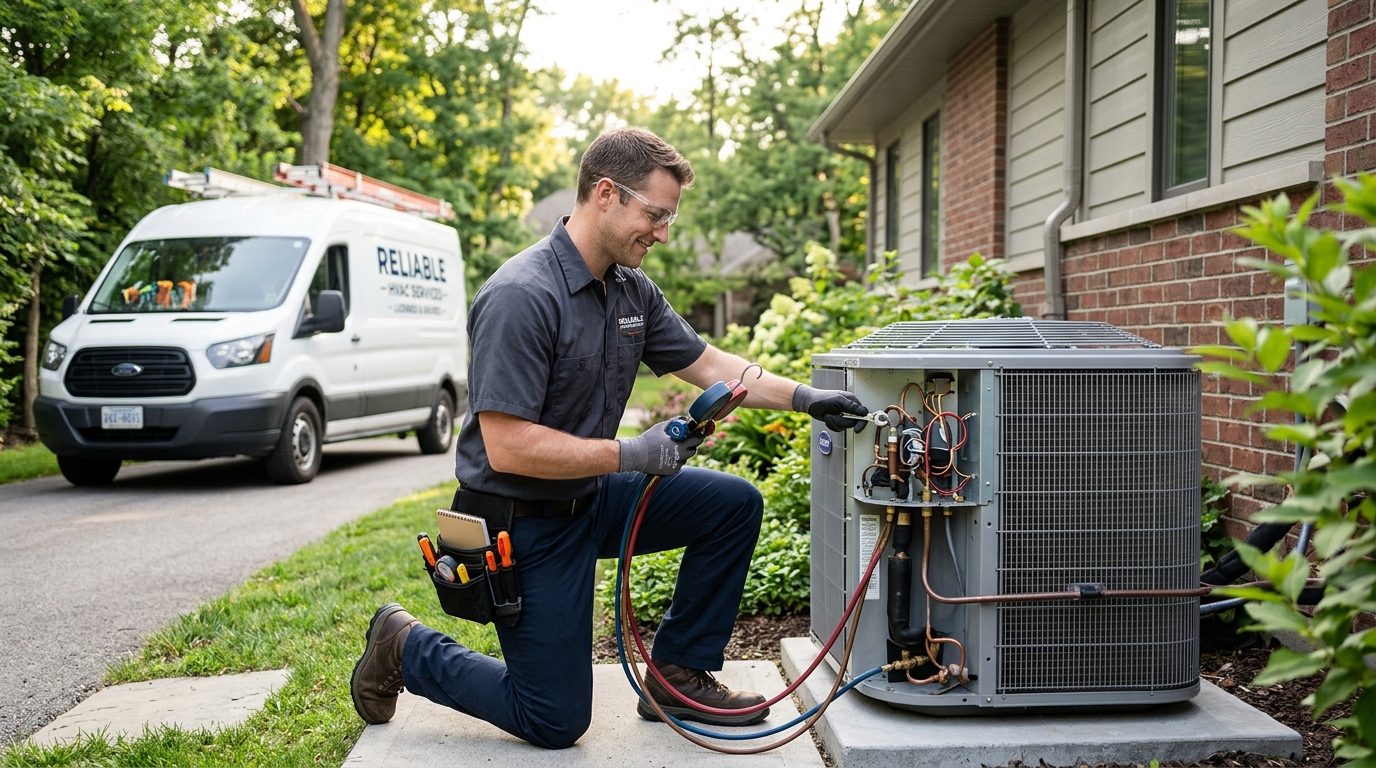
HVAC Business Plan: Complete Template & Guide for 2026
16 min read·Updated March 20, 2026The HVAC industry is entering a transformative era in 2026, with the market projected to exceed $25.6 billion as smart homes and energy-efficient heat pumps become the standard. For aspiring owners, the transition to A2L refrigerants and the federal SEER2 requirements have created a complex landscape where technical skill alone isn't enough to survive. This comprehensive guide provides a battle-tested roadmap for building a resilient HVAC business that overcomes seasonal volatility and outperforms local franchises. Whether you are a solo tech ready to buy your first van or a service manager looking to launch a full-scale operation, these strategies will ensure your business is built on a foundation of recurring revenue and operational excellence.
Table of Contents
Market Analysis and Competitive Positioning

Identifying Your Local Service Niche
Success in the 2026 HVAC market requires a hyper-local understanding of your service territory's demographics and housing stock. You must determine if your primary revenue will come from high-efficiency retrofits in aging suburbs or maintenance for new construction high-density developments. Analyzing the average age of residential units in your target ZIP codes allows you to predict furnace and AC failure cycles with roughly 85% accuracy. Focus on areas where the median home age is 12 to 15 years, as these properties are entering the peak replacement window for R-410A systems.
Beyond residential, consider the local demand for light commercial HVAC services, such as rooftop unit (RTU) maintenance for retail strips and medical offices. These clients offer more stable, year-round income compared to the 'boom and bust' cycles of residential emergency calls. By specializing in specific equipment types, like Mitsubishi VRF systems or Daikin Fit units, you can position your brand as a high-end specialist rather than a generalist. This specialization allows for a 20% premium on labor rates because customers perceive higher value in certified expertise.
Conduct a thorough SWOT analysis of your top five local competitors, looking specifically at their response times and digital presence. Many established 'legacy' companies struggle with modern communication, often taking 24 hours just to return a quote request. This gap in the market is your primary entry point, where speed of service and transparent pricing become your greatest competitive advantages. You can win significant market share simply by offering online booking and instant text-based dispatch notifications to your customers.
Navigating Regulatory and Refrigerant Shifts
The 2026 landscape is defined by the full implementation of the AIM Act, which has mandated the phase-down of HFC refrigerants. Your business plan must account for the specialized training and equipment required to handle A2L refrigerants like R-454B and R-32. Technicians must be equipped with spark-proof recovery machines and leak detectors specifically calibrated for mildly flammable gases. Incorporating these safety protocols into your standard operating procedures (SOPs) protects your liability and ensures compliance with evolving EPA Section 608 regulations.
In addition to refrigerant changes, the federal government's push for electrification means heat pump installations are now a primary revenue driver. Understanding the nuances of cold-climate heat pump performance and available tax credits under the Inflation Reduction Act is essential for closing high-ticket sales. Your sales team should be able to explain the long-term ROI of a 18-SEER2 system compared to a standard 14.3-SEER2 unit. Providing customers with a clear energy savings calculator can increase your average ticket size by $3,500 or more per installation.
Local building codes are also becoming more stringent regarding Indoor Air Quality (IAQ) and duct sealing requirements. Incorporating Aeroseal technology or high-MERV filtration systems into your core offerings allows you to upsell every installation. This holistic approach to home comfort not only increases profit margins but also improves customer satisfaction by solving issues like 'hot and cold spots.' Staying ahead of these regulations ensures your business isn't caught off guard by sudden changes in equipment availability or installation standards.
20%–35%
Higher Profit Margin
Average margin increase for HVAC companies that specialize in high-efficiency VRF and heat pump systems versus standard split systems.
Key Takeaway: Target ZIP codes with 12-15 year old housing stock to maximize high-margin replacement opportunities during the R-410A phase-out.
Service Offerings and Revenue Modeling
The Power of Maintenance Agreements
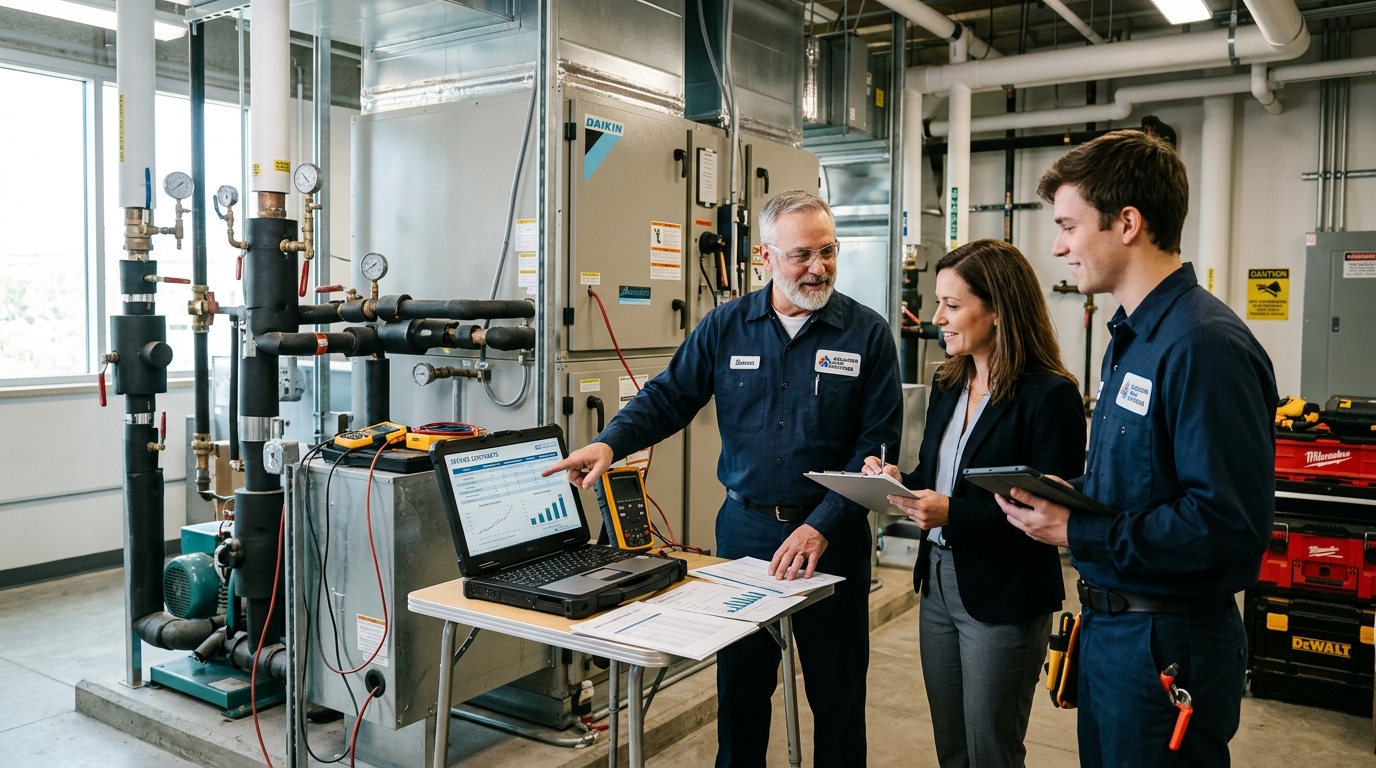
The bedrock of a sustainable HVAC business is the recurring revenue generated through Seasonal Maintenance Agreements (SMAs). These contracts, typically priced between $180 and $350 per year, provide a predictable cash flow that covers your fixed overhead during the shoulder seasons. A well-structured plan should include two precision tune-ups, a 15% discount on repairs, and priority 'front-of-the-line' scheduling. This not only builds customer loyalty but also creates a captive audience for future equipment replacements when their systems eventually fail.
To maximize the effectiveness of these plans, use your CRM to automate renewal reminders and service window notifications. Tracking your 'Agreement Capture Rate'—the percentage of service calls that result in a new maintenance contract—is a key performance indicator (KPI) for your technicians. Aim for a 25% capture rate on all non-agreement service calls to ensure steady growth of your recurring base. When you reach 1,000 active agreements, your business value increases significantly, as recurring revenue is weighted heavily in company valuations.
Management of these contracts can be complex, involving tracking thousands of renewal dates and service histories. Instead of juggling separate tools for your website, client management, and invoicing, all-in-one platforms like Hulo let you run everything from a single dashboard. This integration ensures that when a technician completes a maintenance visit, the invoice is sent and the next seasonal visit is automatically queued. Reducing the administrative burden of contract management allows you to focus on high-level growth rather than chasing paperwork.
Tiered Pricing for Installations and Repairs
Moving away from 'time and materials' pricing toward a flat-rate model is essential for maintaining profitability in 2026. Flat-rate pricing removes the customer's anxiety over a ticking clock and allows you to bake in your overhead, fuel, and insurance costs. Create a comprehensive price book that includes three tiers for every common repair: 'Good, Better, Best.' For example, when replacing a blower motor, offer the standard OEM replacement, an upgraded high-efficiency motor, and a third option that includes a full system cleaning and surge protection.
For installations, presenting a 'Menu of Options' significantly increases the likelihood of an upsell. A typical installation quote should include a base 14.3-SEER2 system, a mid-range 16-SEER2 two-stage system, and a premium 20+ SEER2 variable-speed inverter system. By clearly outlining the features of each, such as decibel levels, humidity control, and warranty length, you empower the customer to choose the value they want. This strategy often results in customers selecting the middle or high-tier option, which carries a much higher net profit.
Emergency repair calls should carry a premium 'diagnostic fee' that is waived if the customer moves forward with the repair. During peak summer months, implementing a 'demand pricing' model for non-contract customers can help manage the surge in volume. This ensures your most loyal contract customers receive priority while maximizing the revenue potential of one-off emergency leads. Always provide a written estimate with clear expiration dates to encourage faster decision-making on complex multi-zone installations.
| Service Type | Avg. Ticket Value | Gross Margin | Frequency |
|---|---|---|---|
| System Replacement | $8,500 - $18,000 | 35% - 45% | Low (1x/15 yrs) |
| Emergency Repair | $450 - $1,200 | 60% - 70% | Medium (As needed) |
| Maintenance Plans | $199 - $349/yr | 50% - 60% | High (Recurring) |
| IAQ Upgrades | $800 - $2,500 | 55% - 65% | Medium (Add-on) |
Projected Revenue Streams by Service Category
Operational Strategy and Technology Stack
Fleet Management and Inventory Controls
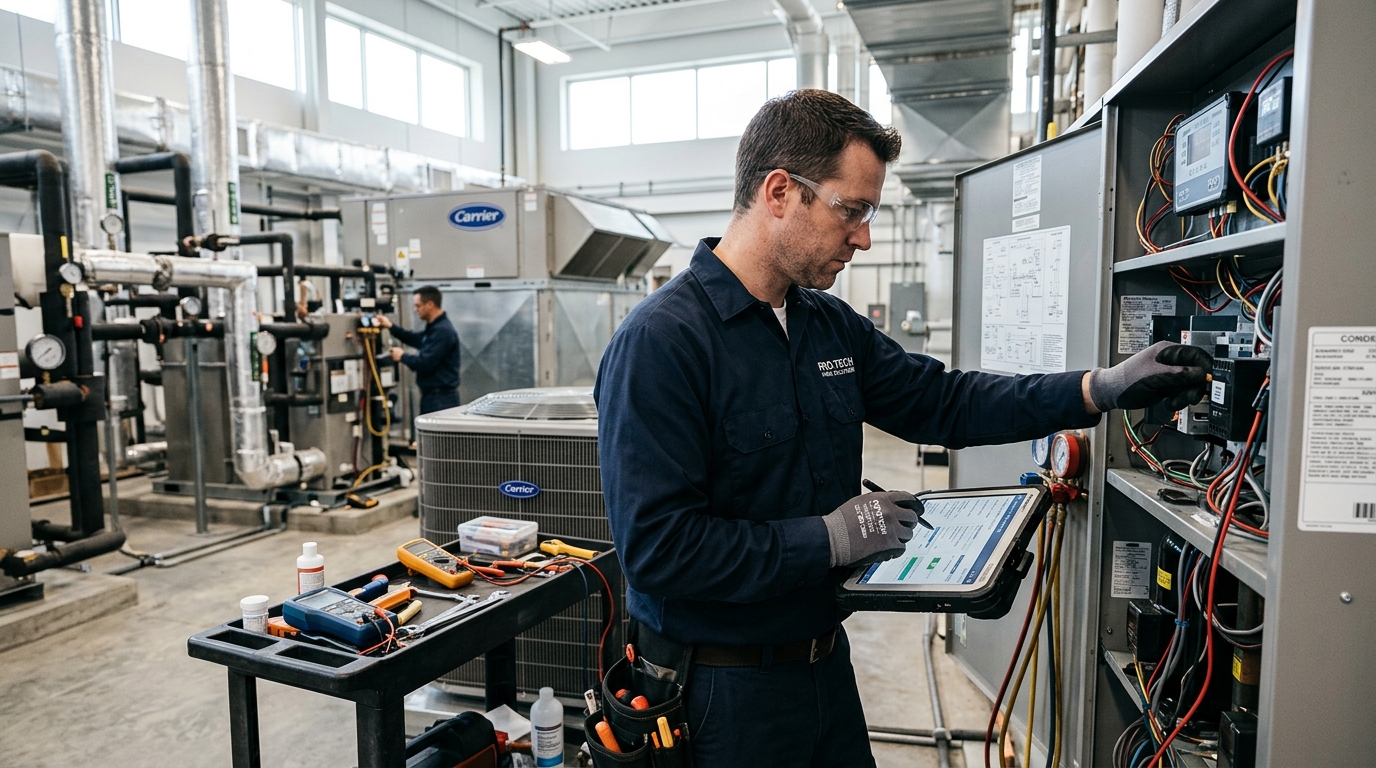
Your service fleet is your most visible marketing asset and your largest physical expense. For a new HVAC business, starting with late-model used vans like the Mercedes Metris or Ford Transit can save $20,000 in initial capital compared to buying new. Each van should be outfitted with a standardized shelving system (e.g., Adrian Steel) to ensure technicians can find parts quickly, reducing 'windshield time' and trips to the supply house. A disorganized van can cost a technician 30-45 minutes of billable time per day, which totals over $15,000 in lost annual revenue.
Inventory management must be strictly controlled to prevent 'shrinkage' and ensure high first-call completion rates. Implement a 'truck stock' list of the top 50 most common parts, such as dual-run capacitors (35/5, 45/5), contactors, and universal ignitors. Use a digital inventory system that tracks parts as they are added to invoices in real-time. This prevents the common problem of a technician arriving at a job only to realize they used their last 24V transformer the previous day.
GPS tracking on all vehicles is no longer optional; it is a vital tool for dispatch efficiency and safety. Monitoring idle times, aggressive driving, and unauthorized stops can reduce fuel and insurance costs by up to 12%. When a customer calls with an emergency, your dispatcher can see exactly which tech is closest and has the right parts on board. This level of operational visibility allows you to squeeze an extra billable hour out of every technician's day without increasing their workload.
Streamlining Dispatch and Customer Management
The heart of your operations is the dispatch board, where scheduling conflicts can either break your reputation or build it. In 2026, customers expect 'Uber-style' transparency, including technician bios and real-time tracking links sent via SMS. Modern platforms like Hulo combine your website, CRM, scheduling, and invoicing in one place for under $50/mo. This eliminates the need for manual data entry between your website's contact form and your technician's mobile app, reducing clerical errors by 90%.
Effective dispatching also requires matching the technician's certification level with the job's complexity. You wouldn't send a junior maintenance tech to troubleshoot a complex VRF communication error or a commercial chiller leak. Your software should flag jobs that require NATE (North American Technician Excellence) certification or specific manufacturer training. This ensures the job is done right the first time, preventing 'callbacks' which are the single biggest drain on an HVAC company's profitability.
Automating the invoicing and payment process is the final step in a streamlined operational workflow. Technicians should be able to capture signatures and process credit card payments through their mobile devices before leaving the driveway. This 'cash-on-delivery' model eliminates the need for an accounts receivable department and significantly improves your cash flow position. Offering financing options through partners like GoodLeap or Synchrony directly within the quote can increase your installation closing rate by 30%.
Pro Tip: Use a 'parts runner' (a lower-wage apprentice) to deliver heavy equipment to job sites, keeping your high-earning lead installers on the tools instead of driving to the supply house.
Key Takeaway: Standardize your truck stock and use integrated CRM software to eliminate 'windshield time' and maximize daily billable hours.
Financial Projections and Startup Capital

Estimating Your Initial Investment
Starting an HVAC business requires a significant upfront investment, typically ranging from $30,000 to $100,000 depending on your scale. The largest expenses include a reliable service van ($35,000+), professional-grade tools like the Fieldpiece SM480V manifold ($600), and a recovery machine ($900). You also need to budget for licensing fees, which vary by state, and initial insurance premiums for general liability and workers' comp. Having a minimum of three months of operating capital in the bank is critical to surviving the initial slow months of brand building.
Marketing is another major 'Day 1' expense that many technicians overlook. You should allocate at least $3,000 to $5,000 for your initial branding, including a professional logo, van wraps, and your digital presence. Having a professional website is non-negotiable in 2026 — tools like Hulo can generate one for your HVAC business in minutes, ensuring you look established from the moment you launch. Without a high-converting website, your expensive Google Ads will simply bounce, wasting your precious startup capital.
Don't forget the 'hidden' costs of office supplies, uniforms, and specialized software subscriptions. While it's tempting to use free spreadsheets, they quickly become unmanageable as you add customers. Investing in a low-cost, all-in-one solution early on prevents the headache of migrating data later. Factor in roughly $2,500 for legal fees to set up your LLC or S-Corp and draft your initial customer contracts and employee handbooks. This upfront investment in professional services protects your personal assets and sets a corporate tone for your business.
Managing Cash Flow and Profitability
Cash flow is the lifeblood of an HVAC company, and 'profit' on paper does not always mean 'cash' in the bank. The biggest challenge is the lag between paying for expensive equipment (like a $5,000 furnace) and receiving the final payment from the customer. To mitigate this, always require a 50% deposit on all installation jobs before ordering equipment. This ensures you aren't acting as a bank for your customers and covers your material costs immediately.
Monitor your 'Gross Profit Margin' on every single job, aiming for at least 45% to 50% on service and 35% on installs. If your margins are slipping, analyze your labor hours versus your estimates; 'labor creep' is the most common reason for unprofitable jobs. Review your Profit & Loss (P&L) statement monthly, not just at tax time, to identify rising costs in fuel or refrigerant early. This proactive approach allows you to adjust your pricing in real-time to maintain your target net profit of 10% to 15%.
A critical part of your financial plan should be an 'Emergency Fund' for the business. HVAC is highly dependent on weather; a mild summer can lead to a 30% drop in revenue compared to a record-breaking heatwave. By setting aside 5% of every invoice into a high-yield savings account, you create a buffer for those slow shoulder seasons. This discipline allows you to keep your best technicians on the payroll during the winter, ensuring you are ready to hit the ground running when the spring rush begins.
| Category | Item | Estimated Cost |
|---|---|---|
| Vehicle | Used High-Roof Van + Wrap | $35,000 - $45,000 |
| Equipment | Manifolds, Vac Pump, Recovery | $4,000 - $6,000 |
| Marketing | Website, LSAs, Branding | $3,000 - $5,000 |
| Legal/Admin | LLC, Licenses, Software | $2,500 - $4,000 |
| Working Capital | 3 Months Expenses | $15,000 - $25,000 |
Estimated HVAC Startup Costs (Single Truck)
Ready to put this into action?
Hulo gives you everything to run your hvac business — website, CRM, scheduling, and invoicing. Join the waitlist for V2.
Join the WaitlistMarketing and Customer Acquisition
Dominating Local Search and LSAs
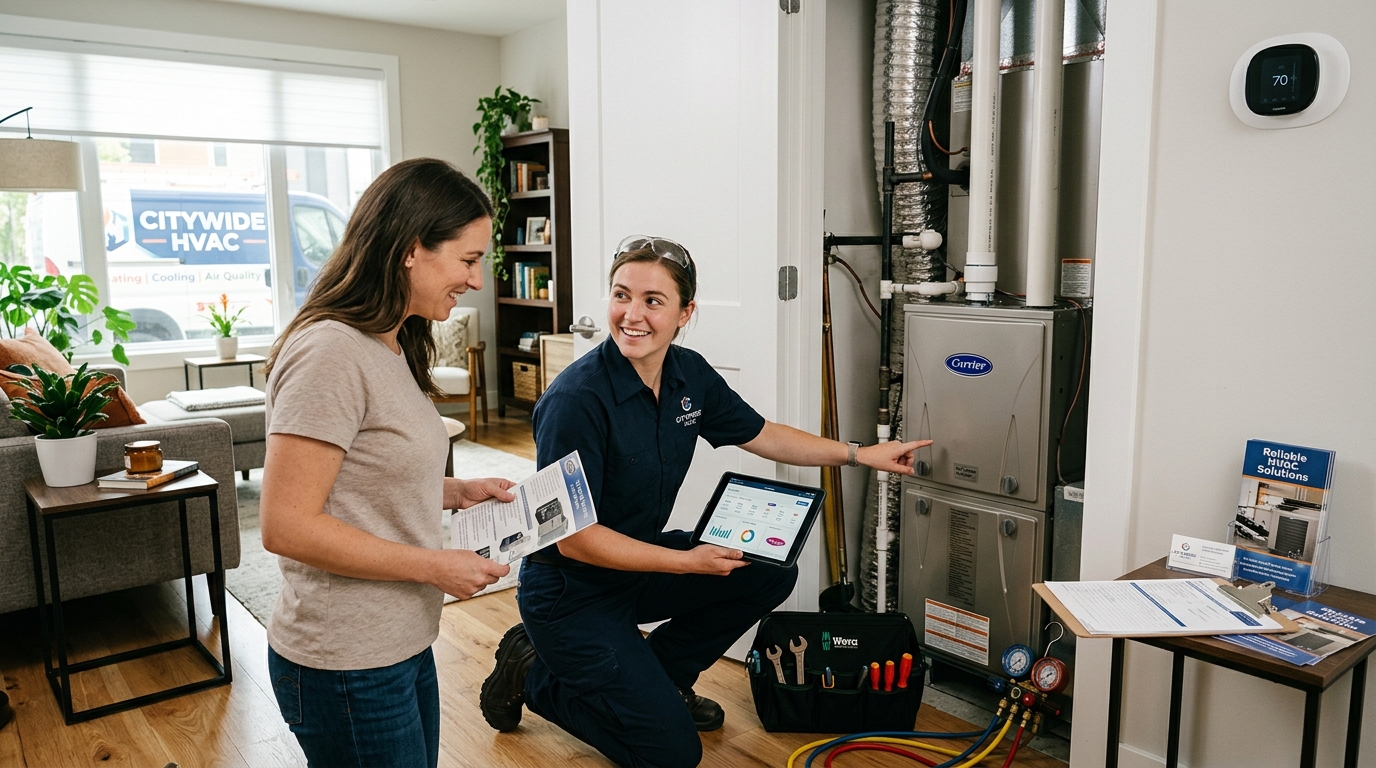
In 2026, the battle for HVAC leads is won or lost on the first page of Google. Google Local Services Ads (LSAs)—the 'Google Guaranteed' checkmark—are the most effective way to generate high-quality phone calls. Unlike standard PPC, you only pay for actual leads, making it a lower-risk option for new businesses. To maintain a high ranking in LSAs, you must answer your phone consistently and maintain a 4.8-star rating or higher. This requires a dedicated system for requesting reviews immediately after every successful service call.
Search Engine Optimization (SEO) is your long-term strategy for 'free' leads. Your website must be optimized for local keywords like 'AC repair in [Your City]' and 'heat pump installation near me.' Creating educational content about energy efficiency and system maintenance establishes you as a local authority. When potential customers find helpful answers on your blog, they are 60% more likely to book a service call with you. High-quality photos of your team and branded vans on your site also build immediate trust.
Social media, particularly Facebook and Nextdoor, is invaluable for community-based marketing. Join local neighborhood groups and offer expert advice without being overly salesy; when a neighbor asks for an HVAC recommendation, your name will naturally come up. Running targeted 'Seasonal Tune-Up' ads on Facebook can help fill your schedule during the slower months of March and October. Always include a clear 'Book Now' button that links directly to your scheduling software to reduce friction in the conversion process.
Building a Referral and Review Engine
Word-of-mouth remains the most powerful marketing tool in the trades, but it needs a system to be consistent. Implement a formal referral program where existing customers receive a $50 credit or a free maintenance visit for every new client they send your way. This turns your best customers into a volunteer sales force. A simple 'Referral Card' left behind after an installation can prompt this behavior, especially if the incentive is valuable to the homeowner.
Reviews are the 'social proof' that converts a lead into a customer. You should aim for a 'Review Velocity' of at least 5-10 new reviews per month to stay ahead of competitors. Train your technicians to ask for reviews at the 'moment of maximum satisfaction'—usually right when the AC kicks back on and the house begins to cool. Providing them with a QR code that links directly to your Google Business Profile makes the process effortless for the customer.
Don't overlook the power of physical marketing in a digital world. A professionally wrapped van acts as a mobile billboard that can generate thousands of impressions daily. Yard signs placed at installation sites (with the homeowner's permission) signal to the entire neighborhood that you are the trusted local pro. These traditional methods, combined with a modern digital presence, create a multi-channel marketing strategy that keeps your phone ringing year-round.
78%
Mobile Search Conversion
Percentage of local HVAC searches on mobile devices that result in a phone call or booking within 24 hours.
Key Takeaway: Invest heavily in Google Local Services Ads (LSAs) early on to generate immediate lead flow while building your long-term SEO presence.
Scaling Your HVAC Business
Hiring and Retaining Top Talent
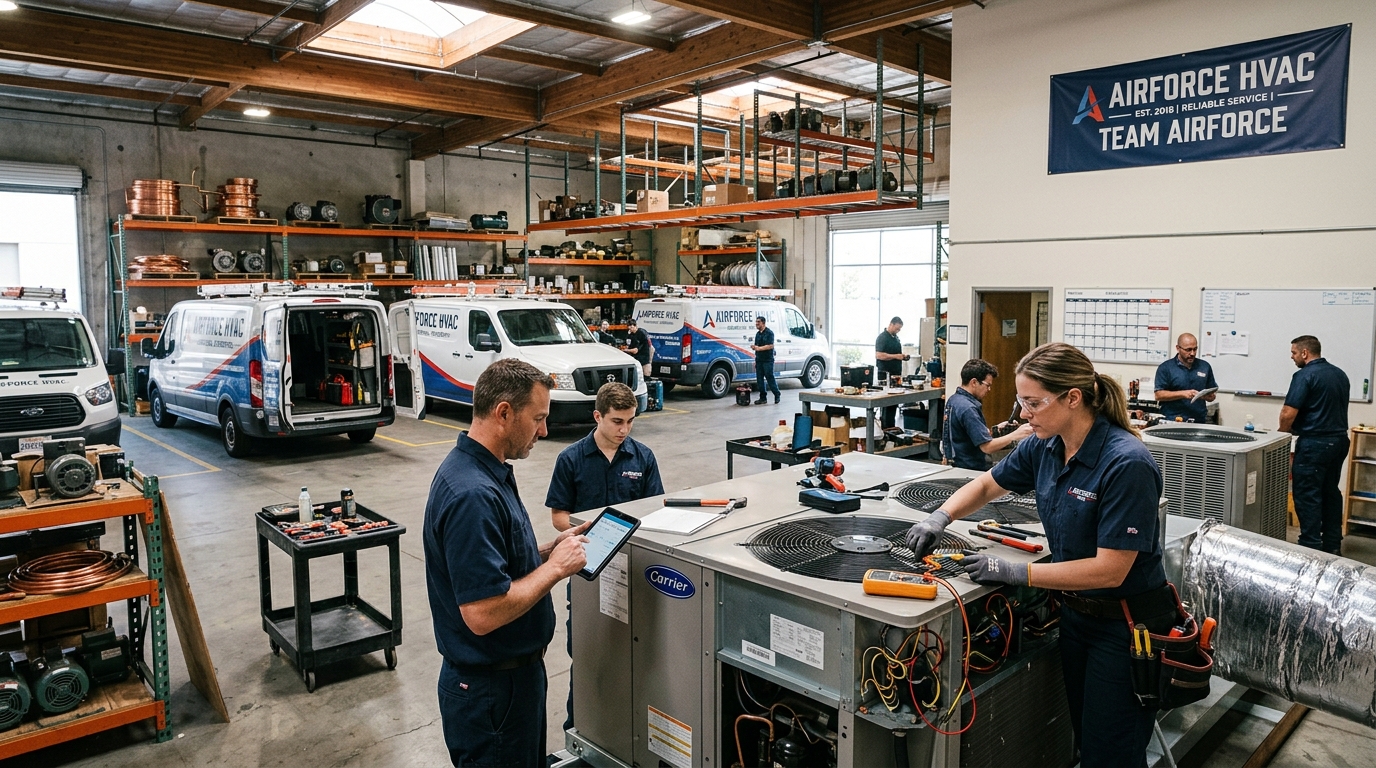
The biggest bottleneck to scaling an HVAC business is the chronic shortage of skilled technicians. To attract the best, you must offer more than just a competitive hourly wage; you need a clear career path and a positive culture. Consider implementing a 'Performance-Based Pay' model where technicians earn bonuses for high efficiency, low callback rates, and contract sales. This aligns their personal financial goals with the company's profitability, creating a win-win scenario for everyone involved.
Investing in ongoing training is the best way to retain your team and reduce turnover. Manufacturers like Carrier and Trane offer specialized certifications that increase your team's value and your company's capability. In 2026, providing training on smart home integration and building automation systems will set you apart from 'old school' competitors. A technician who feels the company is investing in their future is much less likely to leave for a dollar-an-hour raise elsewhere.
As you grow, you will eventually need to transition from a 'technician-owner' to a 'business-owner.' This means hiring your first office manager or dispatcher to handle the phones while you focus on high-level sales and strategy. Using a platform like Hulo during this transition is vital because it allows your new office staff to see the same data you see. With a shared view of the schedule and CRM, your office manager can take over the daily logistics, freeing you to work *on* the business instead of *in* it.
Diversifying Your Service Lines
Once your core residential service is stable, look for adjacent revenue streams to increase your 'share of wallet' with each customer. Indoor Air Quality (IAQ) is a massive growth area, including UV light installations, whole-home humidifiers, and duct cleaning. These services often have higher margins than standard repairs and can be performed by apprentices or junior techs. Offering a 'Healthy Home' package as an add-on to every system replacement can easily add $1,500 to your top line.
Expanding into light commercial work provides a hedge against residential market fluctuations. Commercial maintenance contracts are typically larger and more consistent, providing a solid floor for your monthly revenue. While commercial work requires different insurance and specialized equipment (like cranes for RTU swaps), the long-term stability is worth the investment. Building relationships with local property managers and real estate agents can provide a steady stream of commercial leads with zero acquisition cost.
Finally, consider the emerging market for EV charger installations and smart electrical panels. As homes become more integrated, the line between HVAC and electrical work is blurring. If you have the licensing, offering a 'Total Home Energy' solution makes you a one-stop shop for modern homeowners. This level of diversification not only increases your revenue but also makes your business much more attractive to potential buyers if you ever decide to exit.
Pro Tip: Implement a 'Morning Huddle' every day to review the previous day's wins, today's schedule, and any safety concerns. It builds team unity and catches small issues before they become big problems.
Wrapping Up
Starting and scaling an HVAC business in 2026 is a challenging but incredibly rewarding endeavor. By focusing on recurring revenue through maintenance plans, staying ahead of refrigerant regulations, and embracing modern technology, you can build a company that stands the test of time. Remember that your reputation is built on every service call, so prioritize quality and communication above all else. To help you manage the chaos of a growing trade business, tools like Hulo provide an all-in-one platform for your website, CRM, and invoicing, allowing you to focus on what you do best: keeping your customers comfortable.
Frequently Asked Questions
What are the average startup costs for an HVAC business in 2026?
A lean startup with one used van and essential tools typically costs between $30,000 and $50,000. If you are aiming for a more aggressive launch with a new vehicle, full branding, and office space, expect to invest $80,000 to $120,000.
Do I need separate software for my HVAC website, scheduling, and invoicing?
No—modern all-in-one platforms like Hulo bundle your professional website, CRM, scheduling, and invoicing into a single $49.99/mo subscription. This is much more cost-effective and efficient than paying for 3-4 separate tools that don't talk to each other.
How do I price my HVAC maintenance contracts?
Most successful HVAC companies price their residential agreements between $15 and $30 per month. Ensure your pricing covers the cost of two tech visits per year plus a small profit margin, while using the plan primarily as a lead generator for larger repairs and replacements.
What is the best way to get HVAC leads quickly?
Google Local Services Ads (LSAs) are the fastest way to get high-intent phone calls from customers ready to book. Combining LSAs with an easy-to-use booking system on your website, like the one provided by Hulo, ensures you don't miss leads when you are busy on a job site.
What licensing do I need to start an HVAC business?
Requirements vary by state, but you will almost certainly need a Master HVACR license and an EPA Section 608 certification to handle refrigerants. Additionally, you'll need a general business license, liability insurance, and potentially a surety bond depending on your local jurisdiction.
How long does it take for a new HVAC business to become profitable?
Most HVAC startups reach break-even within 6 to 12 months, provided they have a solid marketing plan and manage their overhead strictly. Companies that focus on building a recurring maintenance base tend to reach stability faster than those relying solely on emergency 'break-fix' calls.
How do I handle the transition to A2L refrigerants?
You must update your tool kits with A2L-compatible vacuum pumps, recovery machines, and leak detectors. Additionally, ensure your technicians complete the necessary safety training for handling mildly flammable refrigerants, as this will be the industry standard for all new equipment in 2026.
Ready to Launch Your HVAC Empire?
Get your professional website, scheduling, and invoicing all in one place with Hulo for just $49.99/mo.
Join the WaitlistMore from the Blog
7 Smart Ways to Evaluate Housecall Pro vs Jobber for HVAC Contractors (2026)
Housecall Pro is generally the superior choice for HVAC businesses focusing on advanced sales automation and detailed pe...
11 Expert Facts on How Much Do HVAC Technicians Make for Contractors (2026)
HVAC technicians in 2026 earn an average annual salary of $58,420 to $74,150, with hourly rates typically ranging from $...
11 Smart Ways How to Bid HVAC Jobs for Contractors (2026 Guide)
To bid HVAC jobs accurately, you must first calculate your total overhead, burdened labor rate, and desired profit margi...