How to Price Car Detailing Services: Complete Pricing Guide (2026)
16 min read·Updated March 20, 2026The car detailing industry is projected to exceed $15.7 billion by 2026, creating a massive opportunity for professionals who understand the science of pricing. Many detailers fail within their first two years because they price based on 'gut feelings' or by simply undercutting the local competition by $10. To build a sustainable business, you must transition from a 'worker' mindset to an 'owner' mindset, where every minute of labor and every milliliter of ceramic coating is accounted for. This guide provides the exact frameworks you need to price your services for high-end profitability and long-term growth.
Table of Contents
Foundational Costs of Running a Professional Detailing Business
Calculating Your Hourly Labor Burden
Before you can set a price for a basic wash, you must determine your hourly labor burden. This is the total cost to have a technician (including yourself) working for one hour, factoring in taxes, insurance, and benefits. In 2026, a solo detailer should aim for a burdened labor rate of $75 to $110 per hour to cover overhead and generate a 25% net profit margin.
Consider your General Liability and Garage Keepers insurance, which typically costs between $1,200 and $2,800 annually depending on your coverage limits. When you break this down by a 40-hour work week, insurance alone adds roughly $1.35 per hour to your operating costs. Failing to account for these 'invisible' costs is the fastest way to work long hours while your bank account remains stagnant.
You must also account for non-billable hours, such as driving to mobile sites, cleaning pads, and marketing. If you spend 10 hours a week on administration and 30 hours on actual detailing, your billable rate must be high enough to cover all 40 hours of your time. This is why top-tier professionals often set their shop rate at $125/hour even if they only expect to pocket $60/hour in personal wages.
Accounting for Chemicals and Consumables
Consumables are the 'hidden' profit killers in car detailing, especially with the rising cost of high-quality polymers and solvents. A standard interior and exterior detail will consume approximately $8 to $15 in chemicals, including iron decontaminators, pH-neutral soaps, and interior cleaners like Koch-Chemie Pol Star. While this seems small, it adds up to thousands of dollars over a year of high-volume work.
Wear and tear on equipment like Rupes LHR15 polishers and high-GSM microfiber towels must be factored into your per-job cost. A high-quality microfiber towel may only last 20-30 washes before it becomes a 'wheel towel' to prevent scratching delicate clear coats. You should allocate a 'tool replacement fund' of roughly 3-5% of every invoice to ensure you can replace a $500 polisher or a $1,200 extractor without a financial crisis.
Professional ceramic coating applications introduce even higher consumable costs, with 30ml to 50ml bottles of Gtechniq Crystal Serum Ultra or Ceramic Pro costing between $100 and $250 per unit. When pricing these services, you must not only cover the cost of the liquid but also the specialized suede applicators and leveling towels used during the process. Accurate tracking of these supplies is essential for maintaining a healthy bottom line.
$75–$125
Target Hourly Shop Rate
Necessary to cover 2026 overhead, insurance, and professional-grade consumables.
Key Takeaway: Always price your services based on your total hourly burden plus a 20-30% profit margin, rather than just matching the guy down the street.
Pricing Models for Car Detailing Services
The Fixed-Rate Package Model
The fixed-rate model is the industry standard for 'maintenance' and 'express' services because it offers price certainty for the customer. For example, a 'Level 1 Interior Detail' might be priced at a flat $180 for sedans and $220 for SUVs. This model works best when you have standardized your processes and can accurately predict that the job will take 2.5 hours or less.
The risk with fixed pricing occurs when a vehicle is 'trashed' beyond the standard scope, such as heavy pet hair or mold remediation. To protect your margins, your pricing guide must include 'starting at' language and clearly defined surcharges for excessive soilage. A common industry standard is a $50/hour surcharge for any cleaning required beyond the initial time estimate included in the package.
Fixed pricing is also ideal for mobile detailers who need to pre-authorize credit card holds through their booking software. By having set prices, you can automate the deposit process, which significantly reduces the likelihood of no-shows. This predictability allows you to fill your calendar weeks in advance with consistent revenue streams.
The Hourly Rate for Paint Correction
Paint correction is an art form that varies wildly depending on the hardness of the clear coat and the depth of the defects. Pricing paint correction at a flat rate is dangerous; a 'two-stage' correction on a black Porsche might take 12 hours, while a silver Honda might only take 6. Therefore, most elite shops charge a base rate of $100-$150 per hour for machine polishing.
When quoting paint correction, perform a 'test spot' on one panel to determine which combination of pads (like Lake Country HDO) and compounds (like Sonax Perfect Finish) will achieve the desired results. This test spot allows you to give the client a high-accuracy estimate of how many hours the full vehicle will require. Transparent communication about the 'percentage of defect removal' helps justify the hourly cost to the client.
Hourly pricing ensures that you are compensated for the meticulous work required to remove swirl marks and RIDS (Random Isolated Deep Scratches). It also prevents 'scope creep,' where a client expects a show-car finish for the price of a basic enhancement polish. If the client wants more perfection, they simply pay for more of your time.
| Service Type | Pricing Model | Typical Range | Best For |
|---|---|---|---|
| Maintenance Wash | Fixed Rate | $60 - $120 | Recurring Clients |
| Full Interior Detail | Tiered Fixed | $150 - $350 | New Clients/Daily Drivers |
| Paint Correction | Hourly | $100 - $150/hr | Restorations/Luxury Cars |
| Ceramic Coating | Flat + Hourly | $800 - $2,500 | Long-term Protection |
Comparison of Pricing Models
Standardizing Interior and Exterior Packages
Tiered Interior Detailing Packages
Creating a 'Good, Better, Best' tier system for interiors helps guide customers toward the service that fits their budget while maximizing your upsell potential. A 'Tier 1' might include a thorough vacuum, wipe down, and glass cleaning for $150. A 'Tier 3' would include hot water extraction of carpets, steam cleaning of all surfaces, and leather conditioning for $350+.
The key to profitable interior detailing is efficiency and the right chemicals, such as P&S Xpress Interior Cleaner. By standardizing the steps—vacuuming from top to bottom, then cleaning from the driver's side clock-wise—you can reduce your labor time by 15-20%. This efficiency directly increases your effective hourly rate without changing the price for the customer.
Don't forget to price for vehicle size. A 2026 Suburban has significantly more surface area and seating than a Tesla Model 3. A standard practice is to add a 25% surcharge for mid-size SUVs and a 40-50% surcharge for full-size vans and three-row SUVs to account for the extra labor and chemical usage.
Exterior Enhancement vs. Full Restoration
Exterior pricing should be split between 'wash and wax' services and 'decontamination and protection' services. A basic exterior wash with a spray sealant like Gtechniq C2V3 can be priced at $80-$120. However, a full decontamination including an iron bath and clay bar treatment should start at $200, as it prepares the surface for long-term bonding of waxes or sealants.
Engine bay detailing and headlight restoration are high-margin add-ons that should be priced separately. A 30-minute engine bay cleaning can easily be priced at $50-$75, providing an excellent return on time. Headlight restoration using a multi-stage sanding and UV-clear coat process should be priced at $100-$150 per pair, as it adds significant visual value to an older vehicle.
For shops in 2026, offering a 'Seasonal Protection' package is a great way to drive volume during the spring and fall. These packages often combine a thorough exterior decontamination with a high-quality silica sealant. Pricing these at a slight discount compared to individual services encourages customers to book comprehensive maintenance twice a year.
Key Takeaway: Use tiered packages to simplify the buying decision for customers while protecting your time with size-based surcharges.
Pricing High-Ticket Ceramic Coating Services
The Three Pillars of Coating Pricing
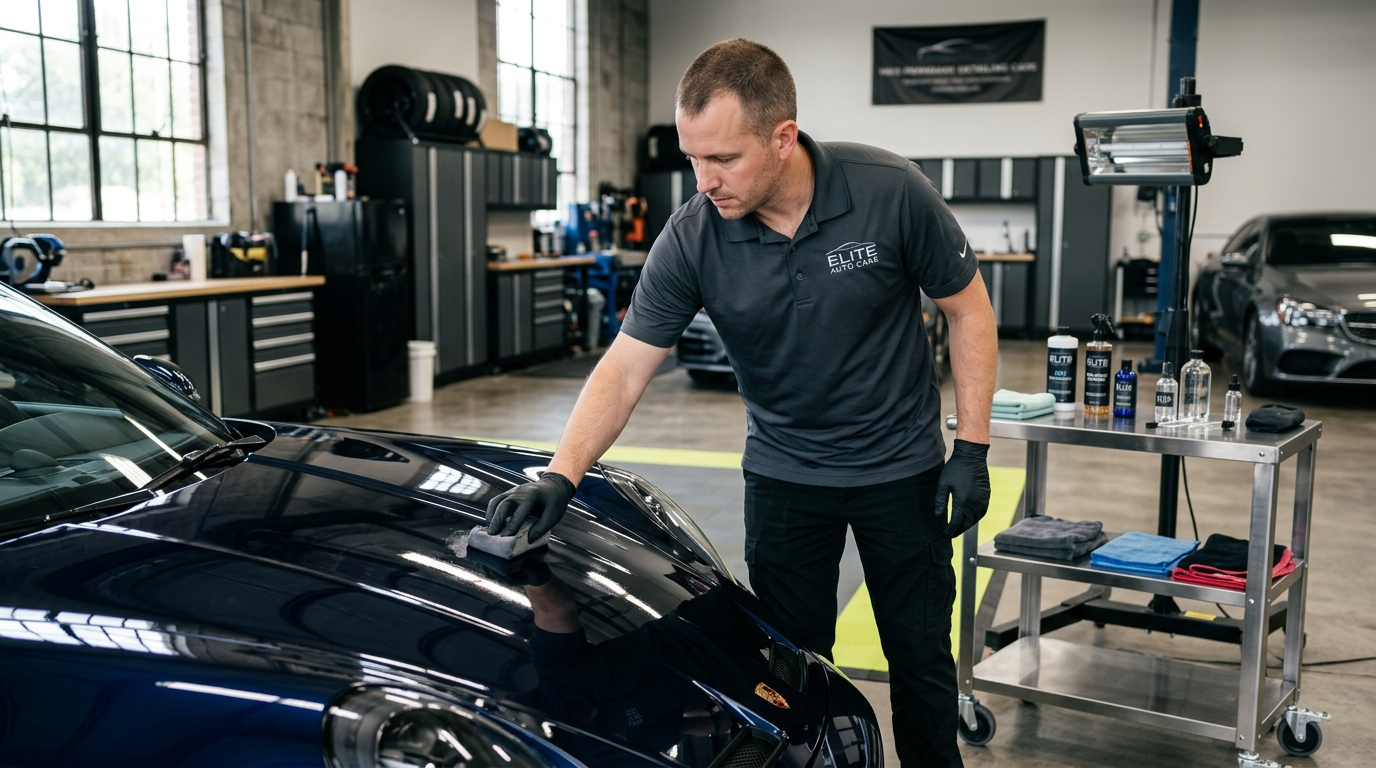
Ceramic coating pricing is built on three pillars: the cost of the product, the labor of paint correction, and the value of the warranty. Most entry-level 1-year coatings start at $600-$800, while professional-grade 5-year or lifetime coatings range from $1,200 to $2,500. The majority of this price is actually the labor required to ensure the paint is flawless before the coating is applied.
You must decide if your coating price includes the paint correction or if it is an add-on. The most transparent way to price is to offer a 'Coating Prep' package (wash, clay, and one-stage polish) for a flat fee, then add the cost of the specific coating on top. This prevents you from losing money if a 'new' car arrives with heavy dealer-installed swirl marks that require 5 extra hours of polishing.
Warranty management is another factor in your pricing. Professional coatings often require annual inspections to maintain the warranty. You can either include the first year's inspection in the initial price or charge a flat $150 fee for an annual 'Ceramic Boost' service. This creates a recurring revenue stream and keeps you in contact with your most valuable clients.
Value-Based Pricing for Paint Protection Film (PPF)
If you offer Paint Protection Film (PPF), your pricing should shift from labor-hours to value-based pricing. PPF is a high-stakes installation where a single mistake can waste hundreds of dollars in film (like XPEL or 3M). Because of the risk and the specialized skill required, 'Full Front' PPF packages typically range from $1,800 to $2,500, while 'Full Body' wraps can exceed $5,000.
When pricing PPF, always include a 10-15% 'waste margin' in your material costs to account for the occasional re-install of a complex bumper or mirror cap. The perceived value of PPF is incredibly high for owners of luxury and performance vehicles who want to prevent rock chips. Your pricing should reflect the peace of mind you are providing, not just the hours spent squeegeeing the film.
Combining PPF with a ceramic coating is the ultimate 'Gold Standard' service. You can price these 'Track Packs' or 'Ultimate Protection' packages at a premium, often between $3,000 and $4,500. These high-ticket items are the key to moving your business from a $50k/year side-hustle to a $250k+/year professional studio.
Pro Tip: When selling ceramic coatings, focus your pitch on 'ease of maintenance' and 'resale value' rather than technical jargon about 9H hardness.
Mobile Detailing Logistics and Travel Fees
The Cost of the 'Shop on Wheels'
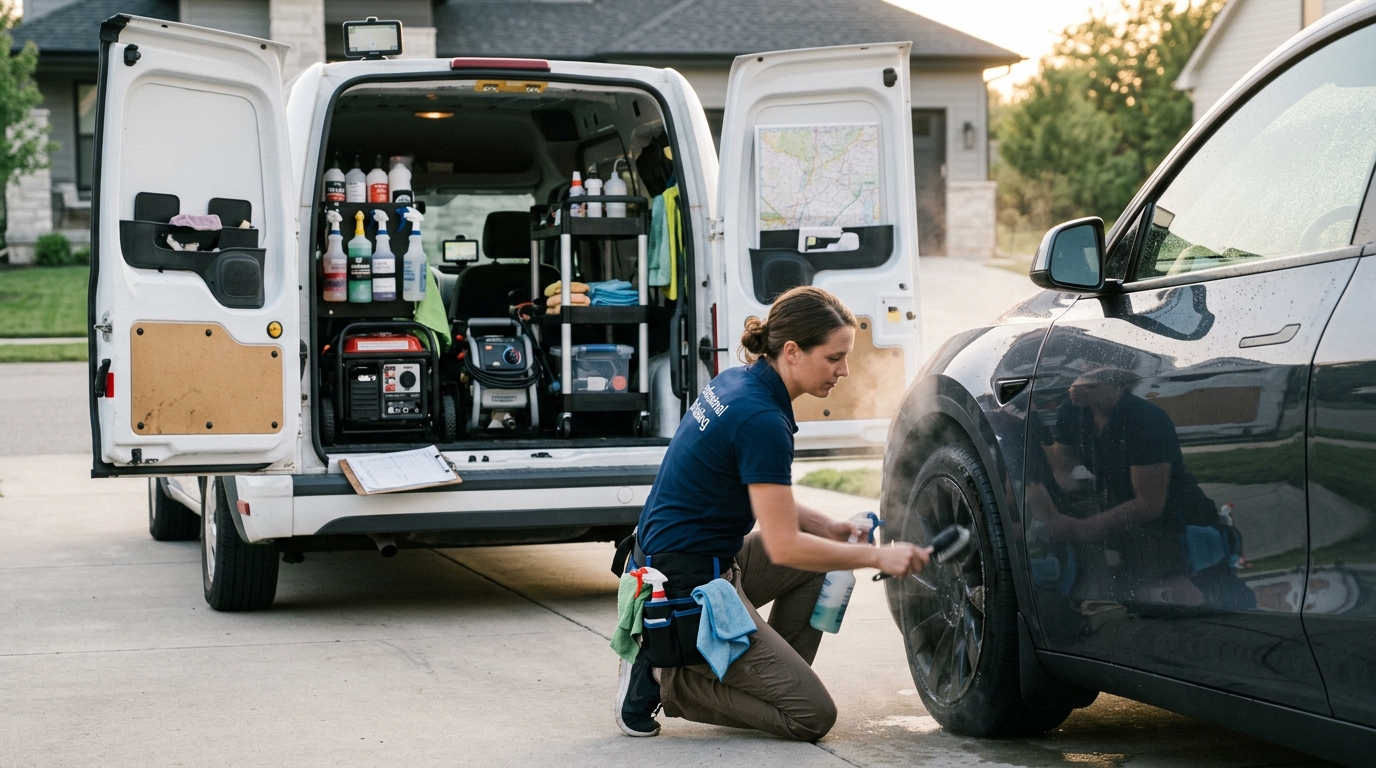
Mobile detailing offers convenience to the client but introduces significant overhead for the business owner. You must account for van payments, specialized insurance, fuel, and the maintenance of generators and pressure washers. In 2026, the average cost to operate a fully equipped mobile detailing rig is between $0.65 and $0.90 per mile.
Instead of a flat mobile fee, consider a 'Service Area' model. Clients within a 15-mile radius of your base pay the standard package price, while those outside that circle pay a travel surcharge of $1.50 to $2.00 per additional mile. This ensures that a job 45 minutes away remains as profitable as one 5 minutes away.
Route density is the secret to mobile profitability. Using a CRM to group appointments in the same zip code can save you $50+ a day in fuel and 2 hours in drive time. Platforms like Hulo combine your website, CRM, scheduling, and invoicing in one place for under $50/mo, making it easy to see where your jobs are located and optimize your travel schedule.
Minimum Call-Out Fees
To protect your time, you should implement a 'Minimum Call-Out Fee' for mobile services. If it takes 30 minutes to pack the van, 30 minutes to drive, and 30 minutes to set up/break down, you have spent 1.5 hours before even starting the work. For most mobile detailers, a minimum booking of $150 is necessary to justify the logistics.
If a customer only wants a 'Quick Wash' for $60, you have two options: decline the job or charge a 'Mobile Convenience Fee' of $40-$60. Most high-end clients are willing to pay for the convenience of having their car detailed at their office or home while they work. Never feel guilty about charging for the value of the time you are saving the customer.
Weather-related cancellations are a unique challenge for mobile operators. Your pricing and policy guide should clearly state your policy for rain or extreme heat. Many detailers offer a 'Rain Guarantee' for an extra $10, where they will come back and do a quick exterior wipe-down if it rains within 48 hours of the service, turning a potential negative into a small profit center.
$150
Recommended Mobile Minimum
Ensures that travel time and equipment setup costs are covered for every site visit.
Ready to put this into action?
Hulo gives you everything to run your car detailing business — website, CRM, scheduling, and invoicing. Join the waitlist for V2.
Join the WaitlistWinning and Pricing Fleet Detailing Contracts
B2B Pricing Strategies
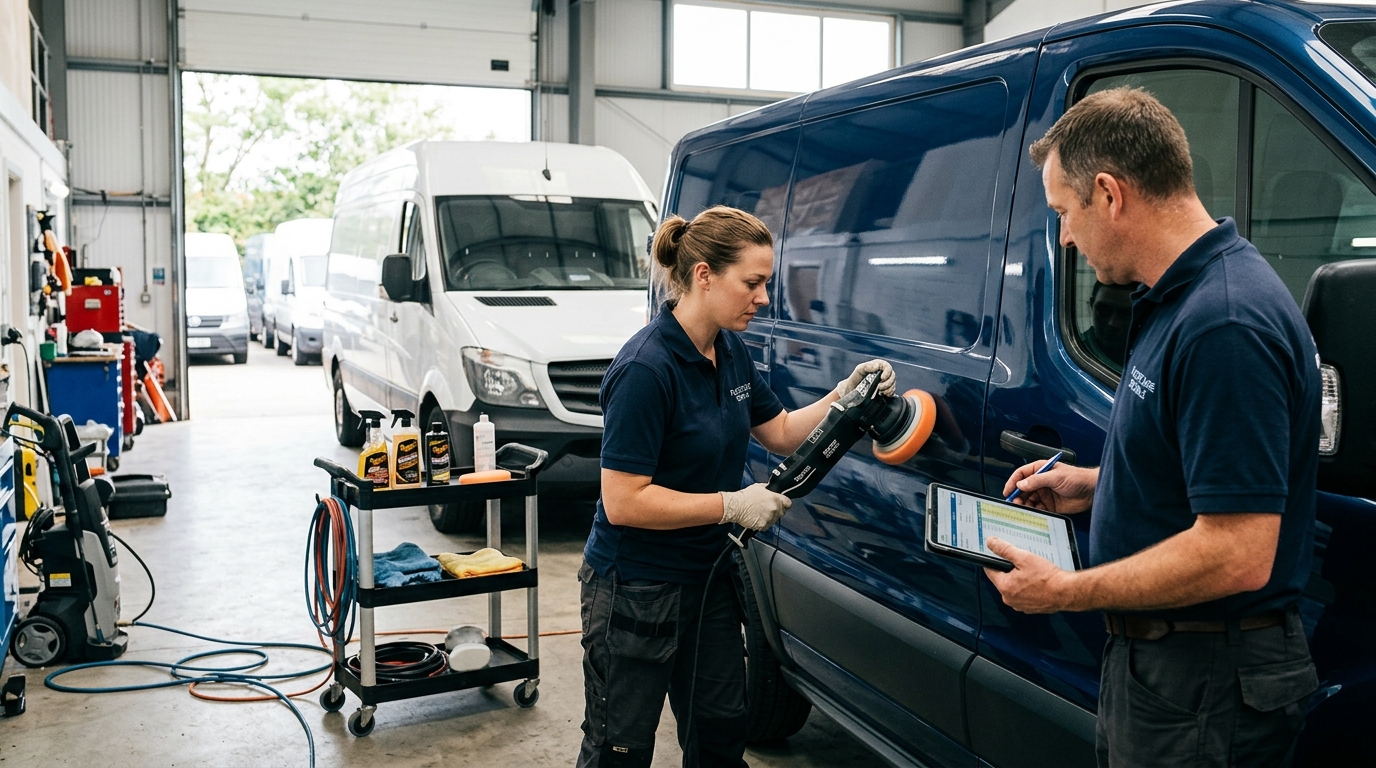
Fleet detailing for local businesses, dealerships, or corporate campuses requires a different pricing mindset than retail work. These are high-volume, recurring contracts where you can afford a lower per-vehicle margin because the 'Customer Acquisition Cost' is spread across 10, 20, or 50 vehicles. Typically, fleet pricing is 15-25% lower than retail rates.
When bidding on a fleet contract, price based on 'Production Detailing' standards. You aren't doing a 6-hour deep clean; you are doing a 45-minute standardized maintenance wash and interior vacuum. If your retail maintenance wash is $80, a fleet rate for 10+ vehicles might be $60 per unit, provided they are all at the same location on the same day.
The stability of fleet contracts is their biggest advantage. A contract for 20 vehicles once a month provides a guaranteed $1,200/month baseline. This steady cash flow allows you to invest in better equipment or hire an assistant, which is why many successful detailers aim for a 30/70 split between fleet and retail revenue.
Structuring Service Level Agreements (SLAs)
For fleet work, a clear Service Level Agreement (SLA) is vital to prevent 'scope creep.' The SLA should define exactly what is included (e.g., 'exterior wash, tire shine, front cabin vacuum') and what is not (e.g., 'stain removal, engine cleaning'). This prevents the fleet manager from expecting a full detail on a work truck for the price of a basic wash.
Invoicing for fleet work should be automated to ensure you get paid on time. Many businesses operate on 'Net 30' terms, meaning you won't see the money for a month after the work is completed. You must factor this delay into your cash flow planning and potentially charge a 5% premium for the convenience of deferred payment.
Using professional software to track these contracts is non-negotiable. Having a professional website and CRM is essential for appearing legitimate to corporate clients. Tools like Hulo can generate a professional web presence for your car detailing business in minutes, allowing you to showcase your fleet services and collect lead information professionally.
Key Takeaway: Fleet pricing should focus on volume and route density, offering a 15-25% discount in exchange for guaranteed recurring revenue.
Business Operations and Software Costs
The Cost of Professionalism
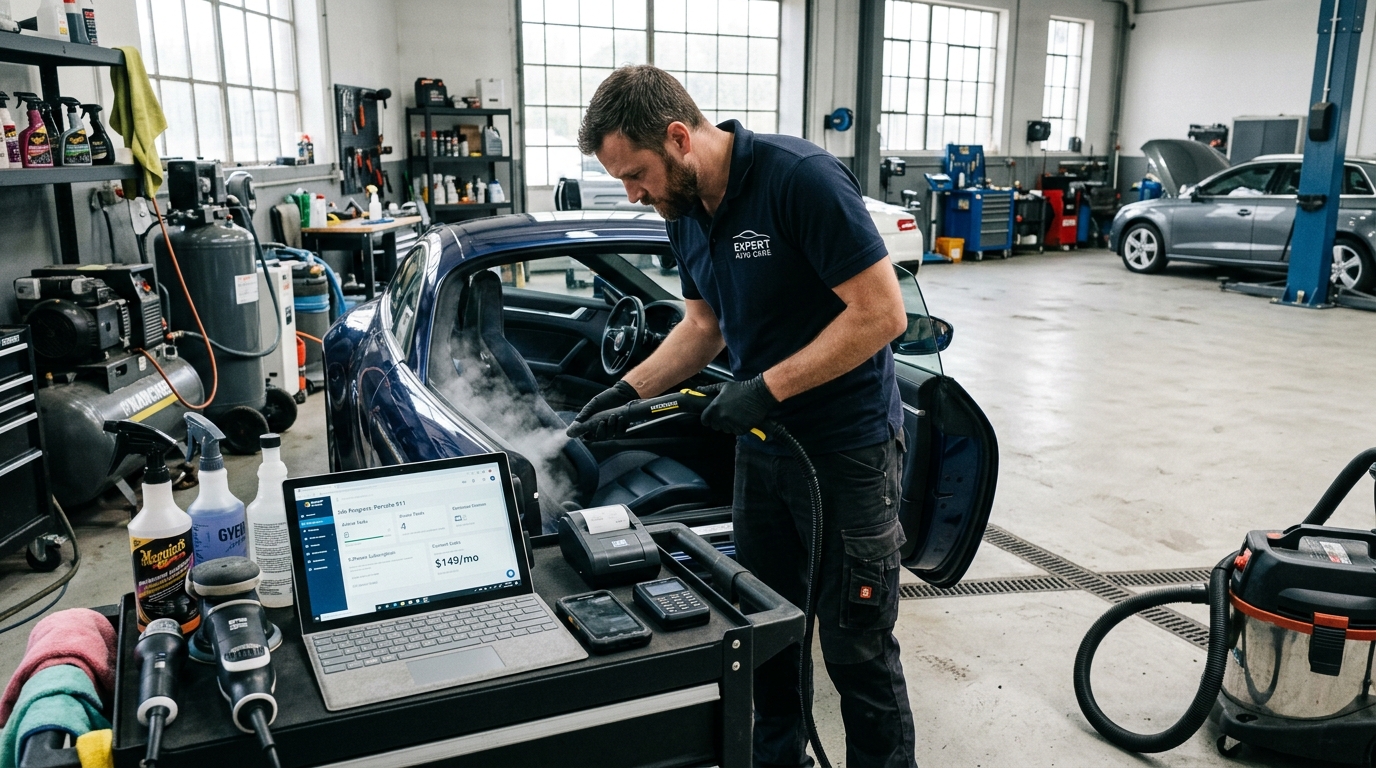
In 2026, customers expect a seamless digital experience, from online booking to digital invoices. If you are still using paper receipts and 'DM me for prices,' you are losing the premium segment of the market. Professionalism has a cost, but it also allows you to charge 20-30% more than the 'bucket and sponge' guy.
Your tech stack should include a website, a CRM to track customer history, a scheduling calendar, and an invoicing system. Individually, these tools can cost $150+/month (e.g., Wix for $30, Calendly for $15, QuickBooks for $40, and a CRM for $70). For a new business, this overhead can be a significant burden on your monthly margins.
Instead of juggling separate tools, all-in-one platforms like Hulo let you run everything from a single dashboard. For $49.99/mo, Hulo provides a professional website, CRM, scheduling, and invoicing tailored for trade professionals. This consolidation not only saves you over $100 a month but also ensures that your customer data isn't scattered across four different apps.
Marketing and Customer Acquisition Costs
To keep your schedule full at your target prices, you need a marketing budget. In the detailing world, the 'Customer Acquisition Cost' (CAC) typically ranges from $20 to $50 per new client through Google Ads or Facebook Meta Ads. If your average ticket is $250, spending $30 to get that client is a highly profitable 8x return on ad spend.
Organic marketing through 'Before and After' galleries on Instagram and TikTok is 'free' but requires significant time. You should value your time spent on social media at your shop rate. If you spend 5 hours a week editing videos, that is 'costing' the business $500 in potential labor—make sure that content is actually converting into high-dollar ceramic coating leads.
Email marketing to your existing database is the most cost-effective way to fill slow weeks. Sending a 'Spring Refresh' special to your past 200 clients can often generate 5-10 bookings with zero ad spend. A robust CRM makes this as simple as a few clicks, ensuring you maximize the 'Lifetime Value' of every customer you've ever serviced.
| Feature | Separate Tools Cost | Hulo All-in-One |
|---|---|---|
| Professional Website | $25 - $50/mo | Included |
| CRM / Client Tracking | $50 - $100/mo | Included |
| Online Scheduling | $15 - $30/mo | Included |
| Invoicing & Payments | $30 - $50/mo | Included |
| TOTAL MONTHLY COST | $120 - $230/mo | $49.99/mo |
Monthly Software Cost Comparison
Handling No-Shows and Cancellation Policies
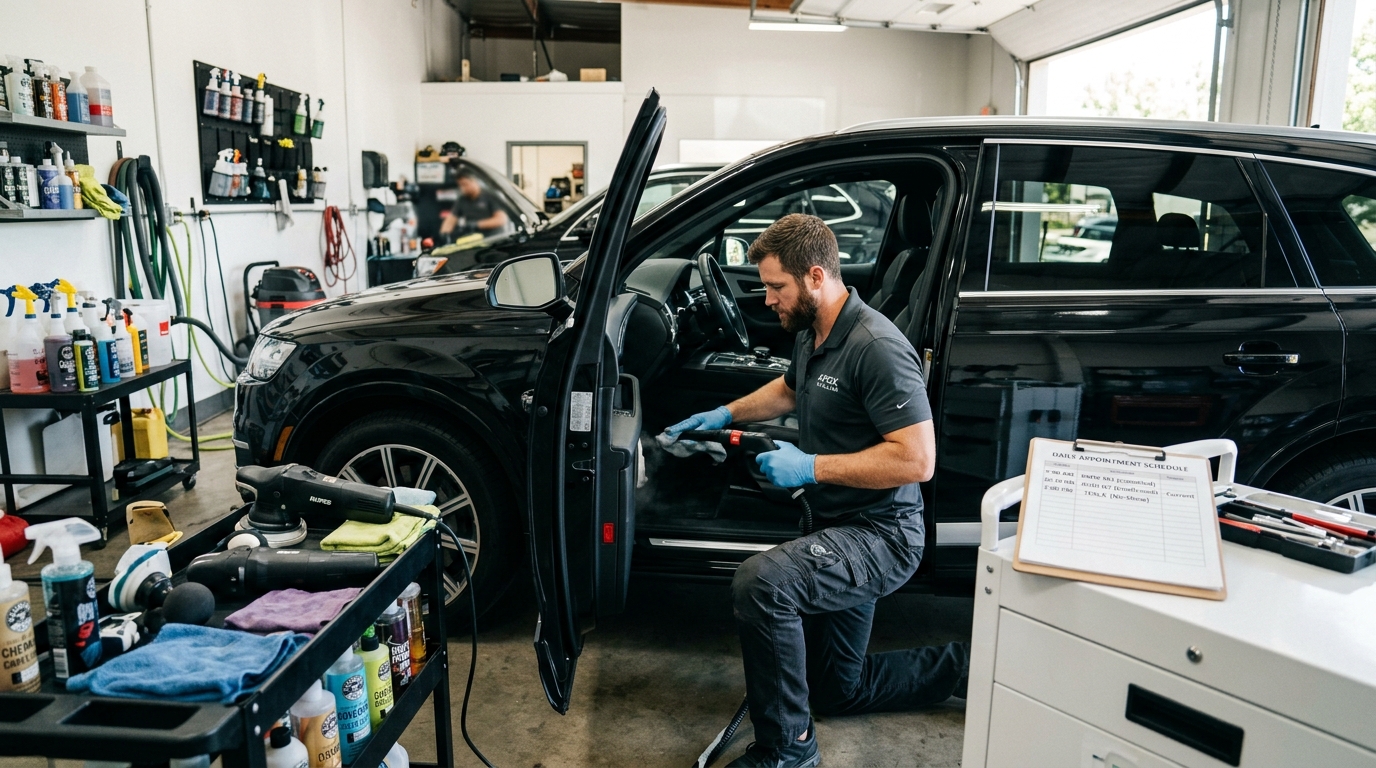
The Financial Impact of No-Shows
A no-show for a $1,500 ceramic coating job isn't just a missed opportunity; it's a financial disaster that leaves your shop empty and your labor wasted. In the detailing industry, a 10-15% cancellation rate is common if you don't have a formal policy. At a $100/hour shop rate, one no-show a week can cost you over $20,000 in annual revenue.
To combat this, you must implement a non-refundable deposit policy. For standard details, a $50 deposit is sufficient, while high-ticket paint correction or coatings should require a 20-25% deposit. This 'skin in the game' ensures the customer is committed and covers your basic overhead if they fail to show up.
Your policy should be clearly stated on your website and in your booking confirmation emails. A '48-hour cancellation' window is the industry standard. If a client cancels with less than 48 hours' notice, they forfeit their deposit. This isn't being 'mean'—it's protecting your livelihood and ensuring your time is respected as a professional.
Automating Reminders to Reduce Churn
Most no-shows aren't malicious; they are simply the result of busy people forgetting their appointments. Automating SMS and email reminders 24 hours and 2 hours before the service can reduce your no-show rate by up to 80%. This simple automated step can save you thousands of dollars in lost time every single year.
When a cancellation does happen, having a 'Waitlist' of clients who want an earlier appointment can save the day. You can send a quick blast to your waitlist saying, 'Unexpected opening tomorrow at 9 AM for a Full Detail—10% off for the first person to claim it!' This keeps your bays full and your revenue consistent.
Handling cancellations professionally is also a branding opportunity. If a client has a genuine emergency, offering to apply their deposit to a rescheduled date within 30 days builds immense goodwill. This flexibility, backed by a firm general policy, creates a premium customer experience that leads to five-star reviews and referrals.
Pro Tip: Use a 'Credit Card on File' system for recurring fleet or maintenance clients to automate payments and eliminate the 'check is in the mail' excuse.
Wrapping Up
Pricing your car detailing services correctly is the difference between a struggling hobby and a thriving professional career. By understanding your labor burden, standardizing your packages, and positioning yourself as a high-value expert rather than a low-cost commodity, you can build a business that scales. Remember that your time is your most valuable asset—don't waste it on manual invoicing or chasing no-shows. Tools like Hulo provide the professional foundation you need to manage your scheduling, website, and clients for just $49.99/mo, allowing you to focus on what you do best: transforming vehicles and delighting customers.
Frequently Asked Questions
What are the average startup costs for a car detailing business in 2026?
A professional mobile setup typically costs between $5,000 and $15,000, including a reliable van, pressure washer, generator, and initial chemical stock. Shop-based setups can range from $20,000 to $50,000 depending on lease deposits and specialized lighting/flooring. All-in-one platforms like Hulo help keep initial overhead low by bundling your website and CRM for just $49.99/mo.
How do I determine if I should charge by the hour or by the job?
Charge by the job for standardized services like maintenance washes and interior cleanings where you know exactly how long the work will take. Use an hourly rate ($100-$150/hr) for unpredictable work like multi-stage paint correction or smoke odor removal to ensure you are compensated for every hour of labor. Managing these different pricing types is easy with an integrated system like Hulo.
Do I need special insurance to detail high-end luxury cars?
Yes, you absolutely need 'Garage Keepers' insurance in addition to General Liability. This covers damage to the customer's vehicle while it is in your care, custody, or control—such as accidentally burning through clear coat or a collision during a move. Expect to pay $150-$250 per month for a policy that covers up to $100,000 in vehicle value.
How long does it take for a new detailing business to become profitable?
Most detailers can reach 'break-even' within 3 to 6 months if they focus on aggressive local marketing and high-margin ceramic coatings. By the end of year one, a solo operator should be netting $50,000 to $80,000 in profit if they manage their overhead and pricing correctly. Efficiency tools and professional websites are key to accelerating this timeline.
What is the most common pricing mistake new detailers make?
The biggest mistake is 'Price Matching' the lowest competitor in town without knowing their own costs. This leads to a 'race to the bottom' where you are working for less than minimum wage after expenses. Always price based on your specific labor burden and the premium value you provide, rather than what the 'cheap guy' on Craigslist is charging.
Ready to Professionalize Your Detailing Business?
Stop juggling five different apps. Get your professional website, CRM, scheduling, and invoicing all in one place with Hulo for just $49.99/mo.
Join the WaitlistMore from the Blog
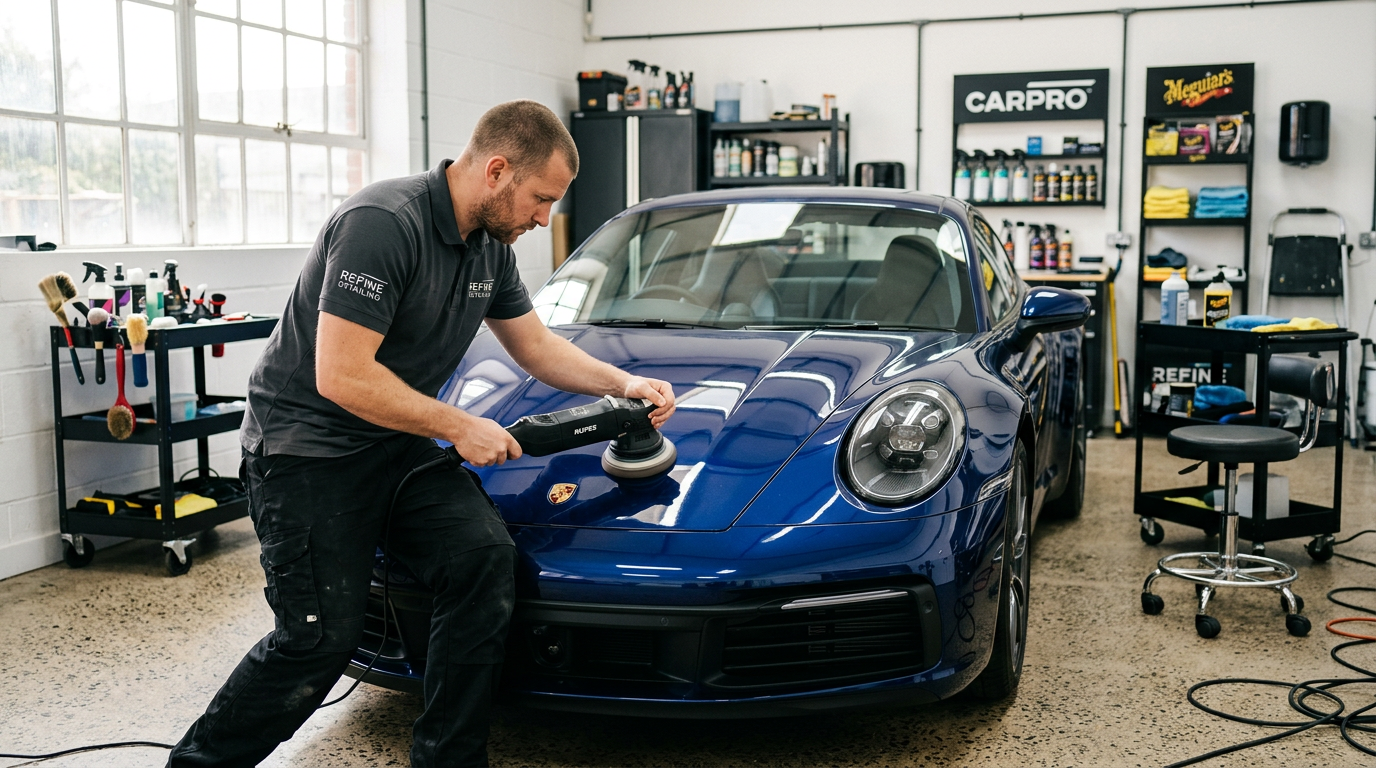
How to Start a Car Detailing Business: Step-by-Step Guide (2026)
The professional car detailing industry has evolved into a $14.7 billion powerhouse, driven by a growing consumer prefer...
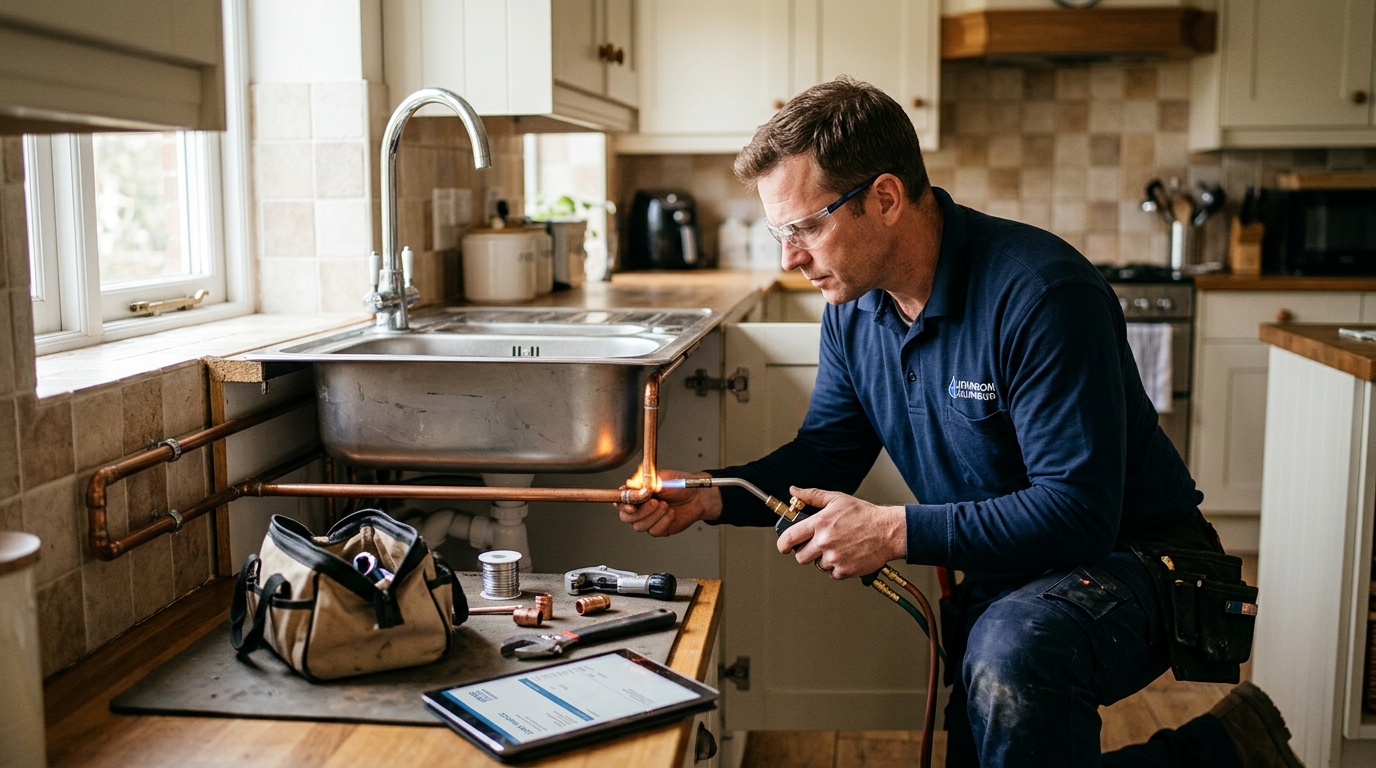
9 Simple Contractor Invoice Template Tips for Plumbers (2026)
A professional contractor invoice template for plumbers must include your business details, the client's information, a ...
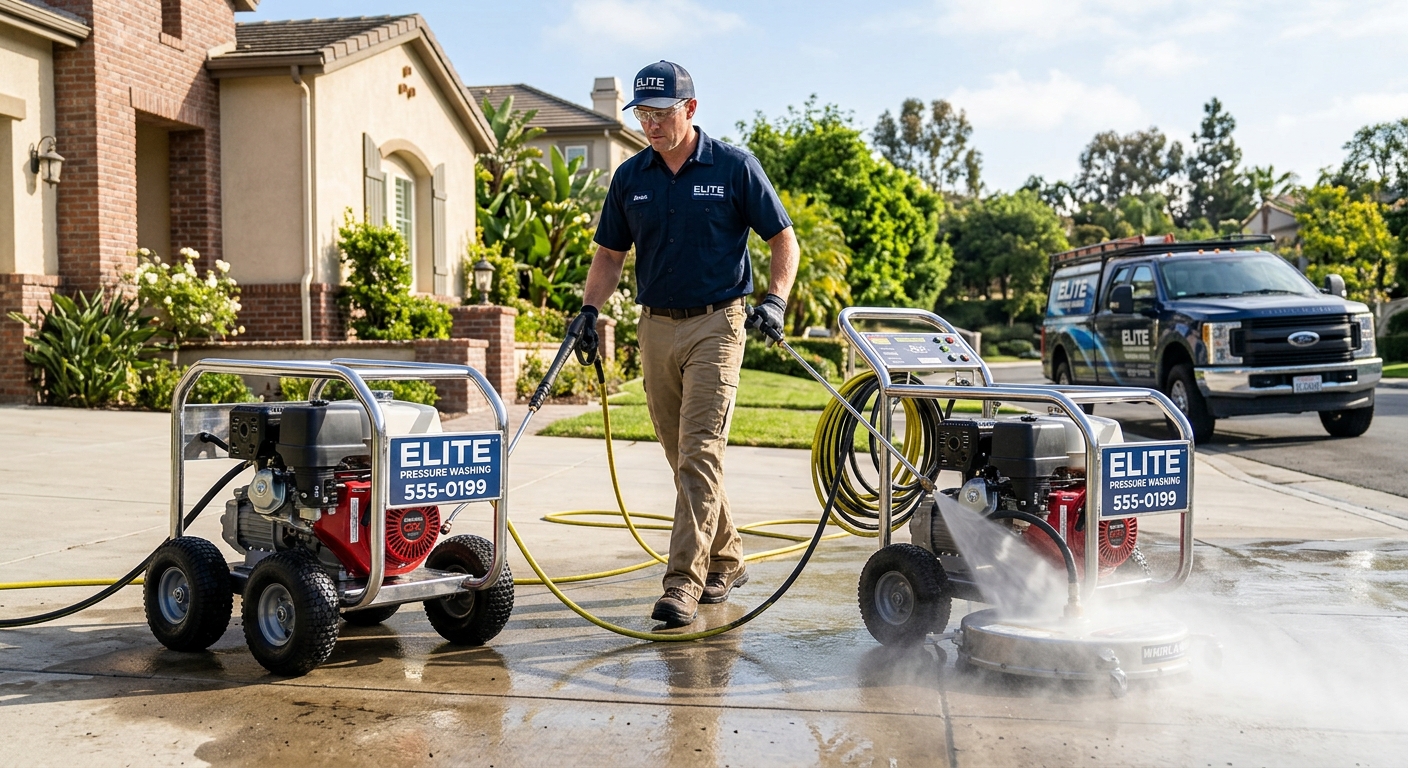
9 Expert Tips for the Best Pressure Washer for Starting a Business (2026)
The best pressure washer for starting a business is a gas-powered unit delivering at least 4.0 GPM (gallons per minute) ...