How to Get Roofing Leads: 15 Proven Strategies for 2026
18 min read·Updated March 20, 2026The roofing industry in 2026 is a $56.7 billion market, yet many contractors struggle to maintain a consistent pipeline because they rely on outdated 'spray and pray' marketing. Whether you are a residential re-roof specialist or a commercial storm chaser, the competition has shifted from who has the loudest megaphone to who has the most efficient digital ecosystem. In an era where homeowners verify your credentials on their smartphones before you even step off their porch, having a professional presence and a streamlined lead intake process is no longer optional. This guide breaks down 15 high-impact strategies to flood your calendar with high-intent roofing leads while maintaining the profit margins you need to scale.
Table of Contents
Mastering Storm Damage Restoration and Insurance Leads
Leveraging Advanced Hail and Wind Mapping Technology
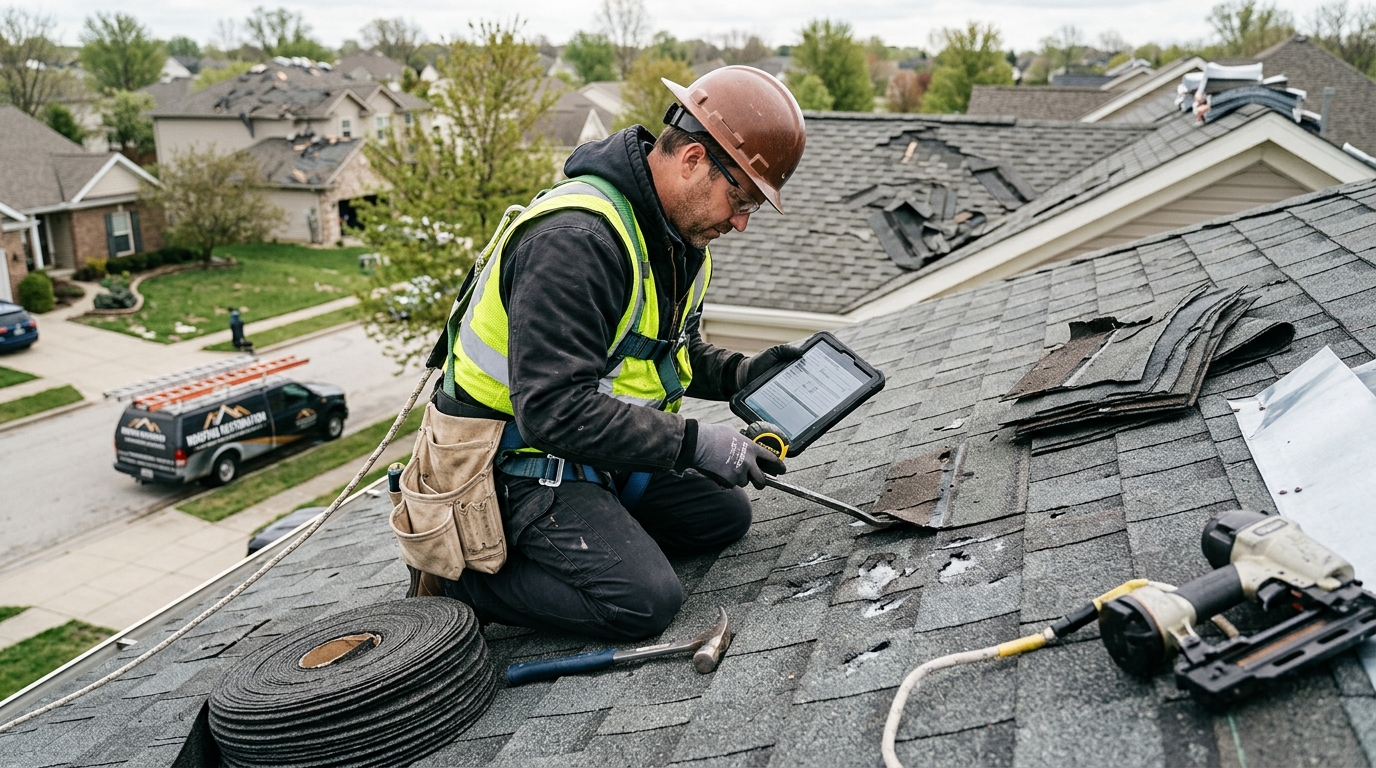
In the competitive world of storm chasing, being first to the neighborhood is the difference between a signed contract and a missed opportunity. Tools like HailTrace or Interactive Aerial provide real-time radar data that pinpoints hail swaths down to 1-inch and 2-inch stone sizes across specific zip codes. By analyzing these maps immediately after a weather event, you can deploy your canvassing teams to the most affected residential pockets within hours of the storm passing. This data-driven approach ensures you aren't wasting gas or labor costs on neighborhoods that only received light rain or pea-sized hail.
Once you identify a target zone, use property data tools like RoofSnap or EagleView to pull preliminary measurements before you even knock on the door. Having a 'pre-inspection' report in hand allows your sales reps to speak with authority, showing the homeowner exactly where the potential damage lies based on the roof's pitch and orientation. This level of preparation builds instant trust, positioning your company as a professional restoration firm rather than a fly-by-night operation. In 2026, homeowners are wary of 'storm chasers,' so leading with data and localized weather reports is the best way to break the ice.
Successful storm restoration requires a high volume of leads to offset the inevitable insurance denials and delays. By integrating your storm maps with a CRM, you can track which neighborhoods have the highest concentration of RCV (Replacement Cost Value) policies versus ACV (Actual Cash Value) policies. Focus your efforts on older neighborhoods with 15-to-20-year-old 3-tab shingles, as these are statistically the most likely to be approved for full replacement following a significant wind or hail event. This strategic targeting can increase your inspection-to-contract ratio by as much as 35% over a single season.
Navigating the Supplemental Insurance Claim Process
Generating leads is only half the battle; maximizing the value of every insurance claim is where true profitability is found. Many roofing contractors leave $1,500 to $3,000 on the table per job by failing to properly document 'line item' supplements like drip edge, starter shingles, or ice and water shield. By training your team to use photo-documentation apps like CompanyCam, you can provide the adjuster with undeniable proof of code requirements and manufacturer-specific installation instructions. This documentation serves as a powerful lead-nurturing tool, as satisfied homeowners are more likely to refer neighbors when they see you fighting for their full coverage.
Supplementing isn't just about the current job; it's about building a reputation as an insurance specialist which attracts high-quality referrals. When you successfully navigate a complex claim involving O&P (Overhead and Profit) for a homeowner, you become their hero in a stressful situation. This creates a 'halo effect' in the neighborhood, where one successful claim leads to five more inspections on the same street. Ensure your sales reps are well-versed in Xactimate or Symbility software so they can speak the same language as the insurance adjusters, which often speeds up the approval process by 10 to 14 days.
As you scale, managing the paperwork for dozens of open insurance claims can become a logistical nightmare that stalls your cash flow. Using an integrated platform like Hulo allows you to keep all your client communications, inspection photos, and claim documents in one central location for just $49.99/mo. Instead of digging through emails to find an adjuster's contact info, you can manage the entire lifecycle of the lead from the initial storm hit to the final depreciation check. This level of organization prevents leads from falling through the cracks during the chaotic post-storm 'gold rush' period.
25%–40%
Revenue Increase
Average revenue gain for contractors who aggressively supplement insurance claims compared to those who accept the initial adjuster's estimate.
Key Takeaway: Use real-time hail mapping to target 15-20 year old roofs and maximize every lead by documenting supplements to increase job value by 15-25%.
Dominating Local Search and Google Maps Presence
Optimizing Your Google Business Profile for Roofing Keywords
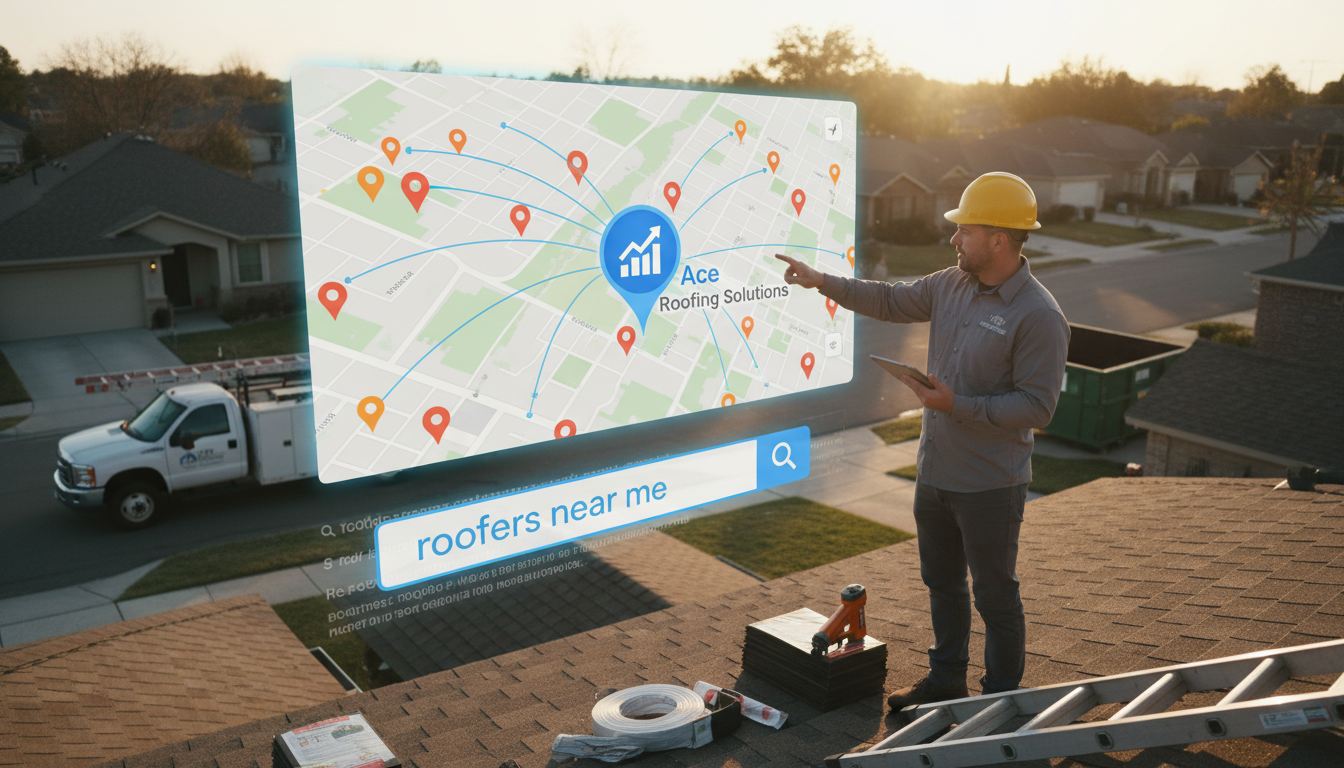
For most homeowners, the search for a new roof starts and ends with a 'roofing contractor near me' search on Google. To capture these high-intent leads, your Google Business Profile (GBP) must be meticulously optimized with high-resolution photos of your recent GAF or Owens Corning installations. Ensure your primary category is set to 'Roofing Contractor' and secondary categories include 'Gutter Cleaning' or 'Siding Contractor' to broaden your reach. Statistics show that businesses in the 'Local Pack' (the top 3 map results) receive over 60% of all clicks, making this the most valuable digital real estate in the industry.
Reviews are the currency of the roofing world, and a 4.8-star rating is the benchmark for winning trust in 2026. Implement an automated system that requests a Google review the moment the final inspection is signed off and the job site is cleared of debris. Don't just ask for stars; encourage customers to mention specific services like 'emergency leak repair' or 'metal roof installation' in their text. These keywords help Google understand your expertise and will boost your ranking for those specific search terms in your local service area.
Don't overlook the 'Questions and Answers' section of your GBP, as this is a prime spot to address common homeowner concerns before they even call you. Post answers to questions about your warranty lengths, financing options, and whether you offer free estimates. Regularly posting 'Updates' to your profile with photos of your crew in branded safety gear or shots of your specialized equipment, like an Equipter RB4000, signals to Google that your business is active and reliable. This consistent activity can improve your local visibility by 20% within the first 90 days of implementation.
Winning with Google Local Services Ads
If you want to bypass the slow process of organic SEO, Google Local Services Ads (LSAs) are the fastest way to get your phone ringing. Unlike traditional PPC where you pay per click, LSAs operate on a 'pay per lead' model, meaning you only pay when a homeowner actually calls or texts you through the ad. For roofing contractors, these leads typically cost between $60 and $180 depending on the market competitiveness. The 'Google Guaranteed' badge that accompanies these ads provides an extra layer of trust, as Google verifies your licenses and insurance before showing your ad.
To maximize your ROI on LSAs, you must answer the phone every time it rings, as Google's algorithm penalizes contractors who miss calls. If you are on a roof or managing a crew, use a dedicated CRM or an answering service to ensure no lead goes to voicemail. LSAs are highly sensitive to responsiveness; contractors who answer within 15 seconds consistently rank higher than those who let calls ring out. This is a game of speed, and the contractors who treat every LSA call like a $20,000 opportunity are the ones who dominate their local market.
Managing the budget for LSAs requires a strategic approach, especially during the peak roofing season from April to October. You can set a weekly budget of $500 to $5,000 depending on your crew's capacity, and you can pause the ads instantly if your schedule becomes overbooked. It is also vital to 'dispute' bad leads—such as wrong numbers or out-of-service area calls—to get your money back from Google. This active management ensures that your marketing dollars are strictly spent on qualified residential or commercial roofing prospects.
| Lead Source | Average Cost per Lead | Typical Closing Rate | Time to Results |
|---|---|---|---|
| Google LSAs | $60 - $180 | 25% - 35% | Instant |
| Organic SEO | $20 - $50 (Amortized) | 15% - 20% | 6 - 12 Months |
| Facebook Ads | $30 - $70 | 10% - 15% | 1 - 2 Weeks |
| Angi / Thumbtack | $50 - $120 | 5% - 12% | Instant |
Local Lead Generation Cost Comparison
Strategic Door Knocking and Neighborhood Canvassing
The 20-20-20 Rule for Neighborhood Saturation
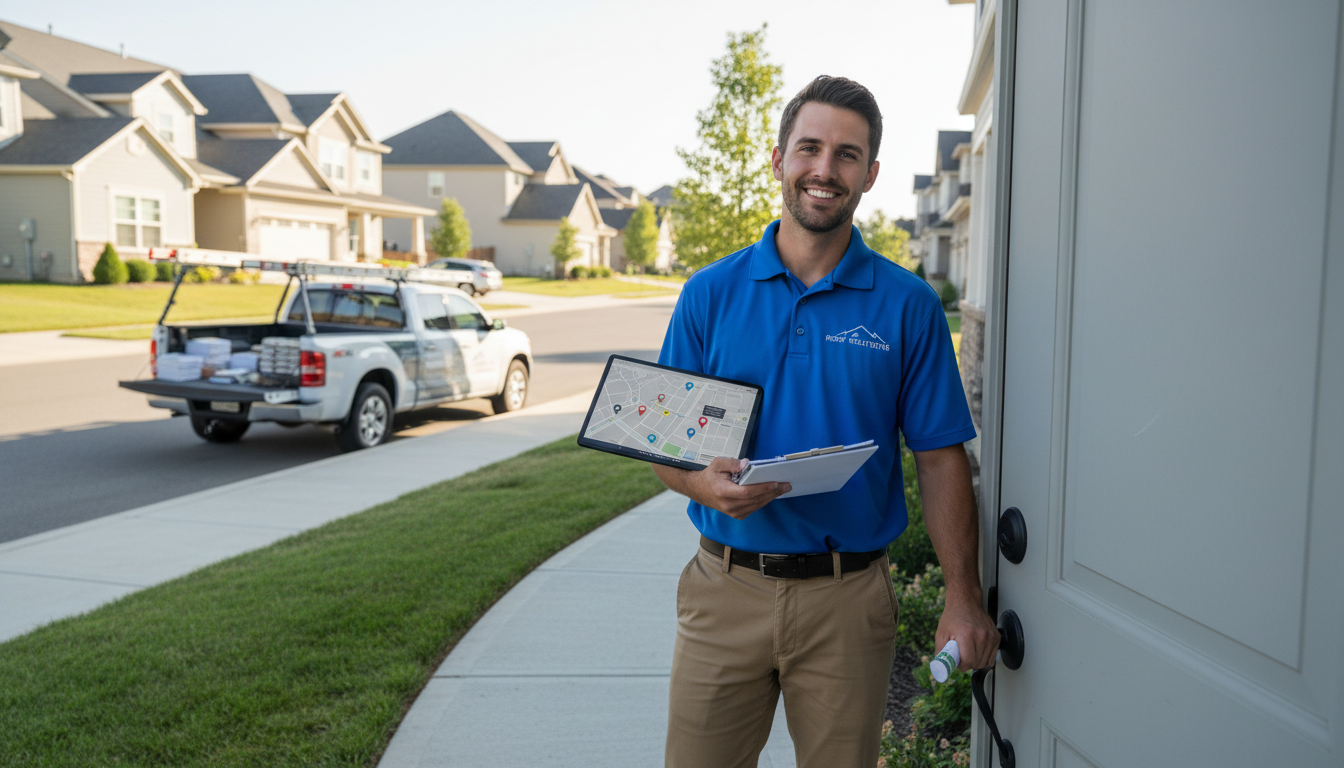
Door knocking remains one of the most effective ways to generate roofing leads, provided you have a systematic approach rather than a random one. The '20-20-20 rule' is a proven framework: whenever you start a job, knock on the 20 doors to the left, 20 doors to the right, and 20 doors directly across the street. These neighbors are already seeing your signs, hearing the nail guns, and watching your crews work, which significantly lowers their guard. Use this opportunity to offer a 'complimentary 15-minute roof health check' while your team is already in the area.
When canvassing, your sales reps should carry a tablet loaded with a professional presentation and real-time photos of the job currently being performed nearby. Showing a neighbor the specific hail bruises or wind-lifted shingles on a house they recognize creates a sense of urgency and social proof. Instead of a generic sales pitch, focus on education: explain the difference between architectural shingles and basic 3-tab, or show them how a ridge vent improves their attic's thermal performance. This consultative approach converts at a much higher rate than aggressive 'close today' tactics.
To manage a canvassing team effectively, use GPS-tracking software like Spotio or SalesRabbit to ensure your reps are actually hitting their numbers. These tools allow you to 'pin' houses based on the outcome of the knock—such as 'Not Home,' 'Follow Up,' or 'Lead Generated.' This prevents multiple reps from hitting the same house and allows you to track the ROI of your labor costs. A well-trained canvasser should be able to generate 2 to 4 qualified inspections per 50 doors knocked, making this a highly scalable lead source for growing companies.
Incentivizing the 'Neighborhood Hero' Referral
Your existing customers are your best lead generators, but they need a nudge to actively promote your business to their friends and family. Create a formal referral program that offers a clear incentive, such as a $250 Visa gift card or a $500 discount on a future gutter installation, for every signed contract they refer. Make this program easy to join by including a QR code on your business cards and final invoices that links directly to a referral submission form on your website. This 'word-of-mouth' marketing is essentially free and carries a closing rate that is often triple that of cold leads.
Beyond financial incentives, focus on the 'experience' of the roofing project to turn customers into 'super-fans.' This includes small touches like using a Catch-All system to protect their landscaping or performing a final 'magnet sweep' of the driveway to ensure no nails are left behind. When a homeowner sees that you care about their property as much as they do, they are far more likely to mention your name at the next neighborhood BBQ. These organic mentions are the highest-quality leads you can get because they come with a pre-built foundation of trust.
To keep your referral program top-of-mind, send a quarterly newsletter to your past clients with seasonal maintenance tips and a reminder of the referral bonus. Using a platform like Hulo, you can automate these emails so you stay in touch without adding more work to your plate. Reminding a customer that you offer roof snow removal in the winter or gutter cleaning in the fall keeps your brand relevant and ensures you are the first person they call when a storm hits or a neighbor asks for a recommendation.
Pro Tip: Always leave a 'We're working in your neighborhood' door hanger on the 5 houses surrounding your current job site. It builds curiosity and justifies your presence when you eventually knock.
Building a High-Conversion Professional Web Presence

Converting Traffic with Roofing Cost Calculators
In 2026, homeowners don't just want to see your logo; they want immediate value and transparency regarding pricing. One of the most effective lead magnets for a roofing website is an interactive 'Roofing Cost Estimator' or 'Shingle Visualizer.' By allowing users to input their square footage and material preference (e.g., asphalt, metal, or tile), you provide them with a ballpark figure while capturing their contact information in exchange for the detailed report. This strategy positions you as a transparent expert and filters out 'tire-kickers' who aren't ready for the investment.
Your website must be optimized for mobile devices, as over 70% of roofing searches happen on smartphones, often while the homeowner is standing in their yard looking at their roof. Ensure your 'Call Now' and 'Request Inspection' buttons are prominently displayed and easy to click with a thumb. A slow-loading site or a cluttered layout will drive potential leads straight to your competitors. Modern roofing websites should also feature a live chat or automated chatbot that can answer basic questions about warranties and scheduling 24/7, ensuring you never miss a lead at 10 PM.
Instead of spending thousands on a custom-coded site that you can't update, consider all-in-one platforms tailored for trades. Tools like Hulo can generate a professional, high-converting roofing website in minutes, complete with integrated lead capture forms and a CRM to manage the influx of inquiries. For $49.99/mo, you get a site that looks like it cost $5,000, allowing you to compete with the big-budget franchises without the massive overhead. This professional digital storefront is the foundation upon which all your other marketing efforts will be built.
The Power of Before and After Project Galleries
A picture is worth a thousand words, but in roofing, a 'Before and After' gallery is worth thousands of dollars in signed contracts. Homeowners want to see that you have successfully handled projects similar to theirs, whether it's a steep-slope Victorian or a flat-roof commercial warehouse. Use high-resolution drone photography to capture the scale and quality of your work from angles that aren't visible from the ground. Include detailed captions that mention the specific materials used, such as 'GAF Timberline HDZ in Charcoal,' which helps with SEO and educates the prospect.
Organize your gallery by service type—Residential, Commercial, Metal, and Repairs—to make it easy for leads to find relevant examples. Including a brief case study for each project that outlines the challenges faced (e.g., 'discovered extensive wood rot and replaced 12 sheets of decking') demonstrates your thoroughness and expertise. This builds confidence in your ability to handle the 'surprises' that often occur during a re-roofing project. When a lead sees a finished project that looks exactly like their dream home, the sales process becomes significantly easier.
Video testimonials are the 'gold standard' for social proof in the roofing industry. A 30-second clip of a homeowner standing in front of their beautiful new roof, praising your crew's cleanliness and professionalism, is more persuasive than any sales script. Post these videos on your website and share them across your social media channels to create a 'social proof loop.' Seeing a real person in their community vouch for your work removes the 'fear of the unknown' that often prevents homeowners from pulling the trigger on a major home improvement project.
$49.99/mo
Total Tech Stack Cost
The price of using Hulo for your website, CRM, and invoicing, which is often 90% cheaper than piecing together separate software tools.
Key Takeaway: Your website is your 24/7 salesperson; use interactive tools like cost calculators and high-quality project galleries to convert passive visitors into qualified leads.
Ready to put this into action?
Hulo gives you everything to run your roofing business — website, CRM, scheduling, and invoicing. Join the waitlist for V2.
Join the WaitlistGenerating High-Ticket Commercial Roofing Leads

Targeting Facility Managers and Property Owners
Commercial roofing leads are the 'holy grail' of the industry due to their high contract values and potential for recurring maintenance revenue. Unlike residential leads, commercial sales cycles are longer and require a relationship-based approach targeting facility managers, HOAs, and property investment groups. Use LinkedIn to identify the decision-makers for large local warehouses, shopping centers, and office parks. Instead of a hard sell, offer a 'Roof Asset Management' (RAM) report, which provides a 5-year outlook on their roof's health and potential repair costs.
Cold calling still works in the commercial sector if you lead with a specific value proposition, such as energy-saving TPO (Thermoplastic Polyolefin) membranes or silicone roof coatings. Mention how a cool roof coating can reduce their building's cooling costs by up to 15%—a number that speaks directly to a building owner's bottom line. By positioning your roofing company as a partner in their operational efficiency, you move away from being a commodity service and toward becoming a trusted consultant. This shift allows you to command higher margins and secure multi-year service contracts.
Networking with commercial real estate brokers and property insurance agents is another powerful way to get into the 'inner circle' of commercial leads. These professionals are often the first to know when a building is being sold or when a claim has been filed for a large-scale facility. Offer to perform 'pre-purchase roof inspections' for their clients at a discounted rate. While the inspection itself might not be a huge profit center, it puts you in the driver's seat for the inevitable $100,000+ roof replacement that follows the sale.
Utilizing Thermal Imaging for Leak Detection
In commercial roofing, finding a leak on a 50,000-square-foot flat roof is like finding a needle in a haystack. Investing in infrared thermal imaging cameras, like the FLIR series or DJI Mavic 3 Enterprise drones with thermal sensors, gives you a massive competitive advantage. You can show a property owner exactly where moisture is trapped under their membrane, which often allows for targeted 'recover' jobs rather than a full, expensive tear-off. This data-backed evidence makes your proposals nearly impossible to ignore and justifies a premium price point.
Create a 'Commercial Maintenance Program' that includes bi-annual thermal scans and drain cleanings. This recurring service not only provides steady cash flow during the slow winter months but also ensures you are the only contractor they call when the roof finally reaches the end of its life cycle. A small $1,500/year maintenance contract can easily turn into a $250,000 reroof project three years down the line. It's about 'owning' the roof for its entire lifespan, rather than just competing for a one-time transaction.
When presenting commercial proposals, use professional software to create detailed 'Condition Reports' that include thermal maps, core sample photos, and life-cycle cost analysis. Platforms like Hulo can help you manage these high-value relationships by tracking every interaction and ensuring that follow-up emails are sent automatically. In the commercial world, the contractor who is the most organized and professional usually wins the bid, even if they aren't the lowest price. Showing that you have a streamlined system for scheduling and invoicing builds the corporate trust necessary for large-scale contracts.
Key Takeaway: Commercial success is built on long-term relationships and data-backed proof; use thermal imaging and maintenance programs to lock in high-ticket contracts.
Maximizing Sales with CRM and Pipeline Management
The Importance of Rapid Lead Response
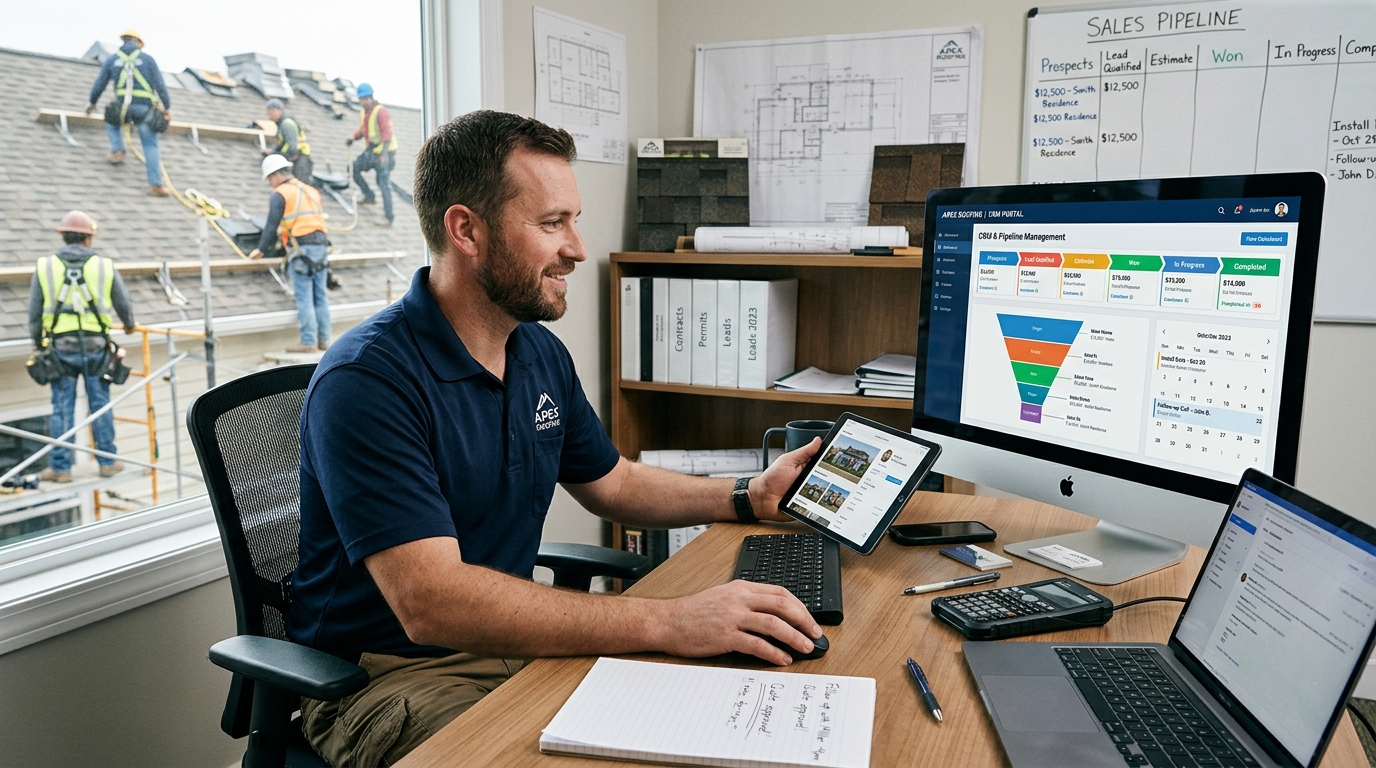
Lead generation is a waste of money if your follow-up process is broken. Studies show that if you don't respond to a roofing lead within 5 minutes, your chances of closing that deal drop by 80%. In 2026, homeowners expect an instant response, whether they find you on Google, Facebook, or through a referral. Using an all-in-one CRM like Hulo allows you to automate an immediate text or email response the second a lead comes in, letting the prospect know you've received their request and are already working on their estimate.
Once the initial contact is made, your pipeline needs to be clearly defined: Lead, Inspection Scheduled, Estimate Sent, Follow-Up, Contract Signed, and Job In-Progress. Visually tracking where every homeowner sits in this journey prevents leads from 'dying' in the follow-up phase. Most roofing sales are closed between the 5th and 7th touchpoint, yet most contractors stop following up after the 2nd. Automated 'nurture' sequences can handle this heavy lifting for you, sending helpful tips about shingle colors or financing options while you are busy on a job site.
A robust CRM also allows you to track your 'Cost Per Lead' (CPL) and 'Cost Per Acquisition' (CPA) across different marketing channels. If you find that your Facebook leads cost $40 but only close at 5%, while your Google leads cost $100 but close at 30%, you can shift your budget accordingly to maximize profit. Data-driven decision-making is what separates the $500k-a-year roofer from the $5M-a-year roofing company. Without a centralized system to track these metrics, you are essentially flying blind and hoping for the best.
Streamlining Scheduling and Invoicing for Cash Flow
One of the biggest pain points for roofing contractors is the gap between finishing a job and actually getting paid. A streamlined invoicing system that allows you to send professional, digital invoices via text or email can reduce your 'Days Sales Outstanding' (DSO) by half. By offering multiple payment options—including credit cards, ACH, and integrated financing—you remove the friction that often causes homeowners to delay payment. Platforms like Hulo integrate these financial tools directly into your workflow, ensuring that as soon as the final walk-through is complete, the invoice is in the customer's inbox.
Scheduling multiple crews across different job sites requires a dynamic calendar that can be accessed by your foremen in the field. Avoid the 'whiteboard' method and move to a digital schedule that allows for real-time updates. If a job is delayed by rain or a material shortage, you can shift your entire schedule with a few clicks and automatically notify the affected homeowners. This level of communication prevents 'no-show' frustrations and keeps your reputation intact, leading to more positive reviews and future leads.
Finally, don't forget the power of 're-marketing' to your existing database. A CRM allows you to filter customers who had a repair two years ago and might now be ready for a full replacement. Or, you can reach out to everyone you've served in a specific neighborhood to offer a 'post-storm checkup' after a recent wind event. Your existing database is a gold mine of 'warm' leads that cost nothing to acquire, provided you have the tools to manage and reach out to them effectively. Using Hulo for just $49.99/mo gives you all these capabilities in one simple dashboard.
400%
Conversion Increase
The increased likelihood of closing a lead when you respond within 5 minutes versus waiting 30 minutes.
Wrapping Up
Starting and scaling a roofing business in 2026 requires more than just high-quality craftsmanship; it requires a sophisticated approach to lead generation and business management. By diversifying your leads across storm restoration, local SEO, and strategic canvassing, you create a recession-proof business that isn't dependent on a single source of income. Remember that the most successful contractors are the ones who treat their 'back-office' as seriously as their 'on-the-roof' work. To simplify this process and keep your costs down, consider using an all-in-one platform like Hulo. For just $49.99/mo, Hulo gives you the professional website, CRM, and invoicing tools you need to manage your leads and grow your roofing empire with confidence.
Frequently Asked Questions
How much should I spend on roofing leads per month?
Most successful roofing companies allocate 5% to 10% of their target gross revenue to marketing. If you want to hit $1M in sales, expect to spend $50,000 to $100,000 annually across SEO, paid ads, and canvassing. Using cost-effective tools like Hulo for your website and CRM helps keep your overhead low so you can spend more on direct lead generation.
What is the best way to get commercial roofing leads?
Commercial leads are best generated through a combination of LinkedIn outreach to facility managers, networking with property insurance agents, and offering thermal imaging inspections. Unlike residential, commercial roofing relies heavily on multi-year maintenance contracts and relationship-building over a 6-to-12-month sales cycle.
Do I need separate software for scheduling, invoicing, and my website?
No—modern all-in-one platforms like Hulo bundle your professional website, CRM, scheduling, and invoicing into a single $49.99/mo subscription. This is far more cost-effective and efficient than paying for 3-4 separate tools that don't talk to each other, which often leads to lost data and missed leads.
Is door knocking still effective for roofers in 2026?
Yes, door knocking remains highly effective, especially when using the 20-20-20 rule around existing job sites. However, it should be supported by digital 'social proof,' such as a professional website and positive Google reviews, so homeowners can verify your company's legitimacy the moment you leave their porch.
How do I compete with large roofing franchises in my area?
Compete by being faster and more personal. Large companies often have slow response times and 'cookie-cutter' service. Use a platform like Hulo to ensure your website and communication look just as professional as the big guys, but use your local expertise and rapid response time to win the homeowner's trust before the franchise even returns their call.
What is a good closing rate for roofing leads?
A healthy closing rate for 'cold' leads (like Facebook or LSAs) is 10-20%, while 'warm' referral leads should close at 40-60%. If your closing rate is below 10%, you likely have a 'speed to lead' problem or need to improve your sales presentation and professional documentation.
Ready to Scale Your Roofing Business?
Stop juggling 5 different apps and start winning more jobs. Get your professional website, CRM, and invoicing all in one place with Hulo for only $49.99/mo.
Join the WaitlistMore from the Blog
7 Smart Steps to How to Estimate a Roofing Job for Contractors (2026 Guide)
To estimate a roofing job, you must calculate the total square footage of the roof and divide by 100 to determine the nu...
11 Expert Ways to Get Roofing Leads Without Door Knocking for Contractors (2026)
To get roofing leads without door knocking, you must implement a multi-channel digital strategy focusing on Google Local...
How to Start a Roofing Company: Complete Business Guide (2026)
The roofing industry in 2026 is projected to exceed $56 billion in annual revenue, driven by a combination of aging infr...