How to Start a Roofing Company: Complete Business Guide (2026)
14 min read·Updated March 12, 2026The roofing industry in 2026 is projected to exceed $56 billion in annual revenue, driven by a combination of aging infrastructure and the increasing frequency of severe weather events. For an ambitious tradesman, there has never been a better time to transition from a crew lead to a business owner, provided you understand the shift toward digital-first operations. Success today requires more than just a nail gun and a ladder; it demands a sophisticated approach to insurance supplements, digital lead generation, and automated project management. This guide provides a comprehensive roadmap for launching a roofing company that doesn't just survive the storm season but scales into a multi-million dollar enterprise.
Table of Contents
Foundational Legal Requirements and Business Structure
Choosing the Right Legal Entity
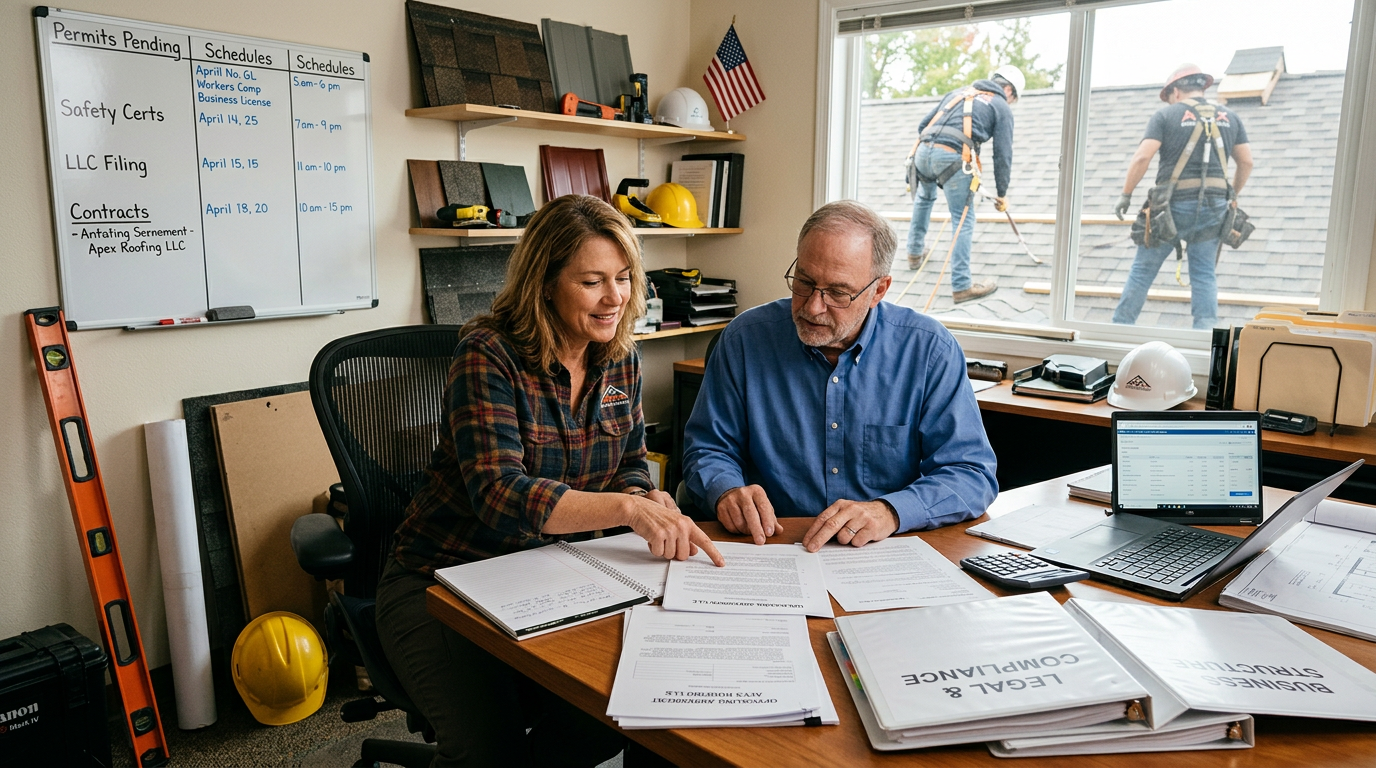
Before you purchase your first bundle of GAF Timberline shingles, you must establish a legal framework that protects your personal assets. Most roofing contractors opt for a Limited Liability Company (LLC) or an S-Corp to mitigate the high-risk nature of the trade. An LLC is generally the most flexible for new owners, providing a shield against personal liability if a job site accident occurs or a contract dispute arises. Consult with a tax professional to determine if an S-Corp election makes sense once your net profit exceeds $75,000 per year, as it can significantly reduce self-employment taxes.
Registering your business involves more than just a name; you need an Employer Identification Number (EIN) from the IRS to open a commercial bank account and hire crews. You should also check local zoning laws if you plan to run the business out of your home or a small warehouse. In many jurisdictions, operating a trade business requires a specific occupancy permit even if you aren't storing large amounts of inventory on-site. Establishing this foundation early prevents the 'paperwork nightmare' that often plagues roofers who grow too fast without a solid structure.
Navigating State Licensing and Certifications
Roofing licenses vary wildly by state, with some requiring a dedicated 'Roofing Contractor' designation while others fall under a general 'Residential Contractor' umbrella. For instance, states like Florida and Illinois have rigorous testing requirements that include both a trade exam and a business/law exam. You should expect to spend between $500 and $1,500 on application fees, background checks, and exam costs. Don't overlook municipal licenses; many cities require a separate registration to pull permits for re-roofs within city limits.
Beyond basic licensing, obtaining manufacturer certifications from brands like Owens Corning or CertainTeed can give you a massive competitive edge. Becoming a 'Master Elite' or 'Platinum' contractor allows you to offer extended labor and material warranties that uncertified competitors cannot match. These certifications often require a minimum of 3 years in business and a high credit rating, making them a goal for your second or third year of operation. High-end homeowners and commercial property managers often won't even look at a bid if the contractor isn't manufacturer-certified.
Securing High-Limit Insurance Coverage
In the roofing world, standard insurance isn't enough; you need specialized policies that cover 'open roof' exposure and high-elevation work. General Liability (GL) insurance is non-negotiable, and you should aim for a minimum of $1,000,000 per occurrence and $2,000,000 aggregate. Many commercial contracts will actually require $5,000,000 in umbrella coverage before you can even step foot on the property. Be prepared for premiums to range from 7% to 15% of your gross revenue depending on your location and safety record.
Workers' Compensation is the most significant insurance expense for a roofing startup, often costing $20 to $40 for every $100 in payroll. Even if you use 1099 subcontractors, many states require you to carry workers' comp for them or ensure they have their own valid policies. Failure to verify sub-contractor insurance can lead to massive 'audit' bills at the end of the year that can wipe out your profit margins. Always collect a Certificate of Insurance (COI) from every sub-crew before they start their first tear-off.
| Item | Estimated Cost | Frequency |
|---|---|---|
| LLC Formation & EIN | $300 - $800 | One-time |
| General Liability ($1M/$2M) | $3,000 - $6,000 | Annual |
| Workers' Comp Deposit | $1,500 - $3,000 | Annual |
| State Contractor License | $500 - $1,200 | Every 2 Years |
| Surety Bond | $200 - $500 | Annual |
Estimated Initial Licensing and Insurance Costs
Key Takeaway: Establish an LLC and secure high-limit General Liability insurance before taking on your first project to protect your personal assets from the inherent risks of the roofing trade.
Essential Equipment and Inventory Management
The Core Roofing Tool Kit
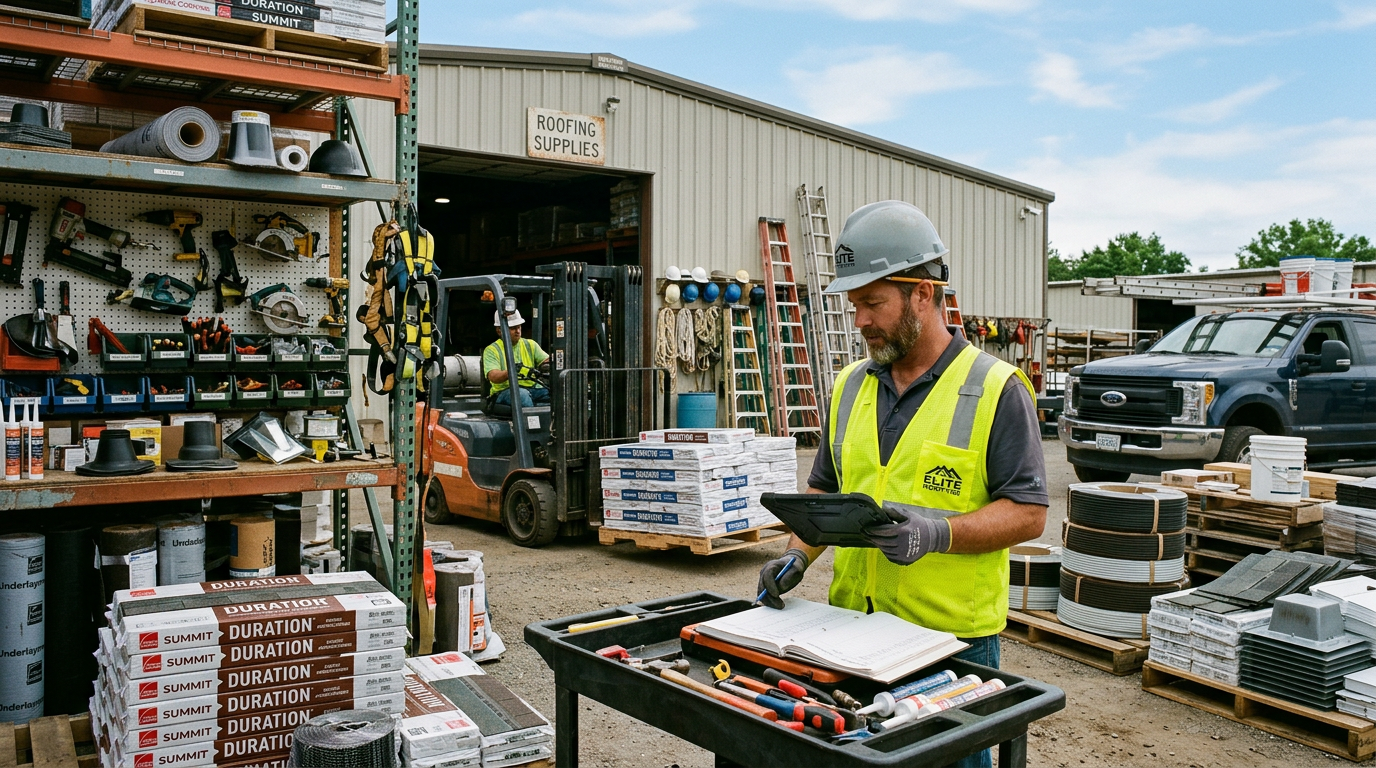
Your initial equipment investment will define your efficiency on the job site. A reliable 3/4-ton or 1-ton truck is the backbone of your fleet, capable of hauling dump trailers and heavy bundles of shingles. Expect to spend $35,000 to $55,000 on a used but reliable work truck with a ladder rack. For tools, you'll need pneumatic coil nailers (like the Hitachi NV45AB2), high-capacity air compressors, and heavy-duty tear-off shovels. Don't skimp on safety equipment; OSHA-compliant fall protection kits, including harnesses, anchors, and vertical lifelines, are mandatory for every person on the roof.
If you're focusing on metal roofing, your tool kit becomes more specialized and expensive. You will need standing seam folders, heavy-duty shears, and potentially a portable roll-forming machine if you plan to fabricate panels on-site. On-site fabrication can save 20% on material waste but requires a significant upfront investment of $25,000 or more. For most startups, it is more cost-effective to order pre-cut panels from a local supplier like ABC Supply or Beacon until your volume justifies the machinery.
Safety Gear and OSHA Compliance
OSHA inspections are a reality in the roofing industry, and fines for fall protection violations can exceed $15,000 per occurrence. Every crew member must be trained in the proper use of Personal Fall Arrest Systems (PFAS) and ladder safety. You should maintain a written safety manual and hold weekly 'toolbox talks' to document your commitment to a safe workplace. This documentation isn't just for safety; it can also help lower your workers' comp premiums over time by proving a lower risk profile.
Invest in high-quality ladders, including 28-foot and 40-foot extensions, as well as adjustable 'Little Giant' style ladders for difficult interior or porch access. Use ladder stabilizers to prevent gutter damage and provide a more secure transition to the roof deck. Remember that safety gear is an investment in your brand's reputation; a company that looks professional and follows safety protocols is much easier to sell to high-end residential clients than a 'chuck-in-a-truck' operation.
$15,000 – $50,000
Average Equipment Startup Cost
Includes a reliable used truck, basic pneumatic tools, safety gear, and initial marketing materials.
Marketing Strategies for Lead Generation
Building a Professional Digital Presence
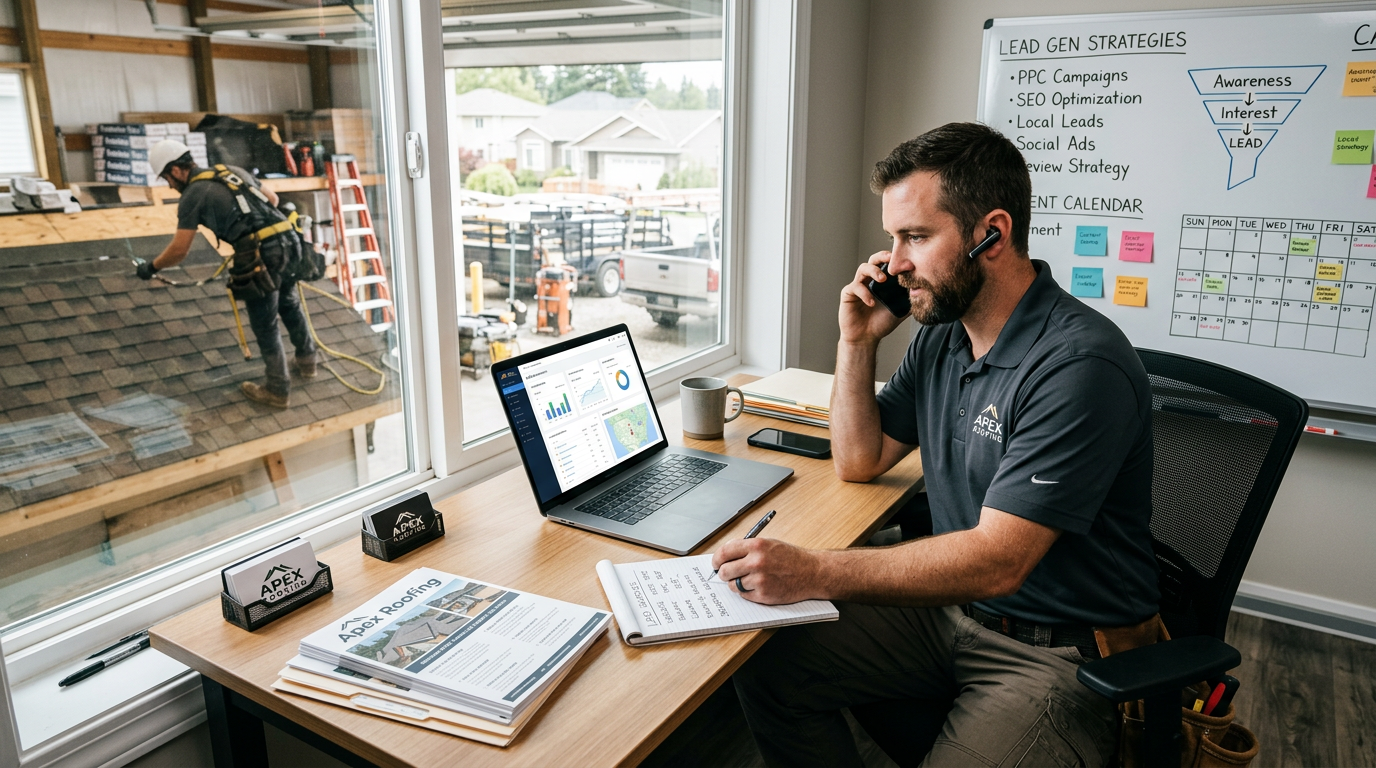
In 2026, a word-of-mouth reputation is no longer enough to compete with established roofing giants. Homeowners' first instinct after a storm is to search for 'roofers near me' on their smartphones. If you don't have a professional, mobile-responsive website, you are effectively invisible to 70% of the market. Your site should feature high-resolution before-and-after photos, clear service descriptions, and an easy way for leads to request an inspection.
Instead of juggling separate tools for your website, client management, and invoicing, all-in-one platforms like Hulo let you run everything from a single dashboard. For $49.99/mo, you can have a professional web presence that integrates directly with your CRM, ensuring that every lead from your website is captured and followed up on immediately. This level of automation is critical for small teams where the owner is often on the roof and cannot answer every phone call.
Storm Chasing vs. Retail Marketing
There are two primary ways to get roofing leads: 'retail' (homeowners choosing to replace an old roof) and 'storm restoration' (insurance-funded repairs after hail or wind). Storm chasing requires a boots-on-the-ground approach, using apps like HailTrace to identify neighborhoods hit by recent weather events. Door knocking remains the most effective way to generate storm leads, but it must be paired with professional leave-behind materials and a digital 'proof of life' (your website) to build trust quickly.
Retail marketing is a longer play, focusing on SEO and local Google My Business (GMB) optimization. Encourage every satisfied customer to leave a 5-star review on Google, as this is the single biggest factor in your local search ranking. You can also partner with local realtors and home inspectors who often need quick roof repairs to close a sale. A balanced mix of 60% storm work and 40% retail work provides the best cash flow stability throughout the year.
Pro Tip: Use a drone for initial inspections. It not only keeps you off the roof during the sales process but also provides high-definition 'wow factor' photos that make your insurance supplements much harder for adjusters to deny.
Estimating, Sales, and the Claims Process
Mastering Xactimate and Supplementing
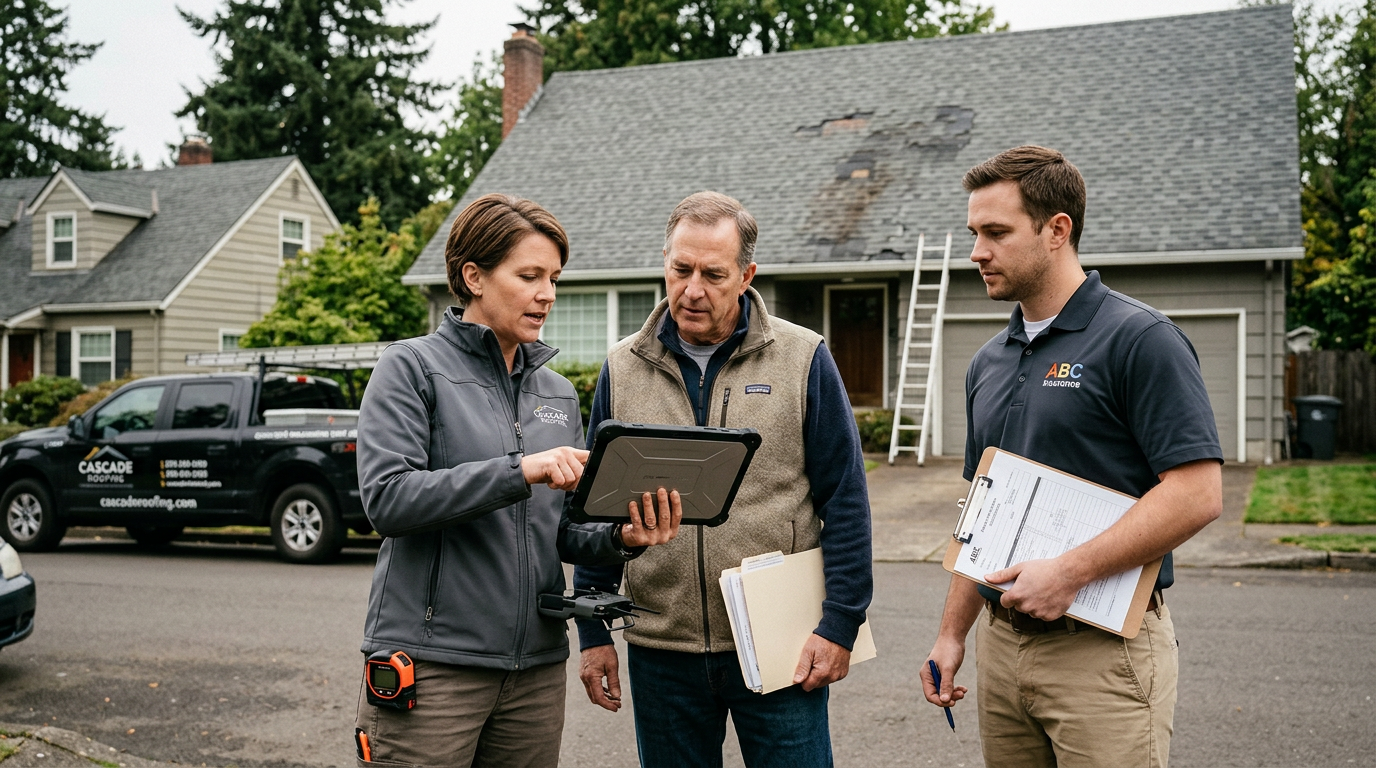
If you are doing insurance restoration, you must become proficient in Xactimate, the industry-standard estimating software used by almost all adjusters. An adjuster's initial estimate is almost always lower than the actual cost of the job because they miss 'line items' like drip edge, starter shingles, or high-profile ridge caps. 'Supplementing' is the process of submitting evidence to the insurance company to get these items paid for. A good supplementer can increase a claim's value by 20% to 35%, which often represents the entire profit margin of the job.
Always take photos of 'code-required' items that need to be upgraded, such as ice and water shield in valleys or proper attic ventilation. Use a tool like CompanyCam to organize these photos by project and share them directly with the adjuster. When you speak their language and provide documented proof, you're viewed as a professional partner rather than a pushy contractor. This builds long-term relationships with local adjusters, which can lead to smoother approvals in the future.
The Sales Presentation and Closing
When selling a retail roof, your goal is to move the conversation from 'price' to 'value.' Use physical samples of shingles so the homeowner can feel the quality difference between a standard 3-tab and an architectural shingle. Explain the 'roofing system,' including the underlayment, flashing, and ventilation, rather than just the shingles themselves. Providing a 'good, better, best' pricing model allows the homeowner to feel in control of the budget while often steering them toward the higher-margin 'better' or 'best' options.
Closing the deal requires a sense of urgency, especially after a storm. Mention that crew schedules are filling up fast and that material prices are subject to frequent increases from the manufacturer. Offer financing options through third-party lenders like GreenSky or Hearth; being able to say 'You can have a new roof for $150 a month' is much more effective than asking for a $15,000 check upfront. Always get a signed contract and a deposit before ordering materials or putting the job on the production calendar.
Key Takeaway: Mastering the insurance supplement process is the fastest way to increase your profit margins without having to find more leads.
Ready to put this into action?
Hulo gives you everything to run your roofing business — website, CRM, scheduling, and invoicing. Join the waitlist for V2.
Join the WaitlistManaging Production and Crew Logistics

Sub-Crews vs. In-House Employees
Most startup roofing companies begin by using 'sub-crews'—independent teams that provide their own labor and tools while you provide the materials and project management. This model is highly scalable because you only pay for labor when you have a job. Sub-crews typically charge by the 'square' (a 10x10 area), with rates ranging from $70 to $120 per square for labor. The downside is less control over scheduling and quality, so you must vet your subs carefully and inspect their work daily.
As you grow, hiring an in-house 'repair technician' or a small 3-man crew for smaller jobs and warranty work is a smart move. In-house employees offer more reliability and can be trained to your specific quality standards. However, this transition requires a deeper understanding of payroll taxes, benefits, and constant work to keep them busy. Many successful owners keep a hybrid model: sub-crews for large re-roofs and in-house staff for specialized repairs and customer service.
Scheduling and Project Management
Managing multiple job sites across different neighborhoods requires a centralized scheduling system. You need to coordinate material deliveries, dumpster drop-offs, and crew arrivals so that the homeowner isn't left with a torn-off roof and no shingles. Using a platform like Hulo allows you to keep track of your entire schedule and client communication in one place. Having your CRM and scheduling integrated ensures that when a job is moved due to rain, every stakeholder—from the crew to the homeowner—can be notified automatically.
A typical residential re-roof should take 1-2 days. Your project manager (which will be you, initially) should be on-site for the 'tear-off' to check for rotten decking and for the final 'magnet sweep' to ensure no nails are left in the driveway. Quality control is your best marketing; a single flat tire for a homeowner can result in a negative review that costs you thousands in future business. Use a checklist for every job to ensure that flashing is tucked, valleys are straight, and the site is cleaner than when you arrived.
20% – 40%
Average Net Profit Margin
Higher margins are typically found in insurance restoration and specialized commercial projects.
Financial Management and Cash Flow
Understanding the 'Cash Gap'
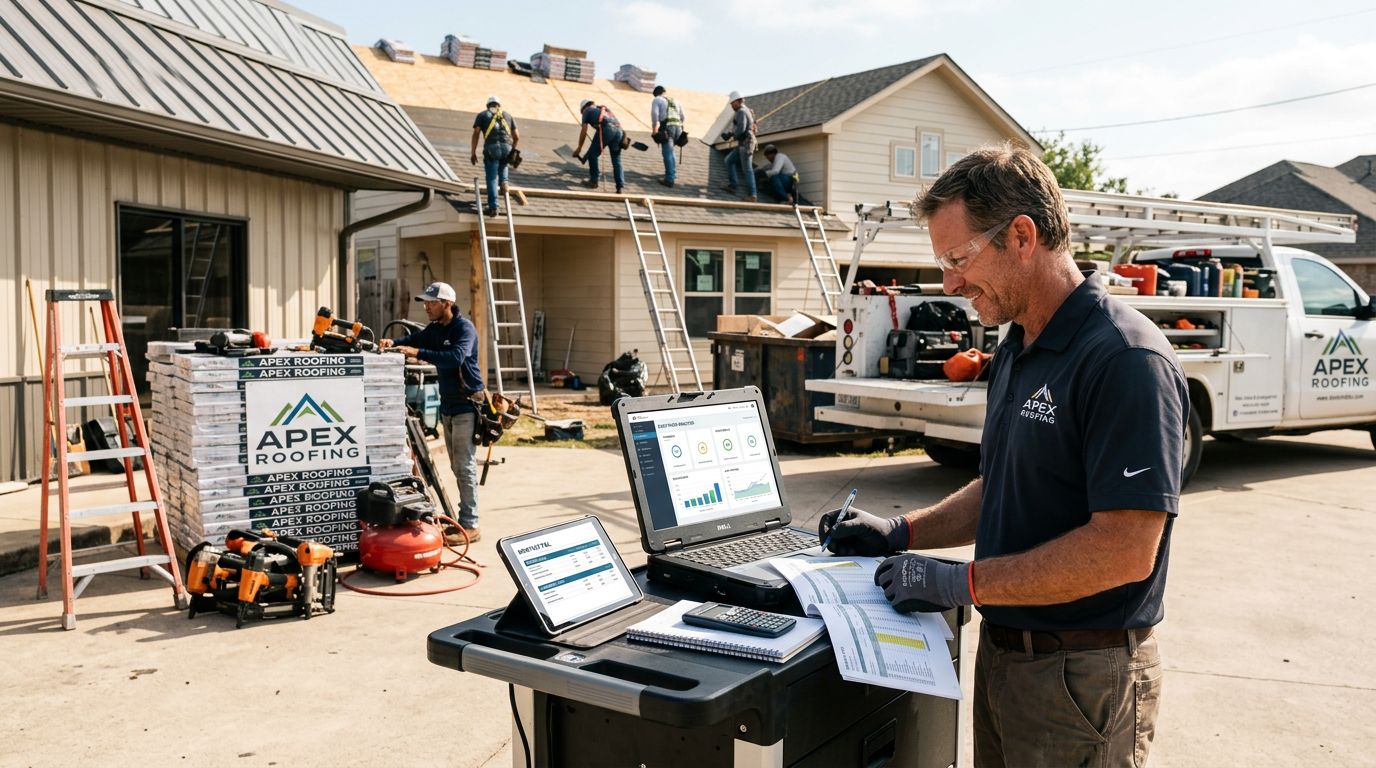
Roofing is a cash-intensive business. You often have to pay for materials and labor before you receive the final payment from the homeowner or the insurance company. This 'cash gap' can sink a new business if not managed correctly. Always require a deposit—typically 30% to 50%—before the job starts to cover your material costs. For insurance jobs, this is usually the 'ACV' (Actual Cash Value) check that the homeowner receives from the adjuster.
The second half of the payment, the 'depreciation' and 'supplements,' can take weeks or even months to arrive from the insurance carrier. You must have enough working capital to pay your crews every Friday even if you haven't been paid by the insurance company yet. Setting up a business line of credit early on can provide a safety net during these waiting periods. Treat your cash flow as your most important metric; a company with a million dollars in signed contracts can still go bankrupt if the cash isn't hitting the bank account in time.
Invoicing and Chasing Payments
Professional invoicing is key to getting paid faster. Your invoices should clearly itemize the work performed, the materials used, and any change orders that were signed during the project. Sending an invoice the moment the job is completed—while the homeowner is still excited about their new roof—increases your chances of immediate payment. Digital payment options like credit cards or ACH transfers can further speed up this process, even if you have to eat a 2.9% processing fee.
Platforms like Hulo simplify this by allowing you to send professional invoices and track payments directly from your CRM. Instead of manually following up with clients, you can see at a glance who owes you money and send automated reminders. This is especially helpful for 'storm chasers' who might have 20-30 open claims across multiple states. Keeping your billing organized ensures that no supplement or final payment falls through the cracks, protecting your hard-earned profit.
| Material Type | Avg. Cost per Square | Lifespan | Pros/Cons |
|---|---|---|---|
| 3-Tab Shingle | $90 - $110 | 15-20 Years | Lowest cost; poor wind resistance |
| Architectural Shingle | $120 - $160 | 25-30 Years | Best seller; high durability |
| Standing Seam Metal | $400 - $700 | 50+ Years | High margin; difficult install |
| TPO (Commercial) | $150 - $250 | 20-25 Years | Energy efficient; specialized tools |
Typical Residential Roofing Material Comparison
Key Takeaway: Always collect a significant deposit upfront to cover materials and use automated invoicing to minimize the time between job completion and final payment.
Scaling into Commercial Roofing
The World of Flat Roofs: TPO and EPDM
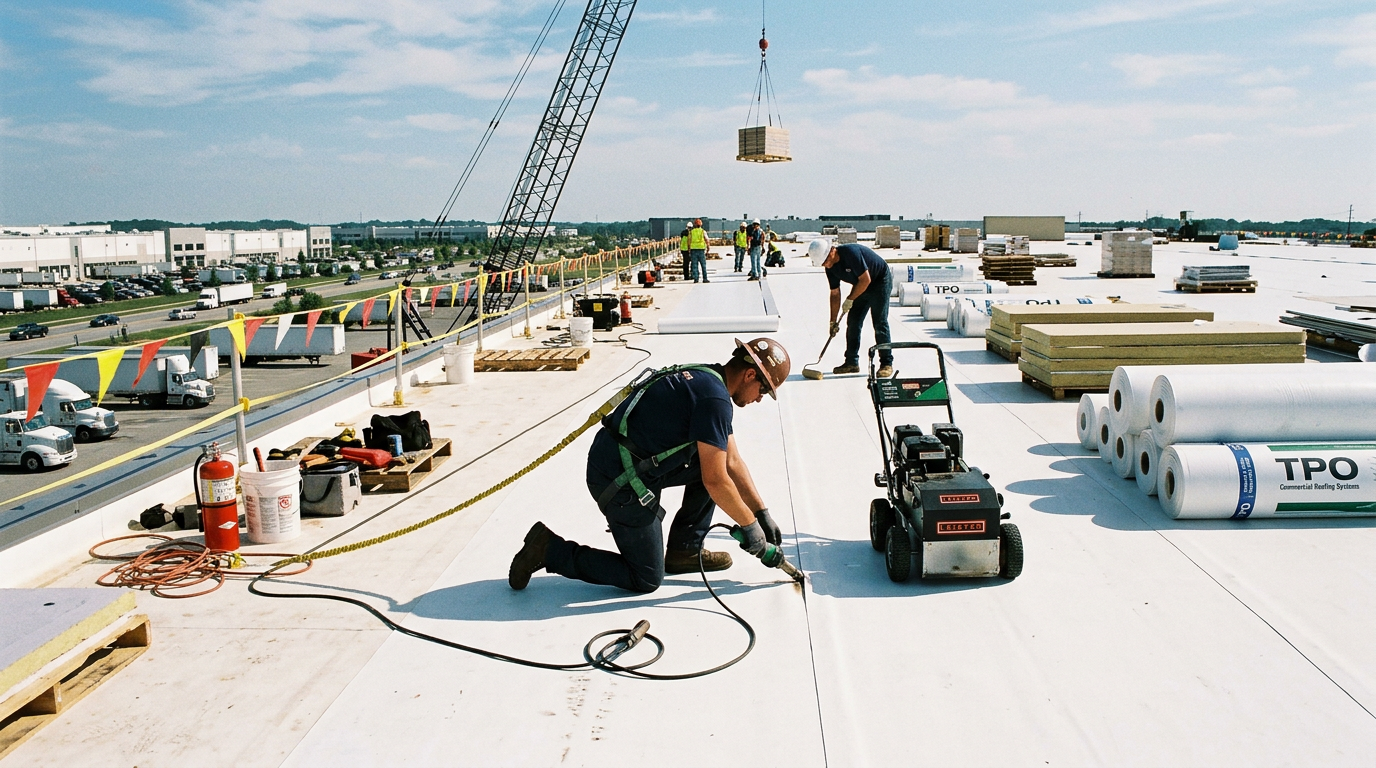
Commercial roofing is a different beast than residential. Instead of shingles and steep slopes, you'll be dealing with flat roofs and membranes like TPO (Thermoplastic Polyolefin) and EPDM (Ethylene Propylene Diene Terpolymer). Scaling into this sector requires specialized equipment, such as robotic heat welders for TPO seams. Commercial jobs are significantly larger, often ranging from $50,000 to over $1,000,000, but they also carry higher risks and longer payment cycles.
To win commercial bids, you must be comfortable with a formal RFP (Request for Proposal) process and provide detailed safety plans. Property managers and building owners care about long-term ROI and energy efficiency. Highlighting how a white TPO roof can lower their cooling costs is a powerful selling point. Commercial work provides excellent 'filler' during the winter months when residential re-roofing slows down, as many commercial repairs can be done in colder temperatures.
Building Long-Term Maintenance Contracts
One of the biggest advantages of commercial roofing is the opportunity for recurring revenue through maintenance contracts. Most commercial warranties require bi-annual inspections and gutter cleanings to remain valid. You can charge $500 to $2,500 per year for a maintenance plan that includes a detailed roof condition report. These contracts not only provide steady cash flow but also put you first in line when the roof eventually needs a full replacement.
Use a professional report generator to show building owners photos of clogged drains, loose flashing, or ponding water. When you provide data-driven evidence of a roof's decline, you become a consultant rather than just a contractor. This shift in positioning allows you to charge premium rates and reduces the likelihood of the client shopping your bid against cheaper, less professional competitors. Commercial scaling is the path to building a business that is an attractive asset for a future exit or acquisition.
Wrapping Up
Starting a roofing company is one of the most reliable paths to financial independence in the skilled trades, provided you treat it like a business rather than just a job. By focusing on high-quality production, mastering the insurance claim process, and maintaining a professional digital image, you can quickly outpace the competition. As you move forward, remember that the right tools make all the difference. Platforms like Hulo provide the essential website, CRM, and invoicing tools you need to stay organized and professional for just $49.99/mo, allowing you to focus on what you do best: building great roofs and growing your bottom line.
Frequently Asked Questions
How much does it cost to start a roofing company in 2026?
Most roofing startups require between $15,000 and $50,000 in initial capital. This covers a reliable truck, essential pneumatic tools, safety gear, and the first few months of high-limit insurance premiums. You can reduce these costs by starting as a 'sales-only' organization and subbing out 100% of the labor, but you still need a professional digital presence and a solid CRM like Hulo to manage your leads and invoicing.
Do I need a separate software for my website, scheduling, and invoicing?
No—modern platforms like Hulo bundle your professional website, CRM, scheduling, and invoicing into a single $49.99/mo subscription. This is far more cost-effective than paying for 3-4 separate tools, which can easily cost over $300/mo. Using an all-in-one system also prevents data entry errors and ensures that your business looks professional from the first click to the final invoice.
What is the most profitable type of roofing?
Insurance restoration for storm damage and specialized commercial roofing (like TPO or slate) typically offer the highest profit margins, often exceeding 40%. Standard residential retail shingle replacements have more competition, which usually keeps margins in the 20% to 25% range. To maximize profit, focus on mastering the insurance supplement process and building a brand that justifies premium pricing.
How do I get my first roofing leads?
For most new roofing companies, a combination of door knocking in storm-affected areas and a professional website is the fastest way to get leads. You should also optimize your Google Business Profile to appear in local search results and encourage every client to leave a review. Tools like Hulo can help you build a professional site quickly, giving you the credibility needed to close leads generated from your boots-on-the-ground efforts.
Is roofing a seasonal business?
In many parts of the country, roofing is seasonal, with a massive surge during the spring and summer storm seasons. However, you can maintain year-round revenue by offering commercial maintenance contracts, emergency leak repairs, and gutter services during the winter. Diversifying into commercial work is one of the best ways to ensure your crews stay busy and your cash flow remains steady throughout the entire year.
What are the common mistakes when starting a roofing business?
The most common mistakes include underestimating workers' comp costs, failing to document job site photos for insurance supplements, and neglecting to build a professional online presence. Many roofers also struggle with 'chasing' payments at the end of a job. Using an integrated platform like Hulo helps you avoid these pitfalls by automating your scheduling and invoicing while providing a professional website that builds trust with homeowners from day one.
Ready to Launch Your Roofing Empire?
Get your professional website, CRM, and invoicing system all in one place with Hulo for just $49.99/mo.
Join the WaitlistMore from the Blog
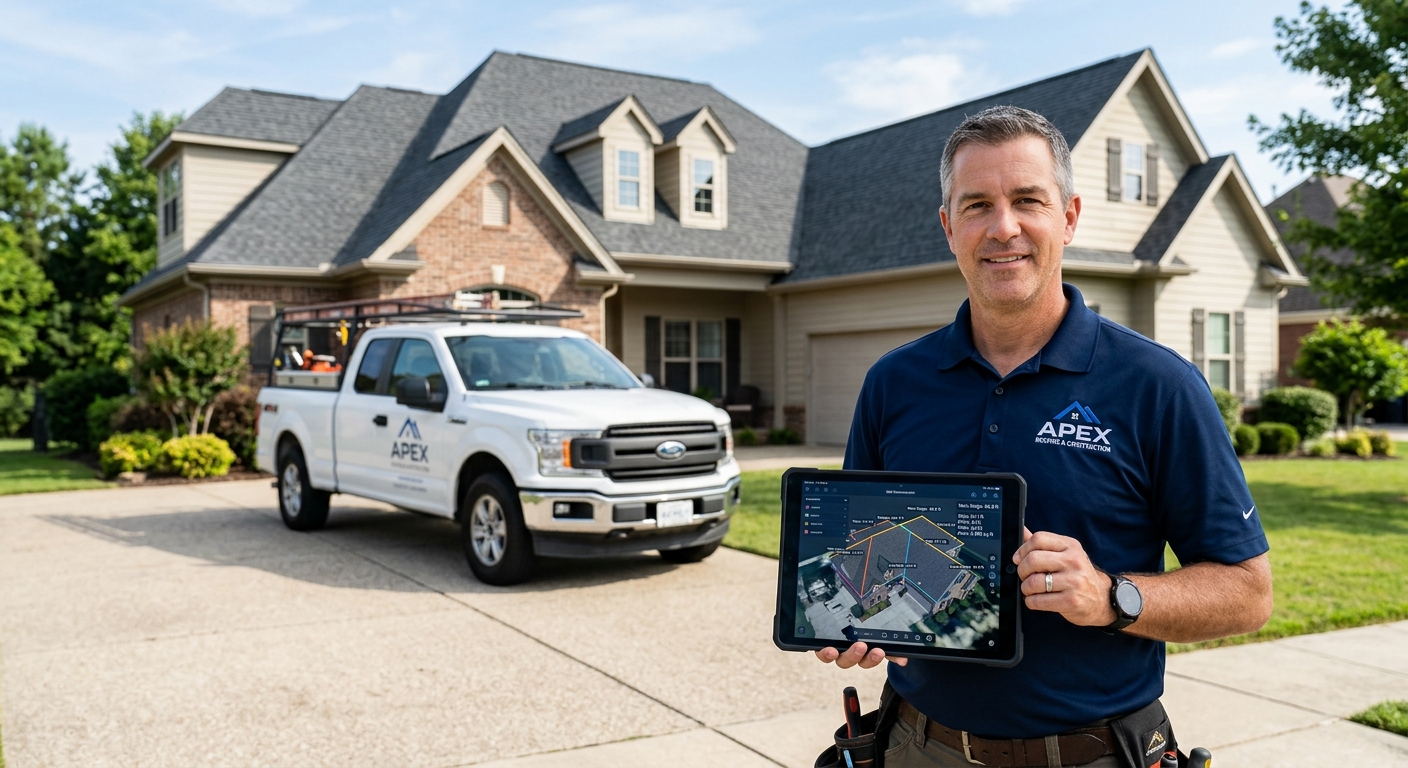
7 Smart Steps to How to Estimate a Roofing Job for Contractors (2026 Guide)
To estimate a roofing job, you must calculate the total square footage of the roof and divide by 100 to determine the nu...
11 Expert Ways to Get Roofing Leads Without Door Knocking for Contractors (2026)
To get roofing leads without door knocking, you must implement a multi-channel digital strategy focusing on Google Local...
How to Get Roofing Leads: 15 Proven Strategies for 2026
The roofing industry in 2026 is a $56.7 billion market, yet many contractors struggle to maintain a consistent pipeline ...