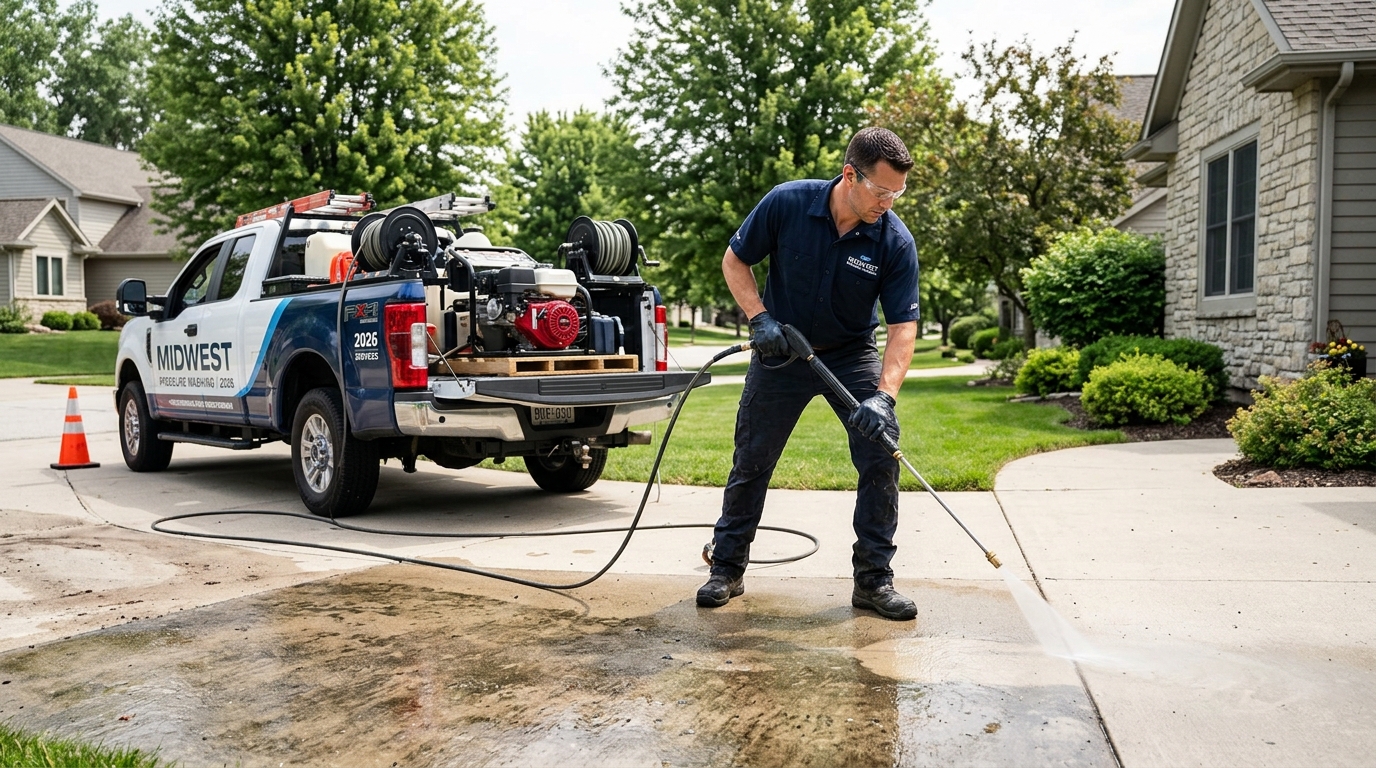
How to Price Pressure Washing Jobs: Complete Pricing Guide (2026)
13 min read·Updated March 20, 2026In 2026, the exterior cleaning industry has moved far beyond the 'guy with a truck' mentality, evolving into a data-driven trade where precision pricing determines who scales and who folds. With residential property values hitting record highs, homeowners and commercial property managers are willing to pay a premium for certified professionals, but only if your quotes reflect transparency and expertise. This guide breaks down the exact formulas used by seven-figure pressure washing companies to ensure every job covers overhead, chemicals, and a healthy net profit. Whether you are dealing with seasonal fluctuations or navigating the complexities of commercial bidding, mastering your numbers is the first step toward building a sustainable, recession-proof business.
Table of Contents
The Three Primary Pressure Washing Pricing Models
Square Footage Pricing for Residential Projects
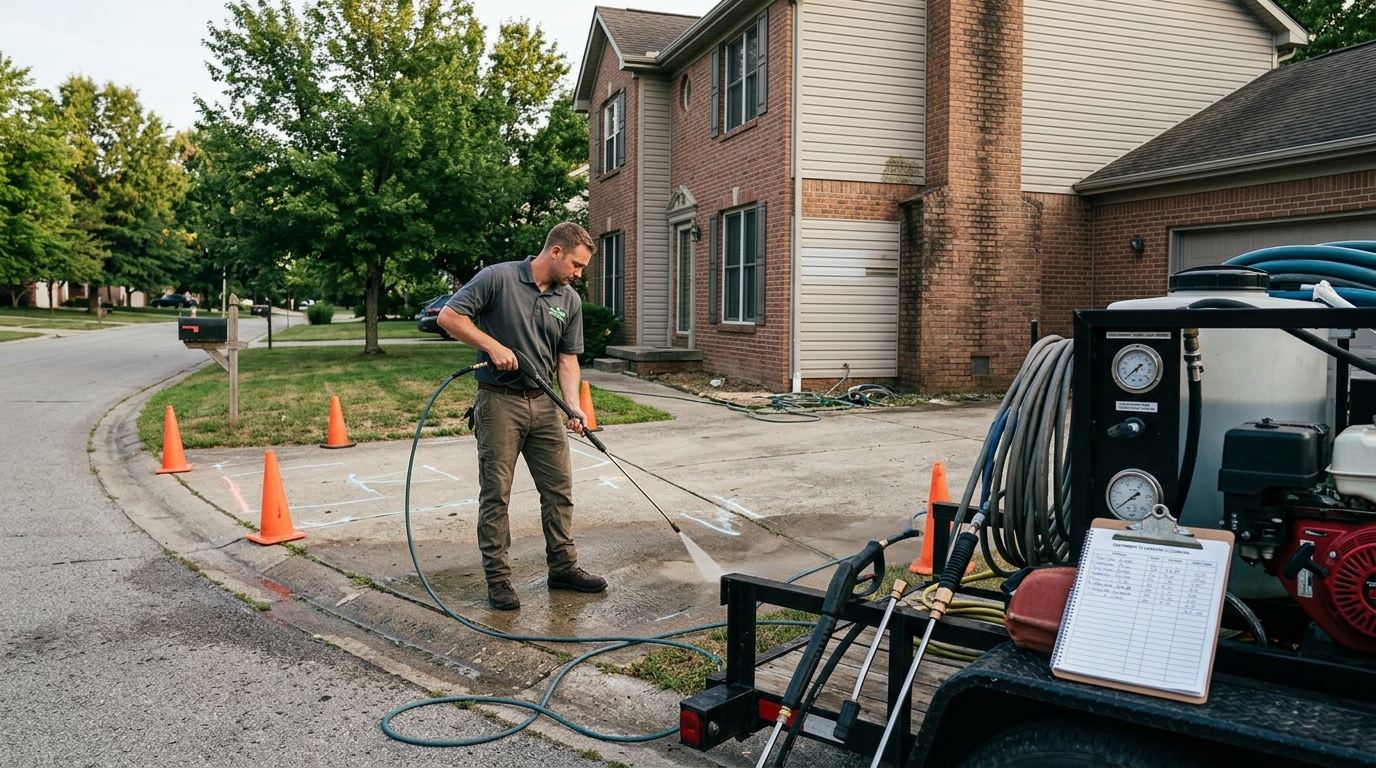
Square footage pricing is the industry standard for flatwork like driveways and large-scale residential house washes. In 2026, most professionals are charging between $0.15 and $0.35 per square foot depending on the level of organic growth and the surface material. For a standard 2,000-square-foot home, this typically translates to a base price of $400 to $700 for a standard soft wash. It is critical to measure the actual surface area being cleaned rather than just the footprint of the home to ensure your chemical usage is accurately covered.
When using this model, you must account for the 'difficulty factor' which includes vertical height and the presence of delicate landscaping. If a property requires extensive masking of high-end light fixtures or protection of sensitive exotic plants, many pros add a 10% to 15% surcharge to the base square foot rate. This transparency helps the client understand that they are paying for precision and protection, not just water pressure. Always use a digital measuring tool or satellite imagery software to confirm these dimensions before sending a final quote to avoid underestimating the scope.
Hourly Rates and Minimum Service Fees
Hourly pricing is often used for complex restoration jobs, such as wood deck stripping or historical masonry cleaning, where the timeline is unpredictable. Most established pressure washing businesses target an hourly shop rate of $150 to $250 per crew, which covers labor, fuel, insurance, and equipment depreciation. If a job is estimated to take four hours with a two-man crew, the quote should start at $800 to ensure the company remains profitable after all expenses. However, relying solely on hourly rates can sometimes penalize you for being efficient, so use this model sparingly.
To protect your schedule from small, low-margin tasks, implementing a minimum service fee is non-negotiable in the current market. Most professionals set a minimum of $175 to $225 just to pull the rig out of the driveway, regardless of how small the cleaning area is. This ensures that travel time, chemical mixing, and setup/breakdown are compensated. Without a minimum fee, taking on small $50 sidewalk jobs will quickly lead to burnout and a net loss when you factor in the cost of fuel for your Honda GX390 or similar high-output engines.
Flat Rate and Package Pricing Strategies
Flat rate pricing is the most consumer-friendly model because it provides an immediate, easy-to-understand number for the homeowner. By bundling services like a 'Whole House Wash' with 'Gutter Brightening' and 'Front Walkway Cleaning,' you can create high-value packages that increase your average ticket size. For example, a 'Premium Curb Appeal Package' might be priced at $850, offering a significant discount over individual services while securing more work for your crew at a single location. This reduces travel time and maximizes the revenue generated per stop.
Successful owners often present three tiers of flat-rate packages: Basic, Standard, and Premium. The Basic package might just be a standard house wash, while the Premium includes roof soft washing and a post-treatment for the driveway to prevent algae regrowth. Providing these options allows the customer to choose their level of investment and often leads to an upsell without the need for high-pressure sales tactics. It also simplifies the administrative side of your business, as these standard packages can be easily managed within your CRM.
| Service Type | Unit of Measure | Price Range |
|---|---|---|
| Standard House Wash (Vinyl) | Per Sq. Ft. | $0.15 - $0.25 |
| Driveway Cleaning | Per Sq. Ft. | $0.20 - $0.35 |
| Roof Soft Wash | Per Sq. Ft. | $0.40 - $0.85 |
| Gutter Cleaning | Linear Foot | $1.50 - $3.00 |
| Deck Restoration | Per Sq. Ft. | $1.50 - $4.00 |
2026 Residential Pricing Averages
Key Takeaway: Always implement a minimum service fee of at least $175 to protect your profit margins against travel and setup costs.
Calculating Overhead and Chemical Expenses
Direct Costs: Chemicals and Fuel
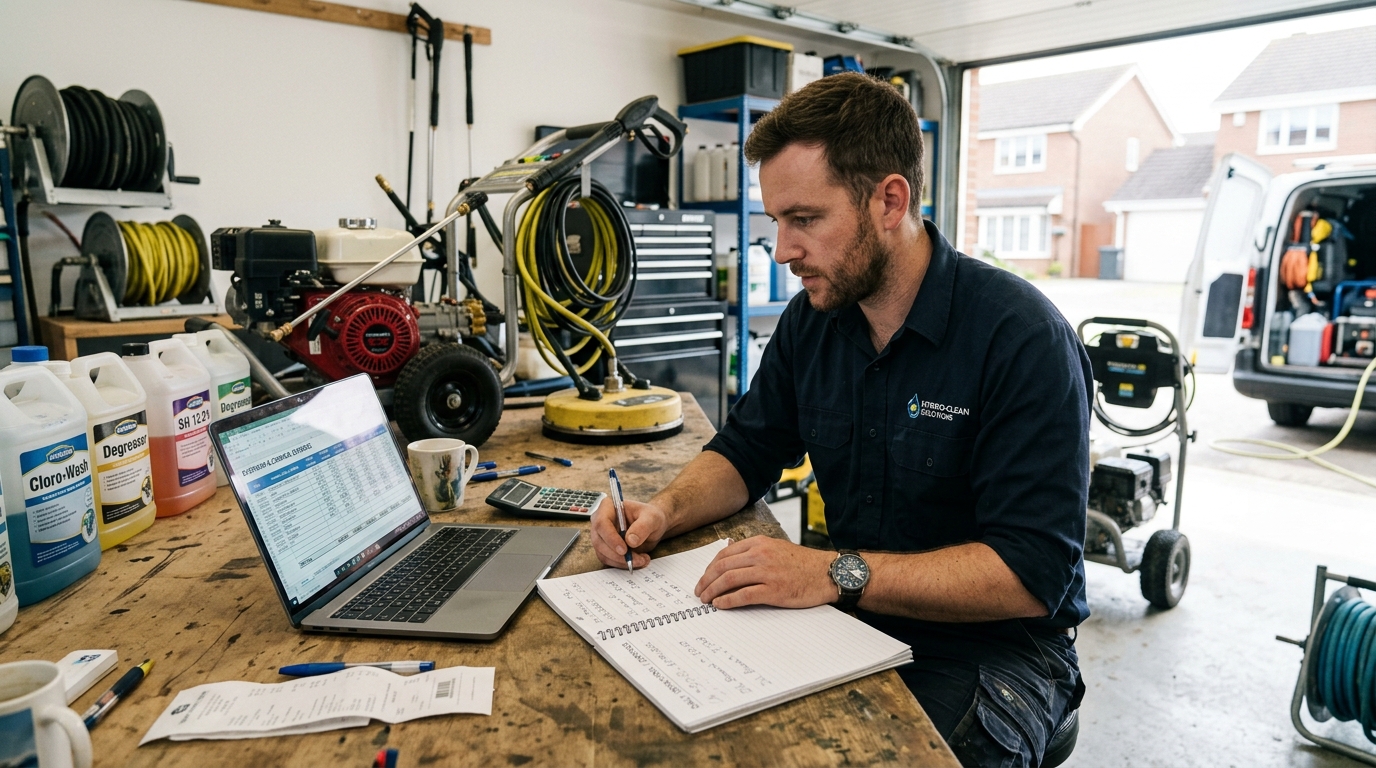
Your chemical costs are the most variable part of your pricing equation and must be calculated with precision. Sodium Hypochlorite (SH) is the backbone of the industry, and in 2026, bulk prices fluctuate based on regional supply chains. A standard house wash might require 5 to 10 gallons of 12.5% SH mixed with a high-quality surfactant like Apple Blossom or Elemonator. If you are paying $5 per gallon for SH, you must ensure that at least $50 to $75 of your quote is dedicated purely to chemical recovery to avoid eating into your labor profits.
Fuel costs extend beyond the truck; your pressure washer engine and your 12V or gas-powered soft wash pumps also consume significant amounts of gasoline or diesel. A 5.5 GPM or 8 GPM machine running for several hours can easily consume $20 to $40 in fuel per day. When pricing a job, many pros add a 'fuel and consumables' line item or simply bake a 5% buffer into their total estimate. This buffer also covers smaller items like O-rings, teflon tape, and nozzle replacements that wear down during heavy use.
Fixed Costs: Insurance, Equipment, and Software
Fixed costs are the expenses you pay regardless of whether you wash one house or one hundred. General Liability insurance is mandatory, with premiums often ranging from $1,200 to $3,500 annually depending on your coverage for 'Care, Custody, and Control.' Additionally, Workers' Compensation is a major factor if you have employees, often costing 5% to 10% of your total payroll. These expenses must be divided by your projected billable hours to determine the 'burdened' rate you need to charge per hour to break even.
Equipment depreciation is another hidden cost that many new owners overlook. A professional-grade skid or trailer setup can cost between $15,000 and $45,000, and these machines have a finite lifespan before pumps and engines need rebuilding. You should be setting aside roughly 10% of every check for future equipment upgrades and maintenance. Instead of juggling separate tools for your website, client management, and invoicing, all-in-one platforms like Hulo let you run everything from a single dashboard for just $49.99/mo, which significantly lowers your monthly administrative overhead compared to expensive enterprise software.
30% - 50%
Average Net Profit Margin
Target this range after accounting for all chemicals, labor, and overhead.
Specialized Pricing for Soft Washing and Roofs
The High Value of Roof Soft Washing
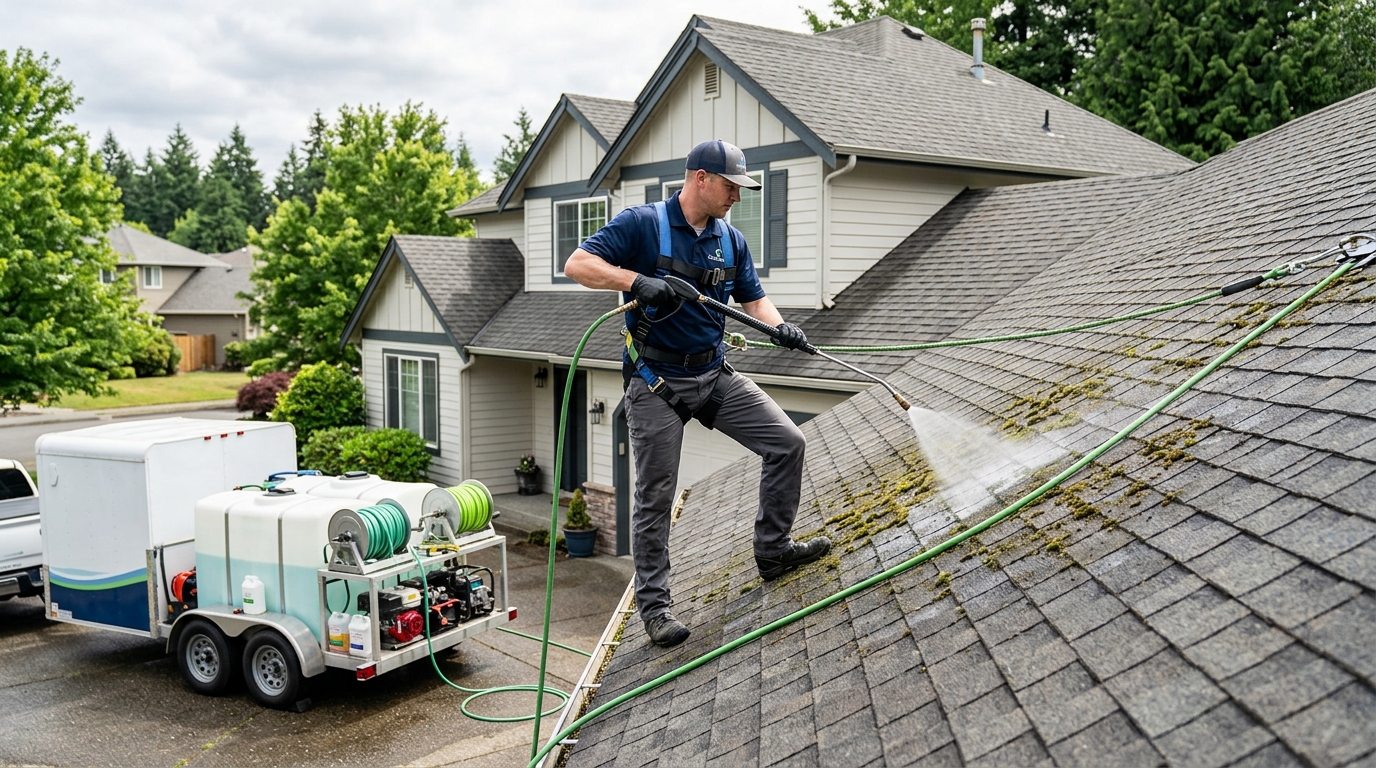
Roof cleaning is one of the highest-margin services in the exterior cleaning industry because it requires specialized knowledge and equipment. Unlike standard pressure washing, roof cleaning utilizes a low-pressure 'soft wash' system to apply a chemical solution that kills Gloeocapsa Magma (the black streaks) at the root. Because of the risks associated with ladder work and the potential for property damage if chemicals are mishandled, roof pricing starts much higher, often between $0.40 and $0.85 per square foot. A typical 2,500-square-foot roof can easily command a price tag of $1,000 to $1,500.
When quoting roofs, always check the pitch and the type of shingle (asphalt, tile, or cedar). Steeper pitches require more safety equipment and slower movement, which should increase your rate by 20% or more. You must also account for the volume of SH used, as roofs require a much hotter mix (3% to 6% SH concentration) than siding. This increased chemical cost must be reflected in the quote to maintain your 50% profit margin. Always include a disclaimer in your contract regarding pre-existing shingle granules loss to protect your business from liability.
Pricing for Delicate Surfaces: Decks and Fences
Wood restoration is a premium service that involves a multi-step process: cleaning, brightening, and potentially sealing or staining. Because wood is easily damaged by high pressure, you must price for the extra time required to use chemical strippers and wood brighteners (oxalic acid). Many pros charge between $1.50 and $4.00 per square foot for a full clean-and-brighten service. If the client also wants a professional stain application, the price can double, as labor for staining is meticulous and weather-dependent.
Fences are typically priced by the linear foot rather than square footage for simplicity. A standard 6-foot privacy fence might be priced at $5 to $10 per linear foot for a basic cleaning. If the fence requires stripping old, failing stain, that price should move toward the higher end of the spectrum. Always remind customers that wood restoration adds years of life to their structures, justifying the higher price point compared to a simple concrete wash. This is an excellent service to offer during the shoulder seasons when house washing demand might dip.
Pro Tip: Use a dedicated soft wash system with a proportioner (like the Blend Manifold) to dial in your chemical ratios on the fly, saving money on wasted SH.
Commercial Bidding and Maintenance Contracts
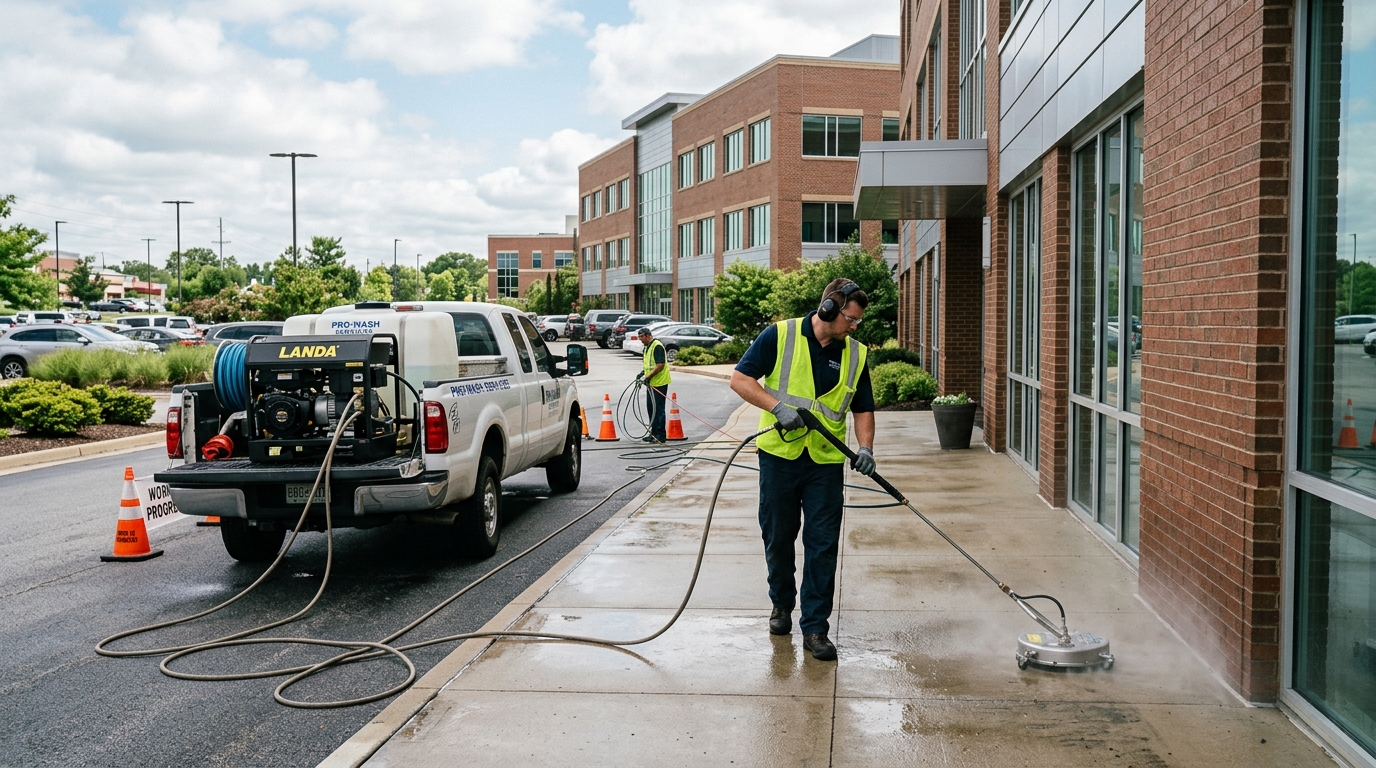
Bidding on Large Commercial Properties
Commercial pricing differs significantly from residential because it often involves higher volume but lower margins per square foot. When bidding on shopping centers, parking garages, or apartment complexes, you are often competing against other established companies in a formal RFP process. For these jobs, pricing usually drops to $0.05 to $0.15 per square foot for concrete, as the scale allows your crew to stay in one place for multiple days. The key is to emphasize your insurance limits, safety certifications, and ability to work overnight to avoid disrupting their business operations.
To win these bids, you need a professional online presence that proves you are a legitimate entity rather than a hobbyist. Having a professional website is non-negotiable in 2026—tools like Hulo can generate one for your pressure washing business in minutes, giving you a dedicated place to showcase your commercial portfolio and certificates of insurance. When property managers see a polished website and receive a professional digital estimate, they are far more likely to trust you with a $10,000 contract than a competitor sending a text-message quote.
Building Recurring Revenue with Fleet Washing
Fleet washing is the bread and butter of consistent, year-round revenue for many pressure washing businesses. Pricing for fleet washing is typically done on a 'per-unit' basis, ranging from $15 to $45 per truck depending on the size and the frequency of the cleaning. A weekly contract for 50 delivery vans provides a predictable $1,500 weekly check that keeps your crews busy regardless of the housing market. While the per-unit profit is lower, the efficiency of washing 50 vehicles in one location is unmatched.
When setting up fleet contracts, include a 'fuel surcharge' clause that allows you to adjust pricing if gas prices spike significantly. You should also offer tiered levels of service, such as a 'Basic Rinse' versus a 'Premium Degreasing and Aluminum Brightening' for heavy-duty tractor-trailers. Using a two-step cleaning process (acid and alkaline soaps) can speed up the job significantly, allowing you to maintain high profitability even at lower per-unit prices. This recurring model is the fastest way to scale a business to multiple rigs and full-time crews.
Key Takeaway: Commercial contracts provide the 'floor' for your monthly revenue, protecting you from residential seasonality.
Ready to put this into action?
Hulo gives you everything to run your pressure washing business — website, CRM, scheduling, and invoicing. Join the waitlist for V2.
Join the WaitlistModern Estimating and Administrative Efficiency
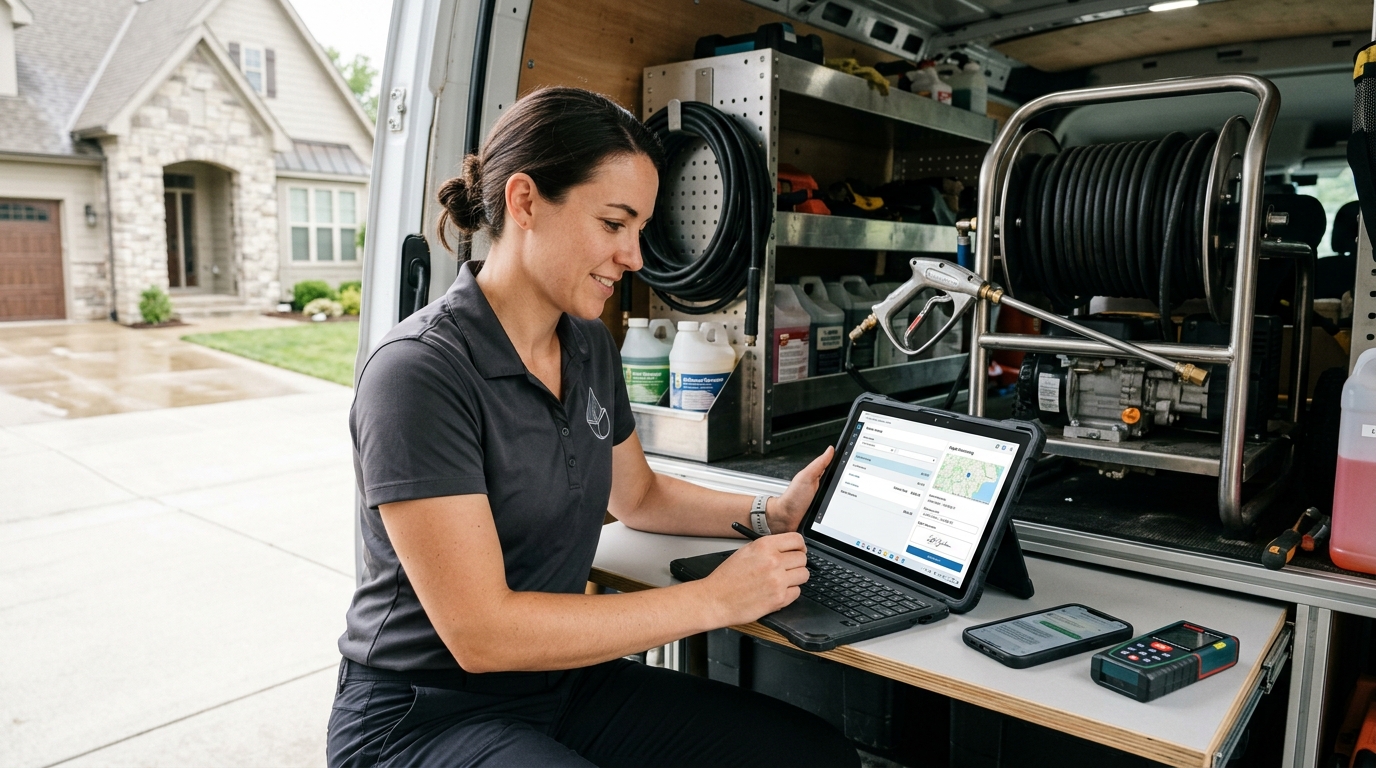
Remote Estimating Tools and Techniques
The days of driving 30 minutes each way to give a free $300 estimate are over for successful 2026 businesses. Use tools like Google Earth Pro, MapDevelopers, or specialized roof measurement software to calculate square footage from your office. By measuring the perimeter of the house and the area of the driveway remotely, you can provide an accurate 'ballpark' estimate within minutes of the lead coming in. This speed-to-lead is often the deciding factor for customers who are shopping around for the fastest response.
Always clarify in your digital estimate that the final price is subject to an on-site inspection for 'unusual organic growth' or 'heavy oil staining.' This protects you if the satellite images are outdated or don't show the true condition of the property. Once you have the measurements, you can send a professional proposal that includes photos of the specific areas you'll be cleaning. This level of detail justifies your pricing and builds immediate trust with the homeowner, setting you apart from the 'low-ballers' in your area.
Streamlining Your Workflow with Integrated Software
Managing a growing pressure washing business requires more than just a spreadsheet; you need a system that tracks leads, schedules jobs, and sends invoices automatically. Platforms like Hulo combine your website, CRM, scheduling, and invoicing in one place for under $50/mo, eliminating the need for expensive, fragmented software stacks. When a client accepts a quote on your Hulo-powered site, the job can be instantly added to your calendar and an automated reminder can be sent to the customer, reducing the risk of 'no-shows' or gate-access issues.
Automated invoicing is another game-changer for cash flow. Instead of waiting until the end of the week to send bills, your system should trigger an invoice the moment the technician marks the job as complete. Offering digital payment options like credit cards or ACH via your CRM ensures you get paid faster, often before the crew even leaves the neighborhood. Reducing the time between 'work performed' and 'payment received' is the most effective way to ensure you have the capital needed for your next bulk chemical order or equipment repair.
| Feature | Separate Tools Total | Hulo All-In-One |
|---|---|---|
| Professional Website | $20 - $100 | Included |
| CRM & Lead Tracking | $30 - $150 | Included |
| Scheduling Software | $25 - $80 | Included |
| Invoicing & Payments | $15 - $50 | Included |
| Total Monthly Cost | $90 - $380 | $49.99 |
Software Stack Comparison (Monthly Costs)
Marketing Strategies to Support Premium Pricing
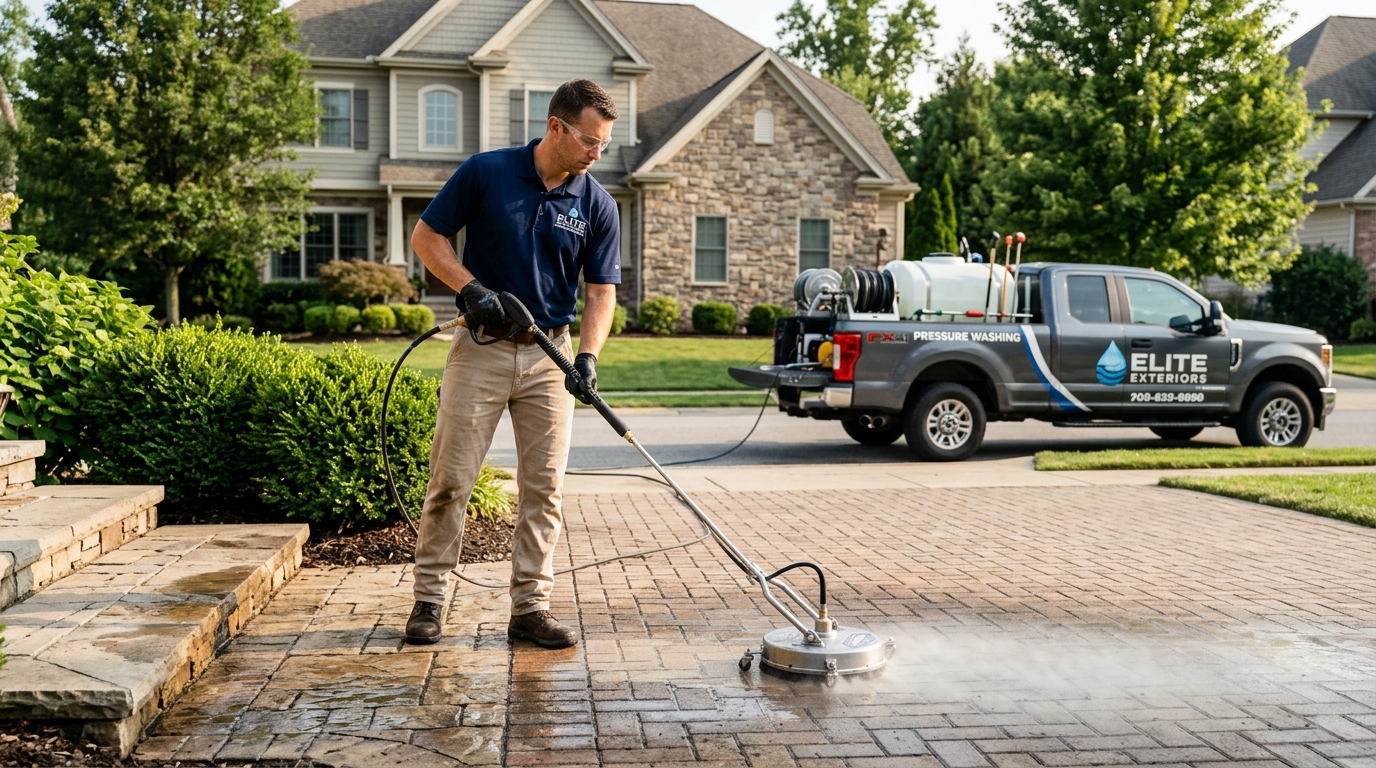
Showcasing Social Proof and Before/Afters
In the pressure washing world, seeing is believing. Your pricing is directly tied to the perceived value of your results, which is why a high-quality gallery of before-and-after photos is your best sales tool. Capture high-resolution images of 'half-cleaned' driveways or 'black-to-clean' roof transformations to show the immediate impact of your work. Posting these on your professional website and social media profiles creates a 'FOMO' effect for neighbors who see the dramatic improvement in their area.
Customer reviews are the second pillar of premium pricing. A business with 100 five-star reviews can easily charge 20% more than a new competitor with zero reputation. Make it a standard part of your workflow to send an automated review request via your CRM as soon as a job is invoiced. When potential clients see that you consistently deliver high-quality results and professional communication, they are much less likely to haggle over your $500 house wash price because they know the risk of hiring a cheaper, uninsured alternative.
Targeting High-Value Neighborhoods and Commercial Hubs
Not all neighborhoods are created equal when it comes to profit margins. Use demographic data to target areas with high property values and older homes that are more likely to have significant organic growth or oxidation. Direct mail campaigns (like EDDM) can be highly effective if you time them correctly—typically in the early spring when 'spring cleaning' is top of mind. By focusing your marketing spend on areas where homeowners have more disposable income, you can maintain higher rates without facing significant price resistance.
For commercial growth, LinkedIn is a powerful tool for connecting with property managers and HOA board members. Rather than a hard sell, share educational content about the importance of 'soft washing' to preserve the lifespan of commercial roofing and siding. Positioning yourself as an expert consultant rather than just a service provider allows you to command higher contract rates. Remember that property managers value reliability and documentation above all else; providing them with detailed 'after-action' reports and clear invoicing through a platform like Hulo will make you their go-to vendor for years.
$20 - $50
Customer Acquisition Cost (CAC)
The amount you should expect to spend on marketing to land a new residential lead.
Key Takeaway: Your pricing is a reflection of your reputation; use automated review requests to build the social proof needed to charge premium rates.
Wrapping Up
Mastering your pricing is the difference between owning a job and owning a business. By understanding your chemical costs, overhead, and the value of specialized services like roof soft washing, you can build a company that thrives in any economy. Remember that as your efficiency grows, so should your margins—don't be afraid to raise your rates as your reputation and expertise increase. To simplify the transition from 'side hustle' to 'professional enterprise,' leverage all-in-one tools like Hulo. For just $49.99/mo, Hulo provides the professional website, CRM, and invoicing tools you need to stay organized and win more high-paying jobs in 2026.
Frequently Asked Questions
How much should I charge for a standard 2-car driveway?
For a standard 2-car driveway (approx. 400-600 sq. ft.), most professionals charge between $125 and $250. This usually includes a pre-treatment with SH, a deep clean with a surface cleaner, and a post-treatment to ensure a streak-free finish and long-lasting results.
Do I need separate software for scheduling, invoicing, and my website?
No—modern all-in-one platforms like Hulo bundle your professional website, CRM, scheduling, and invoicing into a single $49.99/mo subscription. This is much more cost-effective than paying for 3-4 separate tools and ensures all your customer data stays in one organized place.
What are the typical startup costs for a professional pressure washing business?
A professional setup—including a 4-5 GPM machine, hoses, surface cleaner, and chemicals—typically costs between $3,000 and $7,000 for a basic truck/trailer build. If you add a dedicated soft wash system and professional branding, expect to invest $10,000 to $15,000 to start at a high level.
How do I handle weather cancellations in my schedule?
Weather is the biggest disruptor in this trade, so you must have a clear rescheduling policy in your terms of service. Using a tool like Hulo allows you to quickly drag-and-drop appointments to new dates and send automated 'Weather Update' notifications to your clients, keeping them informed and your schedule organized.
Is it better to price by the hour or by the square foot?
Square foot pricing is generally better for growth because it rewards your efficiency; as you get faster, your 'effective' hourly rate increases. Hourly pricing is best reserved for unique, high-risk restoration jobs where the total time required is difficult to estimate upfront.
How can I win more commercial pressure washing bids?
To win commercial bids, you must demonstrate professionalism through a polished website, proof of high-limit insurance, and clear, digital estimates. Using Hulo to manage your commercial leads and present professional proposals can give you the edge over smaller competitors who lack a formal business infrastructure.
Ready to Scale Your Pressure Washing Business?
Join the pros using Hulo to manage their websites, schedules, and invoices for one low monthly price. Start your professional journey for just $49.99/mo today.
Join the WaitlistMore from the Blog
9 Expert Tips for the Best Pressure Washer for Starting a Business (2026)
The best pressure washer for starting a business is a gas-powered unit delivering at least 4.0 GPM (gallons per minute) ...
9 Actionable Ways to Bid Commercial Pressure Washing Jobs for Contractors (2026)
Bidding commercial pressure washing jobs requires calculating your square footage rate, typically between $0.10 and $0.5...
How to Start a Pressure Washing Business: The $50K Side Hustle Guide (2026)
In 2026, the demand for exterior maintenance has reached an all-time high as homeowners prioritize curb appeal and prope...