How to Start a Landscaping Business: The Complete Guide (2026)
17 min read·Updated March 20, 2026The landscaping industry is projected to reach over $130 billion in revenue by the end of 2026, driven by a surge in residential outdoor living investments and commercial property expansions. For aspiring entrepreneurs, the barrier to entry remains accessible, yet the gap between a 'guy with a mower' and a professional landscape contractor is wider than ever. This guide provides a comprehensive roadmap for building a scalable landscaping business that moves beyond basic lawn cutting into high-margin design, hardscaping, and seasonal services. Whether you are transitioning from a crew lead role or starting fresh, understanding the mechanics of estimating, equipment lifecycle management, and digital client acquisition is the key to long-term profitability.
Table of Contents
Defining Your Landscaping Niche and Business Model
Maintenance vs. Design-Build Models
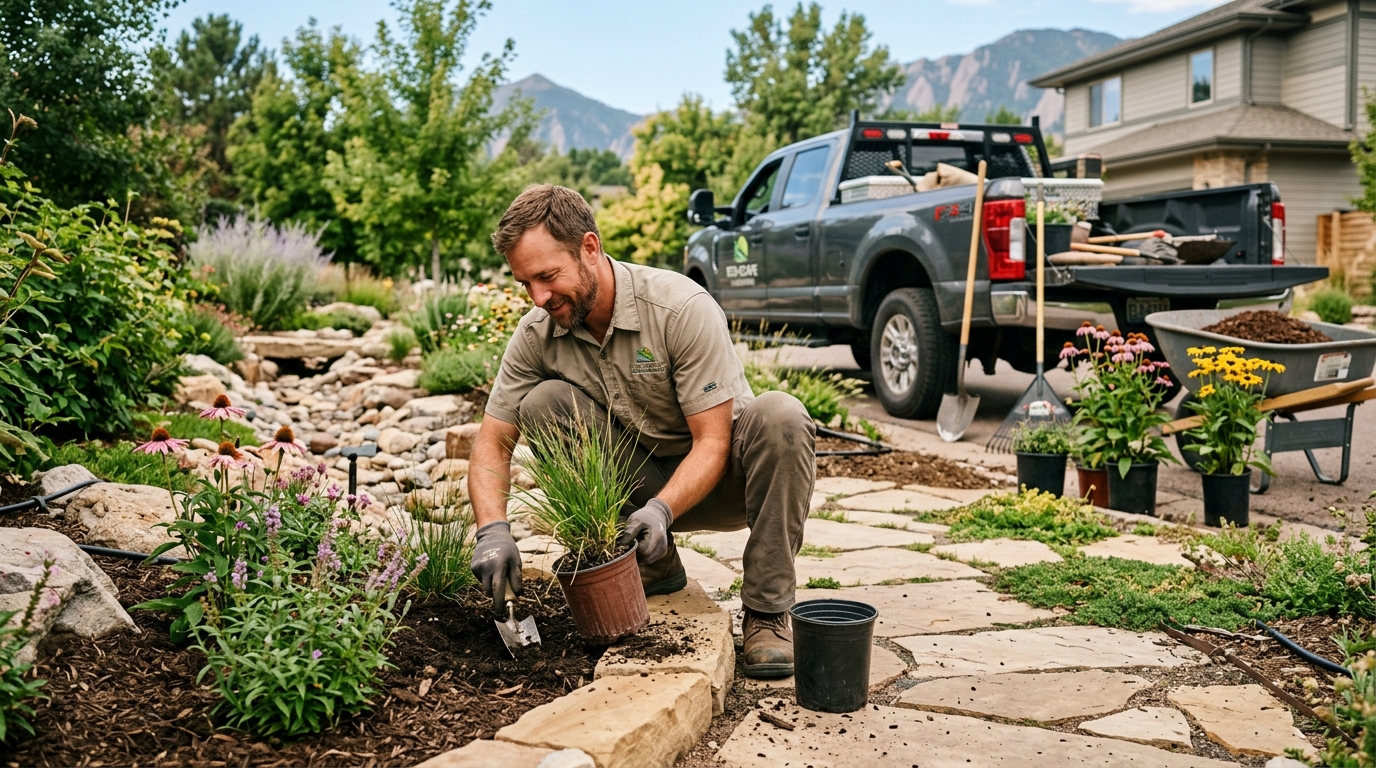
The first critical decision in starting your business is choosing between a recurring maintenance model and a project-based design-build model. Maintenance focuses on weekly lawn care, pruning, and fertilization, providing steady cash flow but often operating on thinner 10% to 15% net profit margins. In contrast, design-build firms handle high-ticket items like patio installations, outdoor kitchens, and custom plantings where project costs can range from $15,000 to over $100,000.
Many successful contractors begin with a hybrid approach, using maintenance contracts to pay the bills while aggressively bidding on installation projects to drive growth. This strategy mitigates the risk of seasonal cash flow gaps, particularly in regions where the winter months halt all planting activity. By securing 20 to 30 annual maintenance contracts, you establish a baseline revenue that covers your fixed overhead, such as truck payments and insurance premiums.
Analyze your local market saturation before committing to a specific niche to ensure there is sufficient demand for your services. If your area is flooded with low-cost lawn mowers, consider specializing in 'softscaping'—the selection and installation of ornamental plants—or high-end hardscaping. Specialization allows you to charge premium rates, often exceeding $85 per man-hour, because you are providing expert craftsmanship rather than a commodity service.
Conducting Local Market Research
Effective market research involves more than just looking at Google Maps; you must understand the specific demographics and property values in your target service area. High-income neighborhoods with aging populations often present the best opportunities for full-service estate management, where clients prefer a single point of contact for all outdoor needs. Use tools like Zillow to find areas with a high density of homes valued at $500,000 or more, as these homeowners are statistically more likely to invest in professional landscaping.
Identify your direct competitors and analyze their service gaps by reviewing their online presence and customer feedback. If most local companies have poor communication or lack a professional website to showcase their portfolios, you can win market share simply by being more responsive and professional. Note their pricing if possible—many small operators underprice their work, which leads to burnout and equipment failure, giving you an opening to position yourself as a premium, reliable alternative.
Talk to local nursery owners and irrigation suppliers to get a pulse on what materials are currently in high demand and what the typical lead times are. Suppliers are often the best source of industry 'intel' regarding which companies are growing and what types of projects are trending in your zip code. Understanding these trends early allows you to tailor your marketing message to solve the specific problems your target clients are currently facing.
Key Takeaway: Choose a hybrid business model that combines recurring maintenance revenue with high-margin installation projects to ensure year-round financial stability.
Legal Requirements and Business Infrastructure
Registering Your Business and Licensing
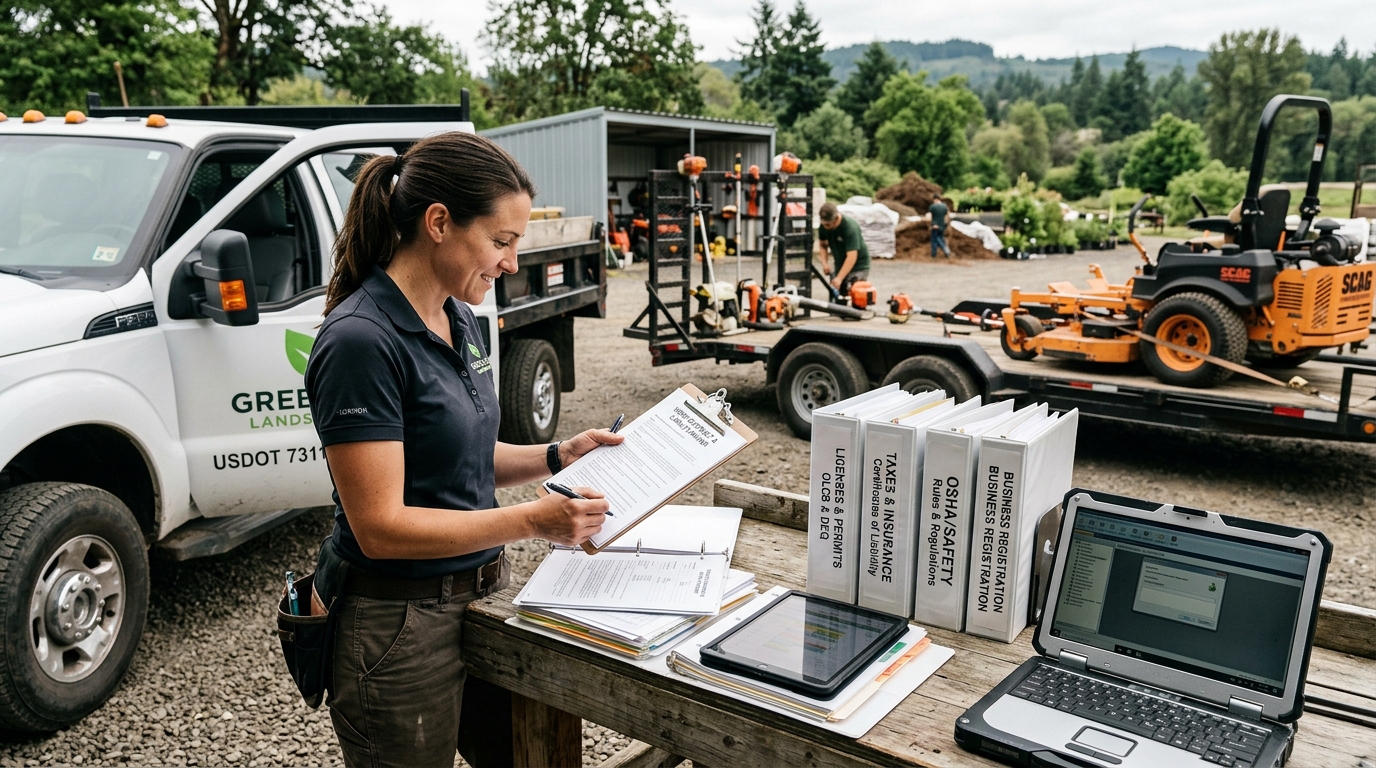
Formalizing your business starts with selecting a legal structure, such as an LLC (Limited Liability Company), which protects your personal assets from business liabilities. In 2026, many contractors prefer the LLC structure for its flexibility and tax advantages, particularly when combined with an S-Corp election as the company grows. You will need to obtain a federal Employer Identification Number (EIN) from the IRS, which is essential for opening business bank accounts and hiring employees.
Licensing requirements for landscapers vary significantly by state and often depend on the scope of work you intend to perform. Basic lawn maintenance may only require a general business license, but applying pesticides, installing irrigation systems, or building retaining walls over four feet tall usually requires specialized certifications. For example, a commercial pesticide applicator license is mandatory in most states if you plan to offer weed control or fertilization services to clients.
Failure to secure the proper licenses can lead to heavy fines and the voiding of your insurance policies if a claim arises. Always check with your state's Department of Agriculture and the local building department to ensure you are compliant with all environmental and construction regulations. Keeping your licenses up to date is not just a legal hurdle; it is a marketing asset that demonstrates your professionalism to high-end residential and commercial clients.
Insurance and Liability Protection
Landscaping is a high-risk trade involving heavy machinery, sharp tools, and the potential for property damage, making comprehensive insurance non-negotiable. General Liability insurance is the foundation, typically requiring a minimum of $1,000,000 in coverage per occurrence to protect against claims of bodily injury or damage to a client's home. If you are performing hardscape work, ensure your policy specifically covers 'completed operations' to protect you if a wall or patio fails years after installation.
Workers' Compensation insurance is mandatory in nearly every state once you hire your first employee, and it is often the most expensive part of a landscaper's overhead. Even if you are a solo operator, some commercial contracts will require you to carry 'Ghost' Workers' Comp policies to prove you have considered the risk. Additionally, Inland Marine insurance is vital for protecting your expensive mowers, skid steers, and hand tools while they are in transit or parked at a job site.
Commercial Auto insurance is another critical requirement, as standard personal auto policies will not cover accidents that occur while performing business activities or hauling a loaded trailer. Expect to pay between $3,000 and $7,000 annually for a comprehensive insurance package, depending on your location and the number of crews you manage. Budgeting for these costs upfront prevents a single accident from bankrupting your new venture before it truly gets off the ground.
| Requirement | Estimated Cost | Frequency |
|---|---|---|
| LLC Formation & Filing | $150 - $500 | One-time |
| General Liability Insurance | $800 - $2,500 | Annual |
| Commercial Pesticide License | $100 - $300 | Annual |
| Commercial Auto Insurance | $2,000 - $5,000 | Annual |
| Business Bank Account Fees | $0 - $300 | Annual |
Essential Business Setup Checklist
Essential Equipment and Inventory Management
Commercial Mowing and Maintenance Gear
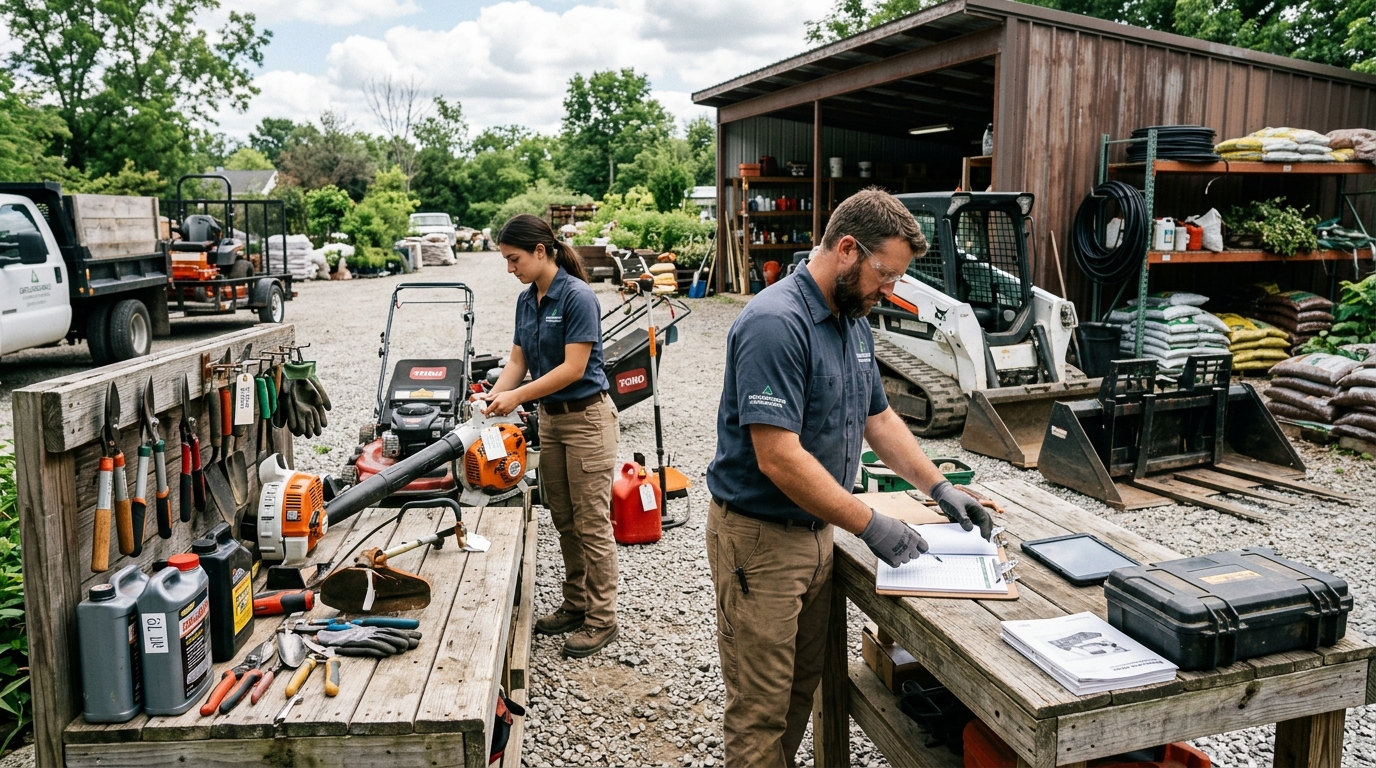
Investing in commercial-grade equipment is the difference between a profitable day and a day spent in the repair shop. For a startup, a 52-inch or 60-inch zero-turn mower from brands like Scag, Exmark, or John Deere is the workhorse that allows you to cut 2-3 acres per hour efficiently. These machines range from $10,000 to $16,000 but are built to withstand 1,500+ hours of operation, whereas residential mowers will fail within a single season of professional use.
In addition to your primary mower, you will need a suite of high-performance handheld tools, including string trimmers, blowers, and edgers. Brands like Stihl and Echo are industry standards for their reliability and ease of service; a professional-grade backpack blower like the Stihl BR 800 is essential for moving heavy spring and fall debris. Budget approximately $2,500 for a complete set of handheld equipment, including spare parts like spark plugs, air filters, and trimmer line.
Don't overlook the importance of a reliable transport system, which usually involves a 3/4-ton pickup truck (like a Ford F-250 or Chevy 2500) and a 14-foot to 16-foot open or enclosed trailer. A used commercial truck in decent condition will cost between $25,000 and $45,000 in today's market, while a new tandem-axle trailer will add another $4,000 to $7,000. Your trailer should be equipped with rack systems to secure your handheld tools, preventing damage and theft while moving between job sites.
Hardscaping and Specialized Installation Tools
If your business plan includes hardscape installations like patios and retaining walls, your equipment needs will scale significantly. A plate compactor is essential for preparing sub-bases to ensure pavers do not settle over time, with professional models costing around $1,500 to $2,500. For larger projects, renting a skid steer or a mini-excavator is often more cost-effective than buying until you are booking at least two major installs per month.
Specialized hand tools for hardscaping include masonry saws, dead-blow hammers, and levels of various lengths (2-foot to 8-foot). A high-quality wet saw for cutting pavers can cost $1,000 or more, but it ensures clean, professional edges that define a high-end installation. You will also need to account for 'consumables' like diamond blades, which can cost $150 each and need frequent replacement depending on the hardness of the stone you are cutting.
Inventory management for materials like mulch, topsoil, and gravel requires a staging area if you want to maximize profit by buying in bulk. Purchasing mulch by the yard (approximately $25-$35) and storing it at your own yard is far more profitable than buying bagged mulch at a big-box retailer. If you lack space for a yard, establish a 'pro' account with a local landscape supply center to secure contractor pricing and prioritized delivery for your job sites.
$35,000 – $75,000
Average Startup Equipment Cost
This includes a commercial truck, zero-turn mower, trailer, and a full set of professional handheld power tools.
Pricing Strategies and Estimating for Profit
Calculating Your Hourly Man-Hour Rate
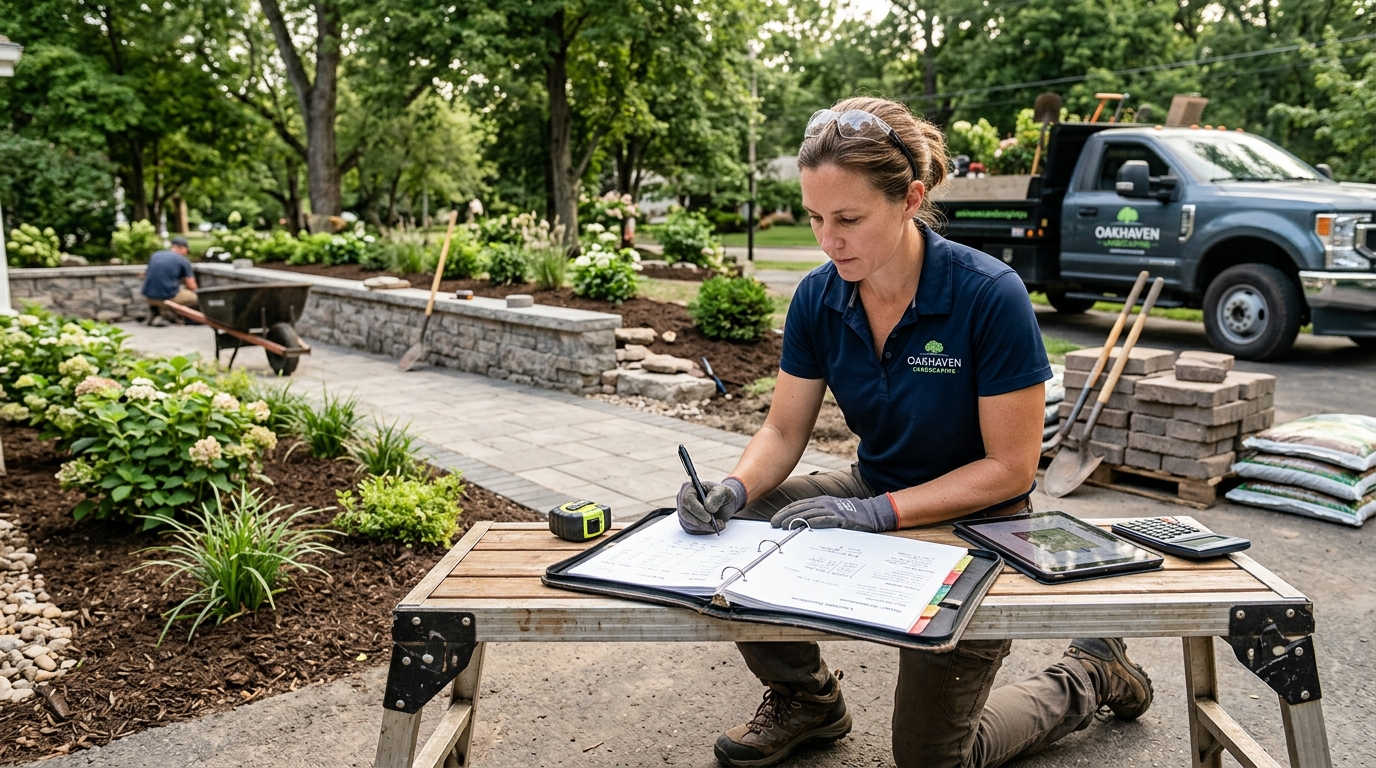
One of the most common reasons landscaping businesses fail is 'guesstimating' prices rather than using a data-driven man-hour rate. To calculate your rate, you must sum your total annual overhead (insurance, equipment payments, fuel, marketing, and office expenses) and add your desired net profit margin. For example, if your total annual costs are $80,000 and you want a 20% profit, you need to generate $100,000 in total revenue across your billable hours.
Divide that total revenue goal by the number of billable hours you and your crew can realistically work in a season—typically around 1,500 to 1,800 hours per person. In 2026, many professional landscaping firms are charging between $65 and $110 per man-hour, depending on the complexity of the service. If a lawn takes two people 30 minutes to mow, trim, and blow, that equals one man-hour of labor, and your price should reflect that full hourly rate.
Be transparent with your pricing but avoid itemizing every small cost for the client, as this can lead to unnecessary negotiations. Instead, provide a flat-rate quote based on your internal man-hour calculations and material markups. For maintenance, standardized pricing based on square footage (e.g., $45 for up to 5,000 sq. ft.) can simplify your sales process and allow for instant quoting over the phone using satellite imagery.
Estimating Large Installation Projects
Estimating a hardscape or large planting project requires a meticulous breakdown of materials, labor, and equipment usage. Start by calculating the exact quantity of base material, bedding sand, and pavers needed, then add a 10% waste factor to account for cuts and breakage. Material markups in the landscaping industry typically range from 20% to 50%, which covers the time spent sourcing, transporting, and managing those materials.
Labor for installations is where most contractors lose money, so you must track your crew's historical production rates for tasks like 'square feet of pavers laid per hour.' Factor in site preparation time, which includes excavation and disposal of old soil or debris, as this often takes longer than the actual installation. Always include a 'mobilization fee' or 'delivery fee' for large projects to cover the fuel and time spent moving heavy equipment to the site.
Include a contingency fund of 5% to 10% on every large bid to account for unforeseen issues like hitting underground utilities or encountering poor soil conditions. Presenting a professional, detailed proposal is crucial for winning these high-ticket jobs. Using a digital platform to send estimates allows clients to approve and pay deposits electronically, which significantly improves your professional image and project win rate.
15% – 25%
Target Net Profit Margin
Successful landscaping businesses aim for this margin after all expenses, including the owner's salary, are paid.
Key Takeaway: Never bid based on what the competition is charging; calculate your own man-hour rate to ensure every job covers your specific overhead and profit goals.
Ready to put this into action?
Hulo gives you everything to run your landscaping business — website, CRM, scheduling, and invoicing. Join the waitlist for V2.
Join the WaitlistMarketing and Building a Professional Digital Presence
The Importance of a Professional Website
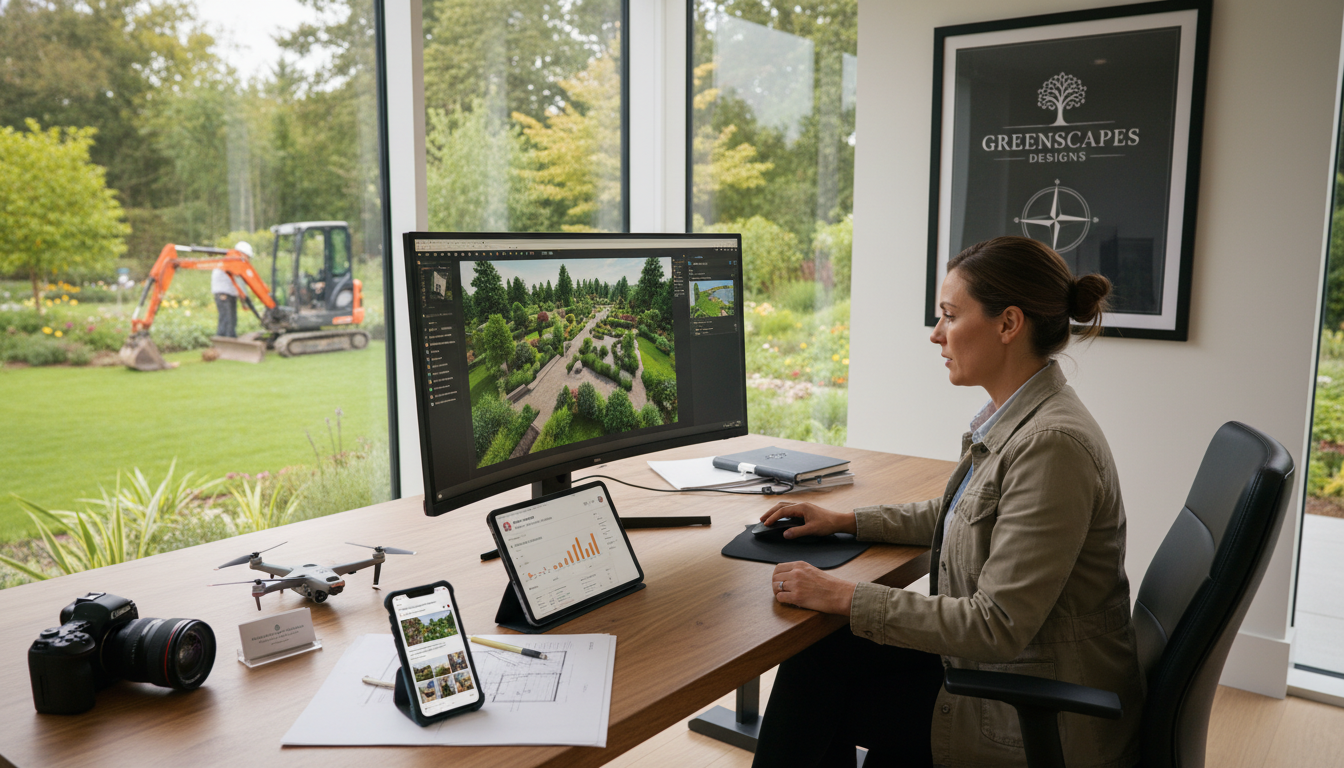
In 2026, your website is your digital storefront and the primary way high-end clients vet your business before calling for an estimate. A professional site must showcase a high-resolution gallery of your best work, clearly list your service areas, and offer an easy way for leads to request a quote. Without a website, you are invisible to the 85% of homeowners who start their search for local services on Google or social media.
Instead of spending thousands on a custom web developer, modern trade-specific platforms offer a more efficient path. All-in-one platforms like Hulo allow you to build a professional website tailored for landscaping, while also integrating your CRM and scheduling tools. Having your website connected directly to your backend management system means that a lead captured on your homepage automatically populates in your database, saving hours of manual data entry.
Ensure your website is optimized for mobile devices, as most homeowners will browse your portfolio while sitting in their backyard or commuting. Fast loading times and clear 'Call to Action' buttons, such as 'Get a Free Estimate,' are critical for converting visitors into paying customers. Your site should also feature testimonials and logos of any industry certifications you hold to build immediate trust with prospective clients.
Local SEO and Lead Generation
Local Search Engine Optimization (SEO) is the process of ensuring your business appears in the 'Map Pack' when someone searches for 'landscapers near me.' This starts with claiming and optimizing your Google Business Profile with accurate hours, photos of your crew in uniform, and a detailed description of your services. Encourage every satisfied client to leave a 5-star review, as the quantity and quality of reviews are primary ranking factors in local search results.
Content marketing can also set you apart; consider writing blog posts about 'The Best Plants for [Your City] Climate' or 'How to Maintain Your New Patio.' This positions you as a local expert and helps your website rank for long-tail keywords that your competitors are likely ignoring. Social media platforms like Instagram and TikTok are perfect for the visual nature of landscaping, allowing you to post 'before and after' videos that demonstrate your craftsmanship in real-time.
While organic growth is the goal, paid advertising through Google Local Services Ads (LSAs) can provide an immediate boost in leads for new businesses. Unlike traditional PPC, LSAs operate on a pay-per-lead basis and grant you a 'Google Guaranteed' badge, which provides an extra layer of credibility. Combining these digital efforts with traditional tactics like branded truck wraps and yard signs creates a multi-touch marketing strategy that keeps your pipeline full.
Pro Tip: Take high-quality 'before' photos from the exact same angle as your 'after' photos to create a dramatic visual impact in your portfolio.
Operations, Scheduling, and Crew Management
Route Optimization and Efficiency
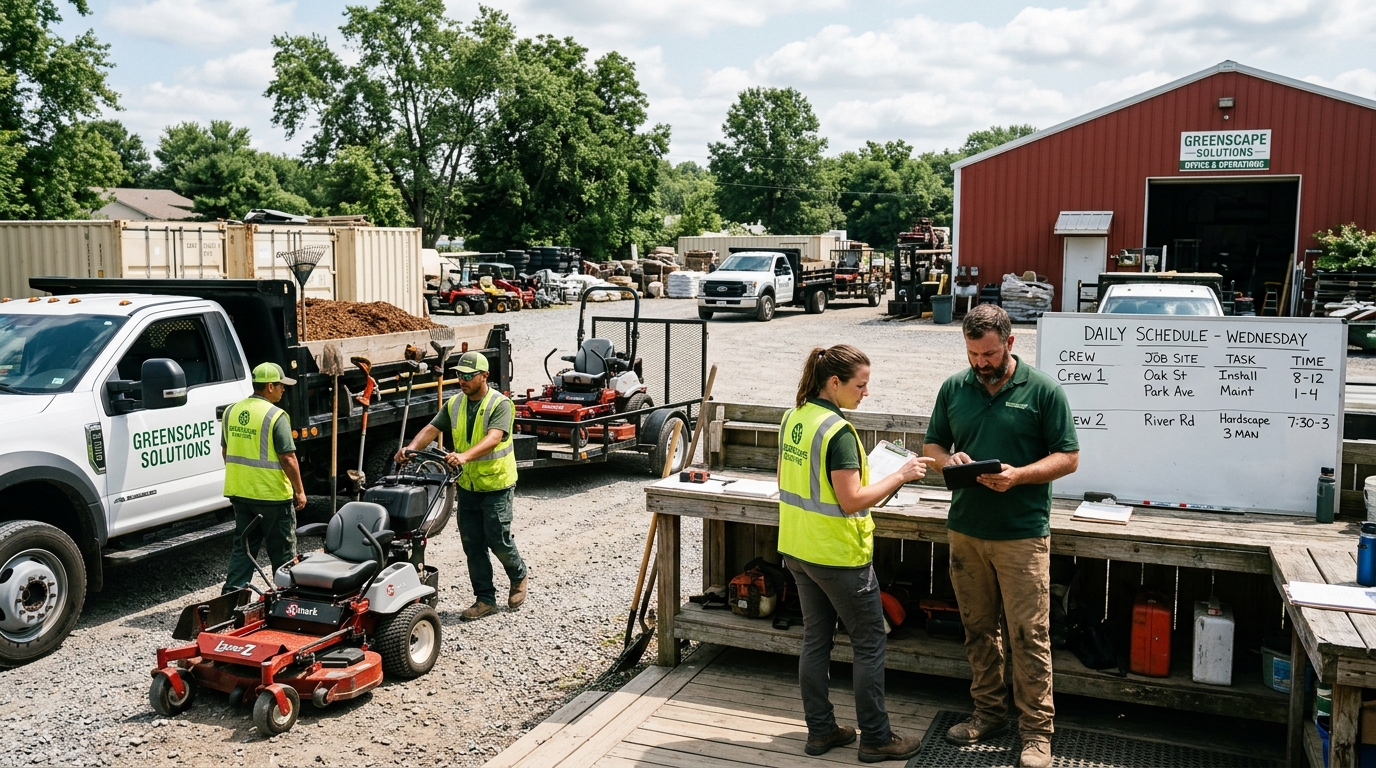
Profitability in the landscaping industry is often won or lost in the 'windshield time'—the non-billable hours spent driving between job sites. Grouping your maintenance clients geographically into tight 'route clusters' minimizes fuel consumption and maximizes the number of lawns a crew can service in a day. For example, servicing 10 homes in a single subdivision is far more profitable than servicing 10 homes scattered across a 20-mile radius.
Implementing digital scheduling tools is essential for managing multiple crews and ensuring that no appointments are missed during the spring rush. Platforms like Hulo provide integrated scheduling that allows you to view your entire week at a glance and move jobs around with a simple drag-and-drop interface. This level of organization prevents double-booking and allows you to send automated reminders to clients, reducing the time spent on 'no-show' properties or locked gates.
Track your 'actual vs. estimated' time for every job to identify where your crews are falling behind or where your bidding may be inaccurate. If a recurring maintenance job consistently takes 15 minutes longer than estimated, you must either adjust the price or investigate the cause of the delay. Continuous improvement of your routing and on-site efficiency is the only way to scale your business without seeing your profit margins erode.
Hiring and Retaining Quality Labor
Finding reliable labor is the single biggest challenge for landscaping business owners, requiring a proactive and year-round recruiting strategy. To attract the best talent, offer competitive hourly wages that exceed the local retail or fast-food rates, and provide a clear path for career advancement. A 'Crew Lead' should not just be your most experienced worker; they should be trained in leadership, client communication, and basic equipment maintenance.
Create a culture of safety and respect to reduce the high turnover rates common in the green industry. Provide high-quality uniforms, personal protective equipment (PPE), and modern machinery that makes the work less physically taxing for your team. Investing in training—such as skid steer certification or plant ID courses—shows your employees that you are invested in their professional growth, which fosters loyalty.
Consider implementing a performance-based bonus system where crews can earn extra pay for completing jobs under the estimated time while maintaining high quality. This aligns the crew's goals with the company's profitability and encourages them to take ownership of their work. Regular team meetings to discuss safety and upcoming project goals help keep everyone on the same page and reduce costly mistakes on site.
Key Takeaway: Minimize non-billable 'windshield time' by clustering your jobs geographically and using digital scheduling to optimize your daily routes.
Financial Management and Managing Seasonal Gaps
Cash Flow and Invoicing Systems
Maintaining a healthy cash flow is critical, especially when you are paying for labor and materials weeks before a client pays their final invoice. For large projects, always require a 30% to 50% deposit upfront to cover material costs and secure the spot on your calendar. Progressive billing—invoicing at specific milestones like 'site prep complete' or 'hardscape installed'—keeps cash flowing into the business throughout the duration of long projects.
Manual invoicing is a major bottleneck that leads to late payments and disorganized books. Using an all-in-one system like Hulo allows you to generate professional invoices from the field the moment a job is completed. When clients can pay via credit card or ACH directly from their email, you typically get paid 3-5 days faster than if you were waiting for a check in the mail, which significantly improves your liquidity.
Set aside a percentage of every check for taxes and equipment replacement funds so you aren't caught off guard by a large IRS bill or a broken mower. A dedicated business savings account should hold at least 3-6 months of operating expenses to weather unexpected downturns or equipment failures. Monitoring your 'Accounts Receivable' weekly ensures that no client falls too far behind on their payments, protecting your bottom line.
Diversifying for Winter Revenue
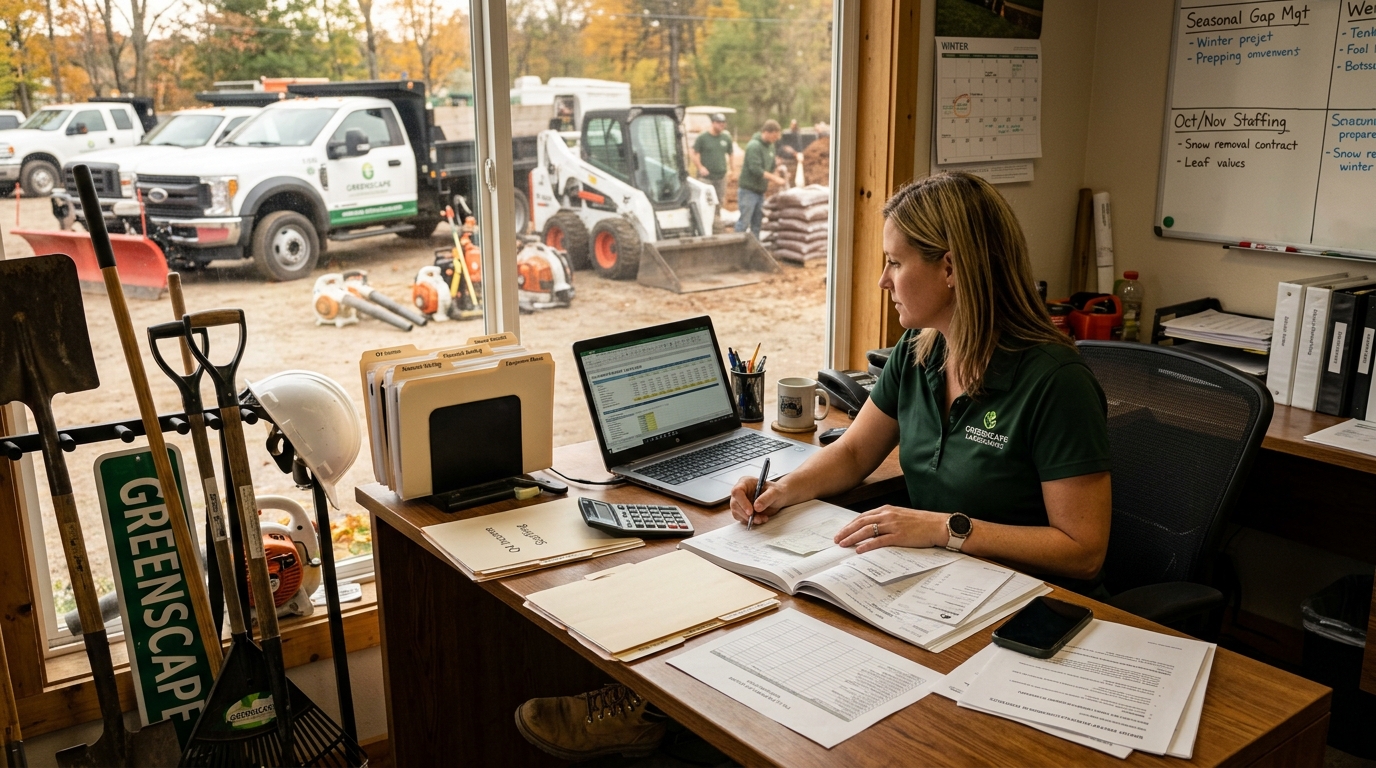
In many parts of the country, the landscaping season ends in November, leaving a 3-4 month gap where revenue can drop to zero while fixed costs remain. Diversifying into snow removal and ice management is the most common way to stay profitable during the winter months. This requires investing in snow plows for your trucks, salt spreaders, and potentially snow blowers for residential walkways, but it allows you to retain your best employees year-round.
Holiday lighting installation is another high-margin seasonal service that requires minimal additional equipment—mostly ladders, clips, and commercial-grade lights. This service typically appeals to your existing high-end residential clients and can be billed at premium rates because of the specialized nature of the work. Planning your holiday lighting marketing in September ensures you have a full schedule by the time the first frost hits.
Winter is also the ideal time for equipment overhauls, staff training, and aggressive sales for the upcoming spring season. Use the 'slow' months to review your financial performance from the previous year and adjust your pricing or service offerings as needed. By the time March rolls around, your equipment should be sharpened, your crew should be trained, and your schedule should already be 50% booked for the year.
Pro Tip: Offer a 5% discount for clients who prepay for their entire season of maintenance in March; this provides an immediate cash injection when you need it most for spring startup costs.
Wrapping Up
Starting a landscaping business is a rewarding path to financial independence, provided you treat the trade with the professional rigor it deserves. By focusing on high-quality equipment, data-driven pricing, and a strong digital presence, you can quickly outpace the local competition. Remember that your time is best spent on the job site or growing the business, not trapped behind a desk doing paperwork. Tools like Hulo are designed specifically for trade professionals to handle your website, scheduling, and invoicing in one place, allowing you to focus on what you do best—transforming outdoor spaces for your clients.
Frequently Asked Questions
How much does it cost to start a landscaping business in 2026?
A basic startup can cost between $15,000 and $30,000, covering a used truck, trailer, and commercial mower. However, for a fully professional setup with new equipment and proper insurance, you should budget closer to $50,000 to $75,000.
Is a landscaping business profitable?
Yes, landscaping can be highly profitable with net margins typically ranging from 15% to 25%. Profitability depends on accurate man-hour pricing, minimizing drive time between jobs, and upselling high-margin services like hardscaping and irrigation repair.
Do I need separate software for scheduling, invoicing, and my website?
No—modern all-in-one platforms like Hulo bundle your professional website, CRM, scheduling, and invoicing into a single $49.99/mo subscription. This is much more cost-effective and efficient than paying for 3-4 separate tools that don't talk to each other.
How do I get my first landscaping clients?
Start by optimizing your Google Business Profile and asking friends and family for referrals. Having a professional website from a provider like Hulo ensures that when local homeowners search for services, they find a credible business they can trust with their property.
What insurance do I need for a landscaping business?
At a minimum, you need General Liability insurance (usually $1M coverage) and Commercial Auto insurance. If you have employees, Workers' Compensation is mandatory, and Inland Marine insurance is highly recommended to protect your equipment from theft or damage.
How do I price my landscaping services?
You should calculate a man-hour rate that covers your labor, overhead (fuel, insurance, equipment), and desired profit. Most professional companies in 2026 charge between $65 and $110 per man-hour for maintenance and installation work.
Ready to Launch Your Landscaping Empire?
Get your professional website, CRM, and invoicing system all in one place with Hulo for just $49.99/mo.
Join the WaitlistMore from the Blog
9 Simple Contractor Invoice Template Tips for Plumbers (2026)
A professional contractor invoice template for plumbers must include your business details, the client's information, a ...
9 Expert Tips for the Best Pressure Washer for Starting a Business (2026)
The best pressure washer for starting a business is a gas-powered unit delivering at least 4.0 GPM (gallons per minute) ...
7 Smart Ways to Evaluate Housecall Pro vs Jobber for HVAC Contractors (2026)
Housecall Pro is generally the superior choice for HVAC businesses focusing on advanced sales automation and detailed pe...