How to Start a Lawn Care Business: Equipment, Pricing & First Clients (2026)
14 min read·Updated March 20, 2026In 2026, the green industry has evolved from simple 'mow and blow' operations into a tech-driven service sector where efficiency and professional branding determine who wins the neighborhood. Starting a lawn care business remains one of the most accessible paths to six-figure entrepreneurship, provided you avoid the common traps of lowball pricing and inefficient routing. Whether you are a solo operator with a push mower or an aspiring fleet owner, the difference between a struggling side hustle and a thriving enterprise lies in your systems. This guide provides a professional blueprint for navigating the equipment landscape, mastering your profit margins, and securing a recurring client base that keeps your schedule full all season long.
Table of Contents
Calculating Your Lawn Care Business Startup Costs
The Bare Bones vs. Professional Setup
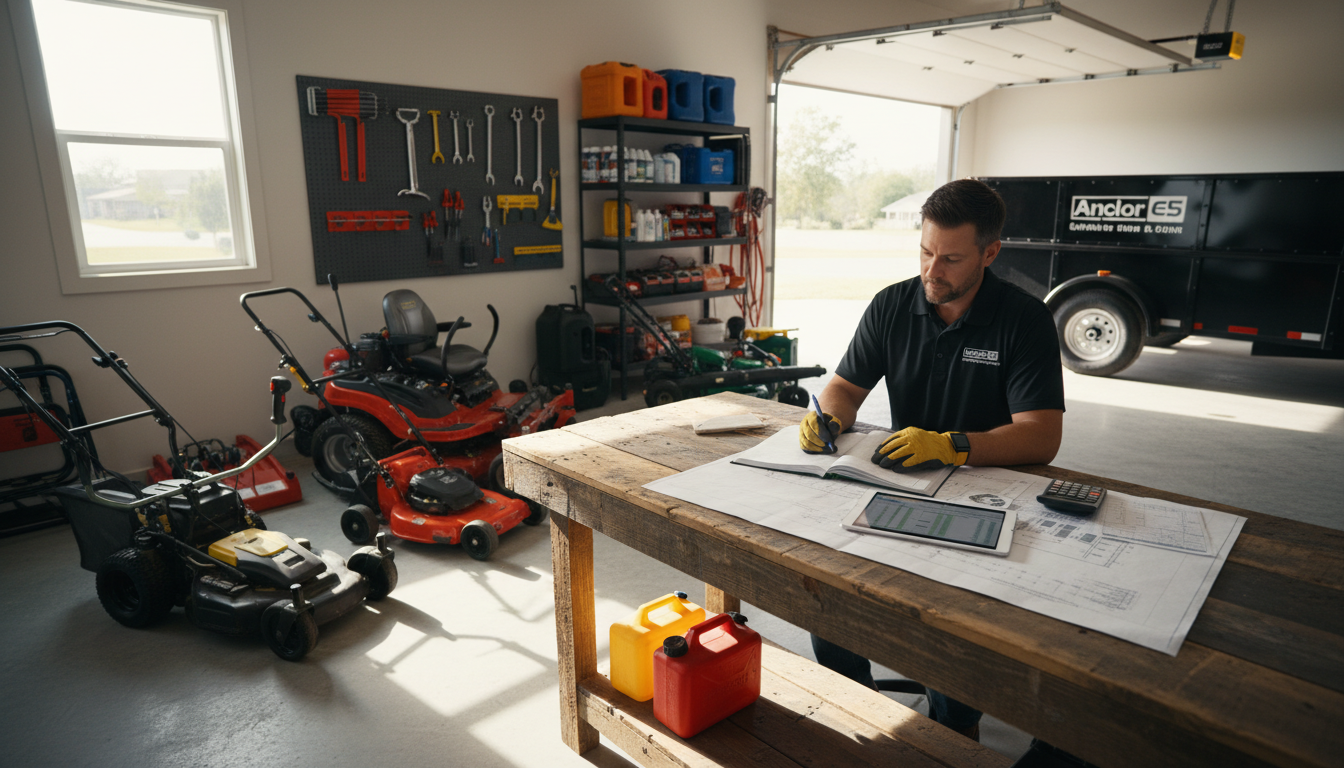
Starting a lawn care business requires a clear distinction between a residential 'neighbor-help' setup and a professional-grade operation. A bare-bones setup typically costs between $2,500 and $5,000, consisting of a high-end residential zero-turn mower, a reliable string trimmer, and a leaf blower transported in a standard pickup truck bed. While this allows you to enter the market, these machines are not built for 40 hours of weekly abuse and will likely fail within the first season under heavy commercial use.
A professional-grade setup, conversely, requires an investment of $15,000 to $30,000 but offers significantly higher uptime and faster cut speeds. This includes a commercial zero-turn mower like the Scag Cheetah II or Exmark Lazer Z, a 12-foot open trailer, and professional-grade handhelds from brands like Echo or Stihl. By investing in commercial equipment early, you reduce the hourly cost of operation through faster completion times and extended service intervals, which is critical for maintaining a 30% to 40% net profit margin.
Budgeting for Licensing and Insurance
Beyond the physical tools, your startup budget must account for the legal 'armor' that protects your assets from liability. General Liability (GL) insurance is non-negotiable, typically costing between $600 and $1,200 annually for a solo operator, providing coverage for property damage like broken windows or chemical spills. If you plan to offer fertilization or weed control, you must also obtain a Pesticide Applicator License, which involves a state-specific exam and an additional $200 to $500 in fees depending on your local Department of Agriculture requirements.
Setting up your business structure as an LLC (Limited Liability Company) is a vital step to separate your personal assets from your business liabilities. Filing fees for an LLC range from $50 to $500 depending on your state, but the protection it offers against lawsuits is invaluable. Additionally, you should budget for professional software to handle your back-office needs from day one; all-in-one platforms like Hulo provide a professional website, CRM, and invoicing for just $49.99/mo, which is significantly cheaper than hiring a web designer or juggling multiple expensive subscriptions.
| Equipment Item | Residential Grade | Commercial Grade |
|---|---|---|
| Zero-Turn Mower | $3,500 - $5,000 | $10,000 - $16,000 |
| String Trimmer | $200 - $300 | $450 - $600 |
| Leaf Blower (Backpack) | $350 - $500 | $600 - $900 |
| Utility Trailer (Open) | $1,200 - $1,800 | $2,500 - $4,500 |
| Insurance & Legal | $800 - $1,200 | $1,500 - $2,500 |
Estimated Startup Equipment Costs (2026)
Key Takeaway: Invest in commercial-grade equipment from the start to avoid costly downtime and ensure your hourly production rate remains high enough to sustain profitability.
Essential Equipment Selection for Maximum Productivity
Selecting the Right Mower for Your Route
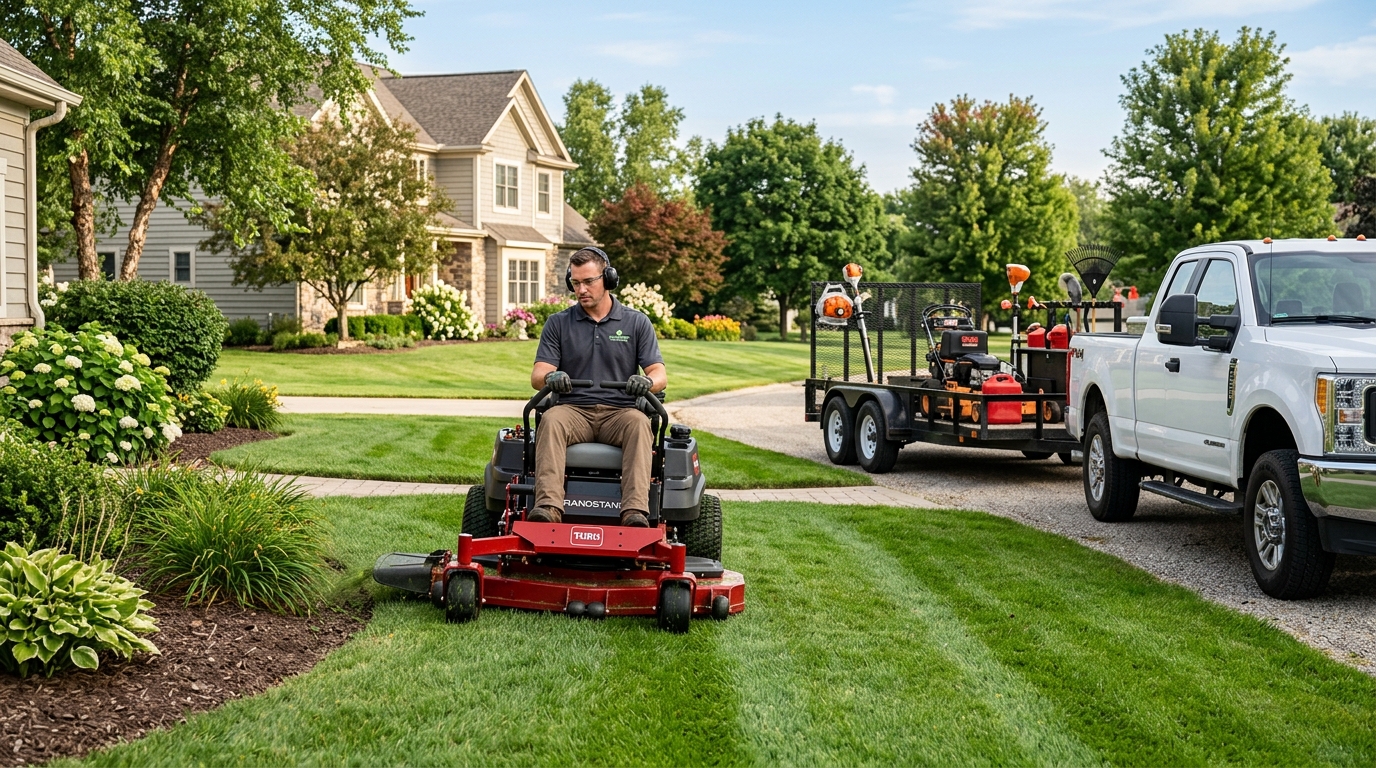
The mower is the heartbeat of your business, and selecting the wrong size can destroy your efficiency before you even arrive at the job site. For tight residential neighborhoods with gated backyards, a 32-inch or 36-inch stand-on mower is often superior to a massive 60-inch zero-turn because it eliminates the need for manual push mowing in restricted areas. Stand-on mowers have become the industry standard for high-production residential routes because they allow the operator to quickly hop off to move obstacles or pick up debris, saving 5-10 minutes per property.
If your target market includes large suburban lots or commercial properties exceeding one acre, a 60-inch or 72-inch zero-turn mower is essential for maintaining a high 'acres per hour' rate. Brands like Wright, Scag, and Ferris offer advanced suspension systems that allow you to mow at higher speeds (up to 12 mph) without sacrificing cut quality or operator comfort. Remember that a mower that saves you just 15 minutes per day across a 20-week season adds up to 25 hours of reclaimed labor time, which can translate to thousands of dollars in additional revenue.
Handheld Tools and Support Gear
While the mower does the heavy lifting, your string trimmer, edger, and blower provide the 'manicure' that justifies a premium price point. For trimmers, the Echo SRM-225 or Stihl FS 91 R are workhorses known for their reliability and ease of maintenance in the field. Using a dedicated stick edger rather than flipping a string trimmer vertically provides a much cleaner, more professional 'V-trench' edge along sidewalks and driveways, which is a major selling point for high-end residential clients.
Your backpack blower should be the most powerful unit you can afford, such as the RedMax EBZ8550 or the Stihl BR 800 C-E. High CFM (Cubic Feet per Minute) ratings are critical during the spring and fall cleanup seasons when you are moving wet grass clippings or heavy leaf piles. Don't overlook small support items like 'Speed Feed' heads for your trimmers and high-lift blades for your mowers; these minor upgrades significantly reduce the time spent on equipment maintenance during your billable hours.
$85 - $110
Average Hourly Revenue Goal
Professional operators aim for this range per man-hour to cover overhead, equipment replacement, and profit.
Pricing Strategies for Mowing and Maintenance
Avoiding the Lowballer Trap
One of the most common mistakes new lawn care owners make is pricing based on what the 'guy down the street' charges rather than their own overhead. If a competitor is charging $35 for a yard that takes 45 minutes to service, they are likely not accounting for self-employment taxes, equipment depreciation, or fuel costs. To build a sustainable business, you must calculate your 'Cost to Mow' (CTM), which includes your hourly labor rate, fuel consumption, and a percentage of your monthly fixed costs like insurance and software.
In 2026, a standard 5,000 to 8,000 square foot residential lot should typically be priced between $45 and $65 per visit for weekly service. Bi-weekly services should always carry a 20% to 30% premium because the grass is taller, requiring more time, more fuel, and more wear on your equipment. Using a platform like Hulo allows you to send professional, branded estimates instantly, which helps justify your higher pricing by presenting your business as a legitimate, reliable service rather than a casual side job.
Implementing Minimum Visit Fees
To protect your margins, you must establish a 'Minimum Visit Fee' regardless of the size of the lawn. Even if a yard only takes 10 minutes to mow, you still have the 'windshield time' of driving to the property, the fuel used in transit, and the administrative cost of billing the client. Most successful lawn care companies in 2026 set a minimum of $40 to $50 per stop to ensure that every property on the route contributes to the bottom line.
When quoting new clients, be transparent about what is included in your base price: mowing, string trimming around obstacles, hard-surface edging, and blowing clippings off driveways. Extra services like bush trimming, bed weeding, or bagging clippings should be treated as line-item add-ons. This 'menu-style' pricing prevents scope creep and ensures you are compensated for every minute of labor performed on-site.
Key Takeaway: Price your services based on your unique overhead and profit goals, not the prices of un-insured competitors who may not be in business next season.
Building Efficient Routes for Maximum Density
The Power of Route Density
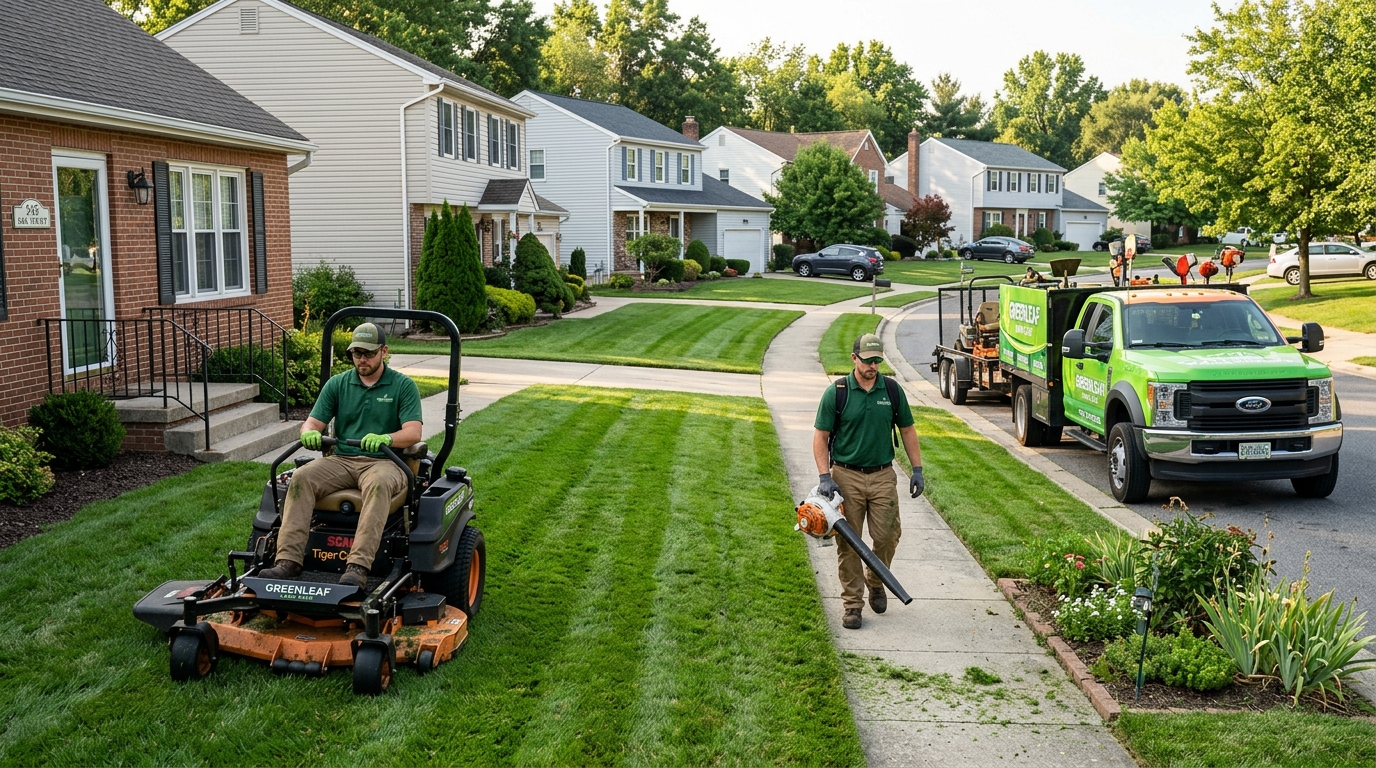
Profitability in lawn care is won or lost in the truck, not on the mower. Route density—the number of clients you have in a concentrated geographic area—is the single most important factor in scaling your business. If you spend 20 minutes driving between $50 jobs, you are losing $100 in potential revenue every hour. Your goal should be to 'clump' your clients so that you can service 3-5 properties on a single street without ever loading the mower back onto the trailer.
To achieve this, focus your marketing efforts on specific neighborhoods rather than an entire city. Use 'cloverleaf' marketing: when you sign a new client, put door hangers on the three houses to the left, the three to the right, and the seven houses directly across the street. This targeted approach ensures that as your business grows, your drive time decreases, which directly increases your hourly profit margin and reduces wear and tear on your vehicle.
Utilizing Scheduling and Routing Software
Managing a growing list of clients on a paper calendar or a basic spreadsheet is a recipe for missed appointments and lost revenue. Modern lawn care owners use software to automate their scheduling and optimize their daily routes. Tools like Hulo integrate your client database with scheduling features, allowing you to see all your jobs on a map and organize them in the most logical order to minimize fuel consumption and travel time.
Automated scheduling also allows you to implement 'route density discounts' for neighbors who sign up together, which is a powerful selling tool. By having your schedule, client notes, and gate codes accessible on your phone through a CRM, you eliminate the friction of daily operations. This level of organization allows you to focus on the work itself rather than the logistics of getting from Point A to Point B.
Pro Tip: Group your properties by 'Day of the Week' zones. Never leave a zone until all properties in that area are completed to avoid criss-crossing town and wasting fuel.
Upselling Fertilization and High-Margin Services
The 5-Step Fertilization Program
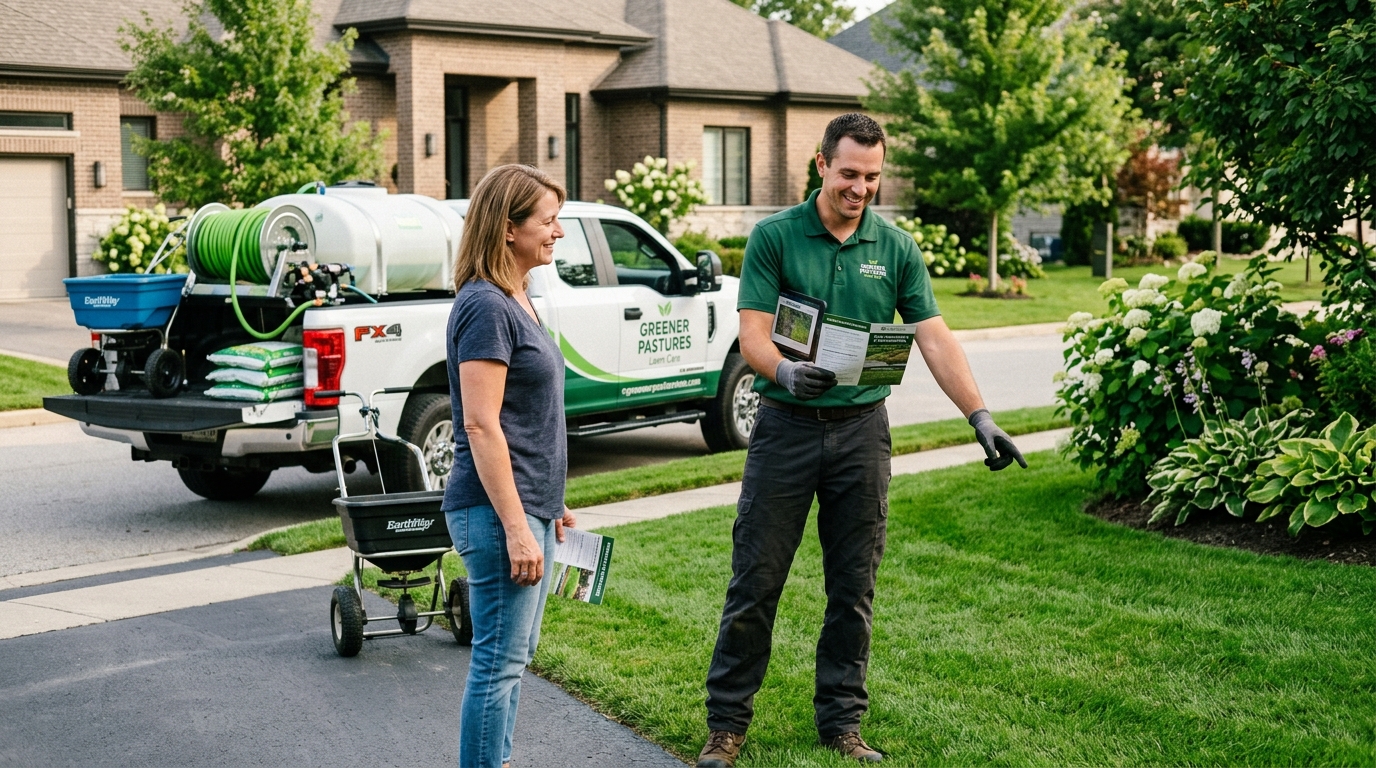
Mowing is your 'foot in the door,' but fertilization and weed control are where the real profits are made. A standard 5-step or 6-step program—including pre-emergent in early spring, broadleaf control in summer, and a winterizer in late fall—can easily double the annual revenue from a single mowing client. Because these services require specialized equipment (like a Lesco spreader) and chemicals rather than intensive labor, the profit margins often exceed 50%.
When upselling these programs, focus on the 'health and aesthetics' of the lawn rather than just the price. Explain to your mowing clients that regular fertilization reduces weed pressure and increases drought resistance, which actually makes the lawn easier to maintain. Offering a 5% discount for clients who prepay for the entire season's fertilization program is an excellent way to boost your cash flow during the slow spring startup weeks.
Aeration, Overseeding, and Dethatching
Ancillary services like core aeration and overseeding are high-ticket items that should be performed every fall. Aeration involves pulling small plugs of soil to alleviate compaction, which can be priced at $150 to $300 for a standard residential lot and takes less than an hour with a stand-on aerator. When paired with overseeding, you are providing a complete lawn renovation service that provides visible results the following spring, cementing your status as a lawn care expert rather than just a mower.
Dethatching (or power raking) is another lucrative service for lawns with heavy organic buildup. These services are 'event-based' and provide a significant revenue spike in the shoulder seasons. By tracking your clients' lawn history in your CRM, you can send automated reminders when it is time for these services, ensuring your schedule stays full even when the grass growth slows down during the heat of late summer.
40% - 60%
Profit Margin on Chem Apps
Fertilization and weed control require less labor time than mowing, resulting in significantly higher margins.
Ready to put this into action?
Hulo gives you everything to run your lawn care business — website, CRM, scheduling, and invoicing. Join the waitlist for V2.
Join the WaitlistMarketing Strategies to Get Your First 10 Clients
Dominating Local Search and Social Media
In 2026, the 'Yellow Pages' are long dead; your first 10 clients will come from Google and social media. You must claim and optimize your Google Business Profile (GBP) with high-quality photos of your work, a clear service area, and a link to your website. Encourage every new client to leave a review immediately; having even five 5-star reviews can make you the top-ranked lawn care provider in your specific zip code when locals search for 'lawn care near me'.
Social media, specifically Facebook and Nextdoor, are goldmines for local service businesses. Join local 'Community' or 'Mom's' groups and offer helpful advice on lawn care rather than just posting ads. When you do post, use 'Before and After' photos of a particularly overgrown yard or a perfectly striped lawn. Using a tool like Hulo to build a professional website ensures that when potential clients click your social media links, they land on a professional page where they can request a quote in seconds.
Physical Marketing and Door-to-Door Tactics
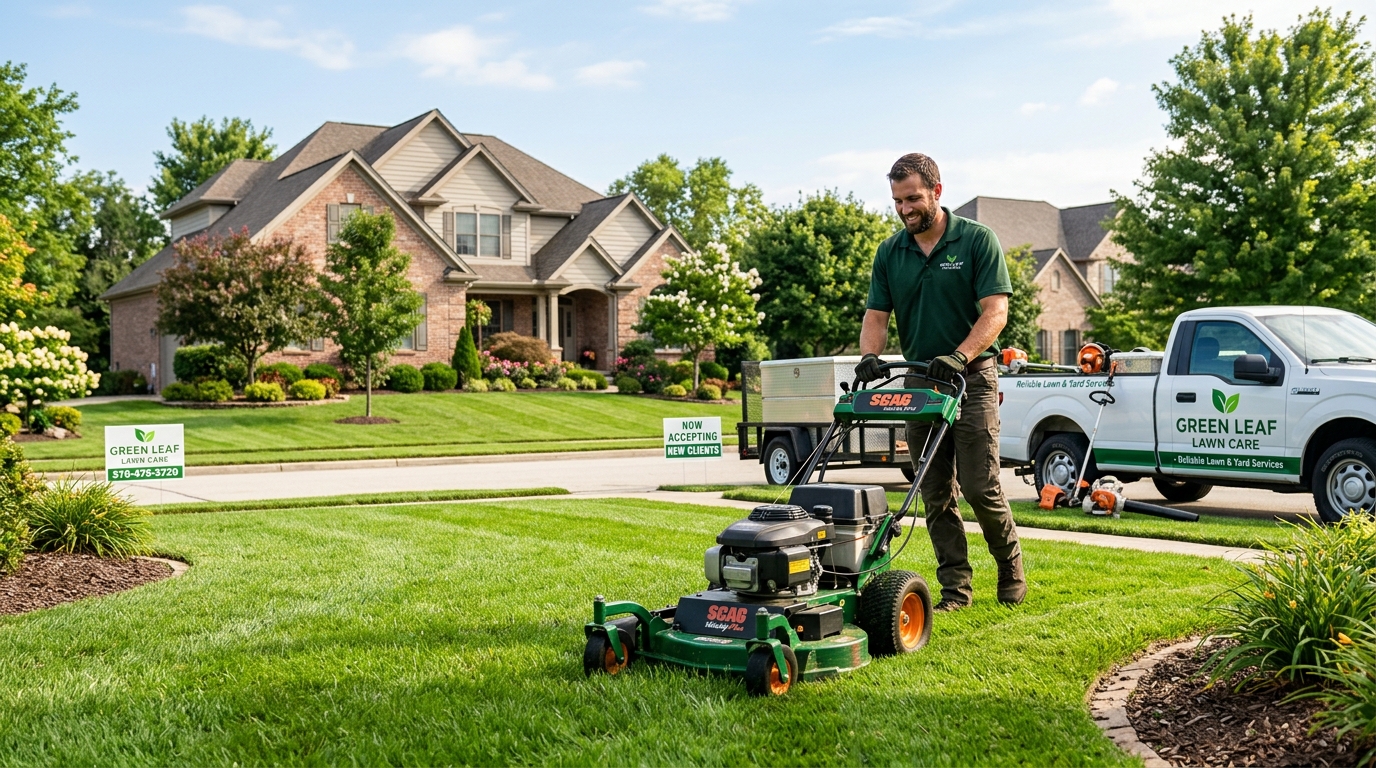
Despite the digital age, physical marketing remains incredibly effective for lawn care because your 'storefront' is the neighborhood itself. High-quality door hangers with a specific 'New Neighbor' offer can yield a 1-2% conversion rate if distributed in the right neighborhoods. Focus on 'Nine-Arounds'—placing marketing materials on the nine houses surrounding a property you just serviced—to build that critical route density mentioned earlier.
Yard signs are another low-cost, high-impact tool. With the homeowner's permission, place a small, professional sign in the front yard of your best-looking properties for 24-48 hours after service. This acts as a silent salesman, showing neighbors exactly what kind of results you deliver. Always ensure your truck and trailer are clean and clearly lettered with your business name and phone number; a professional appearance on the street is your best moving billboard.
Key Takeaway: Combine digital visibility on Google with hyper-local physical marketing like door hangers to rapidly build a dense, profitable route.
Managing Business Operations and Scaling
Streamlining Invoicing and Payments
One of the biggest 'profit killers' in lawn care is chasing down checks and manual billing. In 2026, you should strive for a 100% digital payment model. Requiring a 'Card on File' (CoF) for all residential clients ensures you get paid the moment the job is marked complete in your system. This eliminates the 'Accounts Receivable' headache and ensures your cash flow remains consistent enough to cover fuel and payroll without stress.
Using an all-in-one platform like Hulo simplifies this process by automating your invoicing and payment collection. Instead of spending your Sunday evenings writing invoices, the system can automatically bill the client's card as soon as you finish the route. Professional, automated receipts and payment confirmations also build trust with your clients, making you look like a much larger, more established company than a solo operator with a clipboard.
Scaling from Solo to a Crew
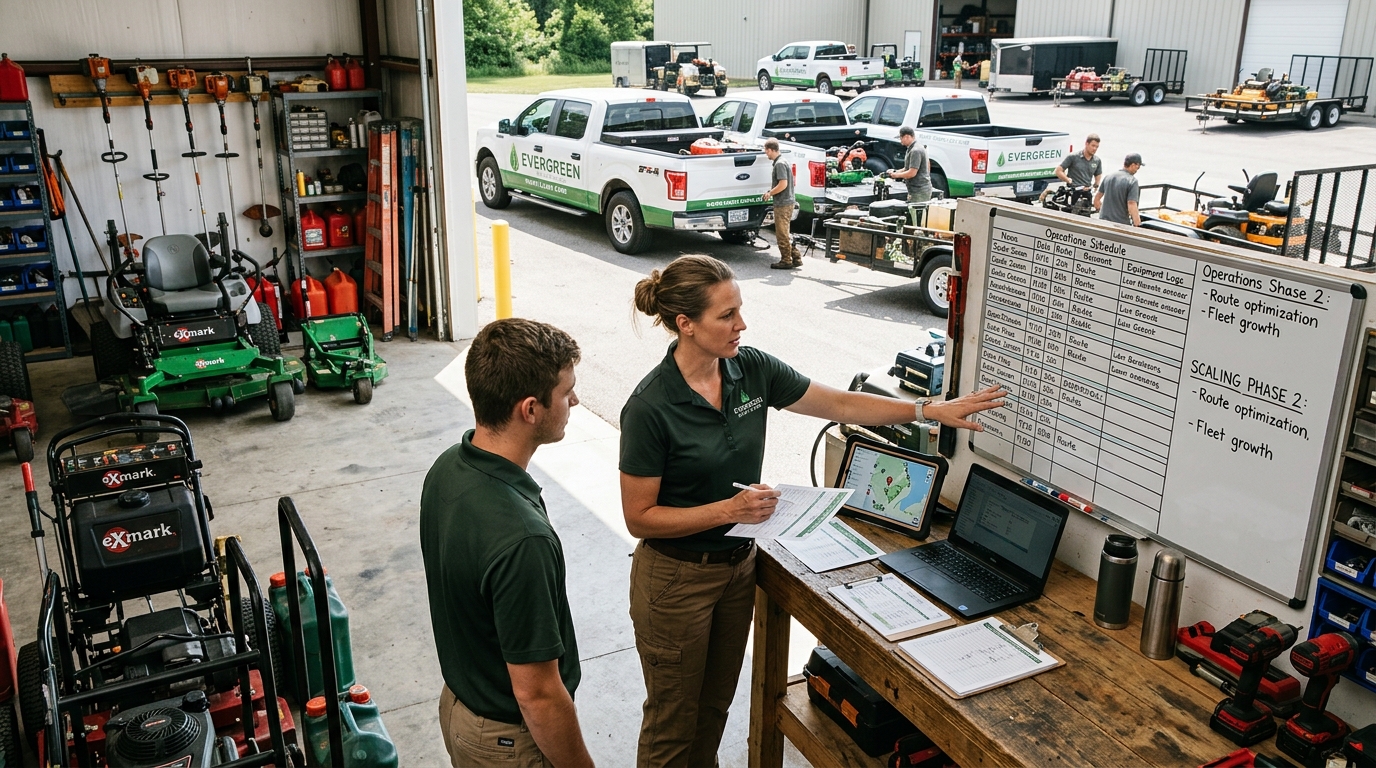
Transitioning from a solo operator to managing a crew is the most difficult stage of growth. To do this successfully, you must have documented Standard Operating Procedures (SOPs) for everything from how to edge a driveway to how to talk to a client. Hiring your first employee usually happens when you reach about 40-50 full-service clients, which is roughly $2,000 to $3,000 in weekly revenue. At this point, your role shifts from 'The Mower' to 'The Manager'.
When you scale, your equipment needs will double, but your overhead won't. This is where you find true profitability. By running a two-man crew, you can service 15-20 yards per day, significantly increasing your total volume. Ensure you are using a CRM like Hulo to track crew productivity and job costs, so you can identify which routes are profitable and which ones need a price increase or to be dropped entirely.
Seasonal Revenue and Winter Services
Fall Cleanups and Leaf Removal
As the grass stops growing in October and November, your revenue shouldn't stop with it. Fall cleanups are high-labor, high-margin jobs that involve leaf removal, perennial cut-backs, and final gutter cleanings. Investing in a leaf vacuum system (like a Billy Goat or a truck-loader) allows you to process massive amounts of debris quickly. These jobs are often quoted as flat-rate projects ranging from $300 to $1,500 depending on the tree canopy and property size.
Marketing for fall cleanups should begin in late August. Use your existing client list in Hulo to send out a mass email or text blast offering 'Early Bird' scheduling for leaf removal. By securing these contracts early, you can plan your late-season labor needs and ensure you have a smooth transition into the winter months without a sudden drop in bank balance.
Snow Removal and Holiday Lighting
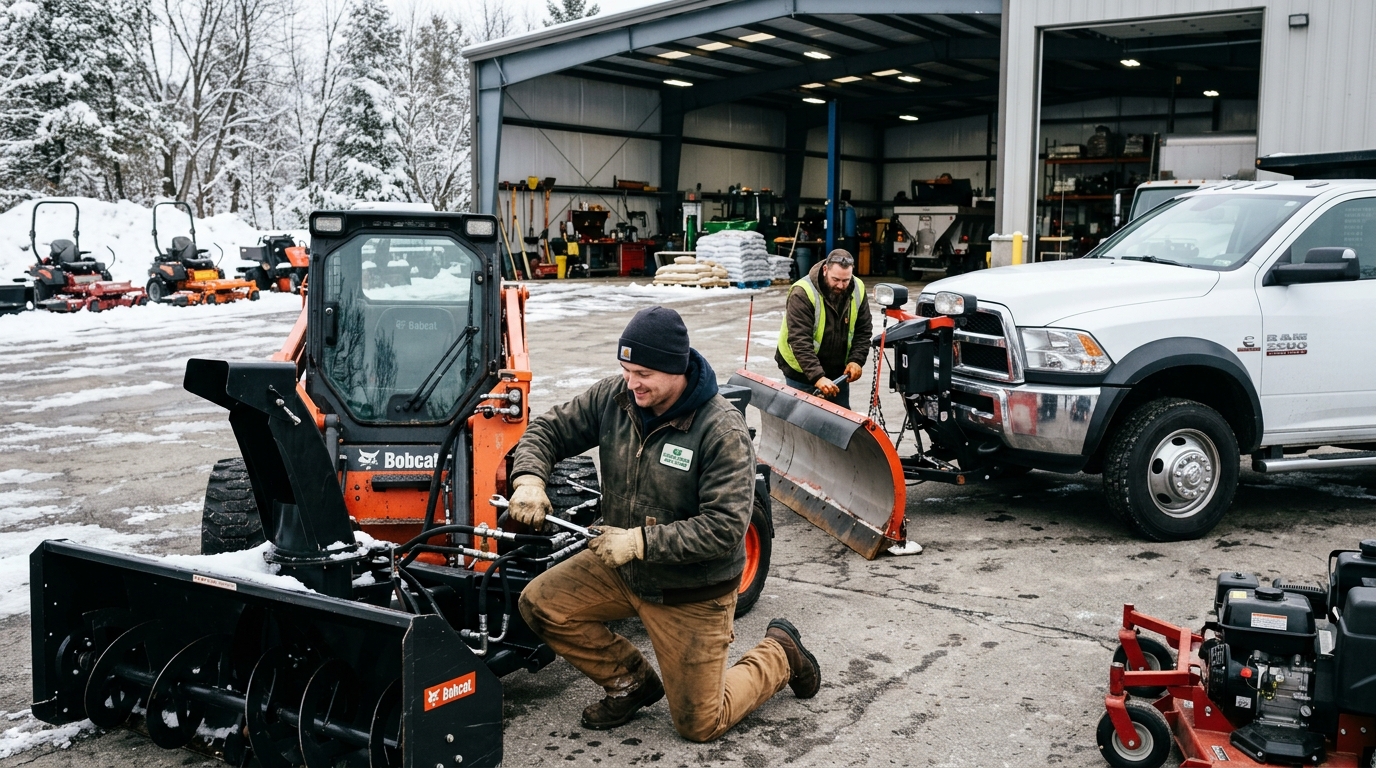
In northern climates, snow removal is the primary way lawn care businesses maintain year-round income. Offering residential driveway plowing or commercial sidewalk clearing keeps your core crew employed and your equipment moving. Commercial snow contracts are particularly lucrative, often structured as 'Seasonal' (fixed price regardless of snow) or 'Per-Push' (paid every time it snows), providing a predictable revenue stream during the 'dead' months.
If you are in a southern climate where snow is rare, consider holiday lighting installation. This high-margin service utilizes your existing ladders and trucks and can generate $1,000 to $3,000 per property for a few hours of work. Regardless of the service, the goal is to create a '12-month business' that avoids the seasonal feast-and-famine cycle common in the green industry.
| Season | Primary Service | High-Margin Add-on |
|---|---|---|
| Spring (Mar-May) | Mowing Start & Cleanups | Pre-emergent & Mulching |
| Summer (Jun-Aug) | Weekly Mowing | Grub Control & Irrigation Repair |
| Fall (Sep-Nov) | Mowing & Leaf Removal | Aeration & Overseeding |
| Winter (Dec-Feb) | Snow Removal / Lighting | Equipment Maintenance / Pruning |
Seasonal Service Calendar
Wrapping Up
Starting a lawn care business is a journey that rewards those who treat it like a professional enterprise from day one. By investing in the right equipment, pricing your services for real profit, and focusing on route density, you can build a stable and lucrative career in the green industry. Remember that your business is only as strong as the systems behind it. Instead of struggling with separate apps for your schedule and invoicing, use an all-in-one platform like Hulo to manage your website, CRM, and payments for one low monthly price. With the right tools and a commitment to quality, your lawn care business can thrive in 2026 and beyond.
Frequently Asked Questions
How much does it cost to start a lawn care business in 2026?
A basic residential setup can start for around $2,500 to $5,000, but a professional commercial operation typically requires $15,000 to $30,000 for high-end mowers, trailers, and insurance. Don't forget to budget for software like Hulo, which handles your website and invoicing for an affordable $49.99/mo.
Do I need a license to start a lawn care business?
Most states require a general business license and an LLC filing, but you will specifically need a Pesticide Applicator License if you plan to apply fertilizers or weed control chemicals. Requirements vary by state, so check with your local Department of Agriculture to ensure you are compliant before offering chemical services.
How do I price my lawn mowing services?
Pricing should be based on your hourly overhead plus your desired profit margin, typically resulting in $45-$65 for a standard residential lot. Avoid matching the 'lowest bidder'; instead, use professional tools like Hulo to provide clear, branded estimates that justify your premium service and reliability.
What is the most important equipment for a lawn care startup?
The most critical piece of equipment is a reliable commercial-grade mower, preferably a 36-inch or 48-inch stand-on for residential routes. Secondary essentials include a high-CFM backpack blower and a professional string trimmer, as these tools provide the final 'finished' look that clients expect.
How do I get my first 10 lawn care clients?
Start by optimizing your Google Business Profile and using 'cloverleaf' marketing with door hangers in your target neighborhoods. Having a professional website through a platform like Hulo makes it easy for these first leads to find you, trust you, and book your services online.
Is a lawn care business profitable in the first year?
Yes, many solo operators reach profitability within the first 3-6 months by keeping overhead low and focusing on route density. By using an all-in-one management tool like Hulo, you can minimize administrative costs and focus your time on billable work, which accelerates your path to a positive cash flow.
Ready to Launch Your Professional Lawn Care Business?
Get your professional website, CRM, scheduling, and invoicing all in one place with Hulo for just $49.99/mo. Start your journey to a six-figure route today.
Join the WaitlistMore from the Blog
9 Simple Contractor Invoice Template Tips for Plumbers (2026)
A professional contractor invoice template for plumbers must include your business details, the client's information, a ...
9 Expert Tips for the Best Pressure Washer for Starting a Business (2026)
The best pressure washer for starting a business is a gas-powered unit delivering at least 4.0 GPM (gallons per minute) ...
7 Smart Ways to Evaluate Housecall Pro vs Jobber for HVAC Contractors (2026)
Housecall Pro is generally the superior choice for HVAC businesses focusing on advanced sales automation and detailed pe...