9 Expert Strategies for How to Run an HVAC Business for Contractors (2026)
14 min read·Updated March 26, 2026To run an HVAC business successfully, you must master the balance of high-margin flat-rate pricing, automated technician dispatching, and a robust recurring maintenance agreement program. Most profitable HVAC companies in 2026 maintain a net profit margin of 15% to 22% by utilizing field service software to minimize drive time and maximize billable hours. This guide breaks down the operational systems, marketing tactics, and financial benchmarks required to scale a small HVAC shop from a one-man operation to a multi-truck fleet. You will learn how to optimize your daily workflow, recruit top-tier NATE-certified technicians, and implement a digital-first customer experience that wins five-star reviews.
Table of Contents
Step-by-Step Overview
- 1
Establish Your Legal and Financial Foundation
Register your HVAC business as an LLC or S-Corp to protect personal assets, typically costing $150-$500 depending on your state. Secure a dedicated business bank account and set up a cloud-based accounting system like QuickBooks Online to track your 25-35% gross profit margin targets. Ensure you have the required $1,000,000 general liability insurance policy and workers' compensation coverage before sending your first technician into the field.
- 2
Obtain Mandatory HVAC Licensing and Certifications
Verify that you hold a valid EPA Section 608 Technician Certification, which is mandatory for handling refrigerants like R-454B or R-32. Apply for your state-specific HVAC contractor license, which often requires 4-5 years of experience and passing a technical and law exam with fees ranging from $300 to $1,000. Membership in professional associations like the ACCA (Air Conditioning Contractors of America) provides access to industry-standard Manual J load calculation tools.
- 3
Implement a Flat-Rate Pricing Model
Transition away from hourly billing to a flat-rate pricing system to ensure consistency and transparency for your residential customers. Calculate your 'break-even' rate by adding your total annual overhead to your desired profit and dividing by 1,500 billable hours per technician. Most successful 2026 HVAC businesses set a diagnostic fee between $89 and $149, which covers the first 30 minutes of on-site troubleshooting and travel expenses.
- 4
Deploy Field Service Management Software
Adopt a comprehensive software platform like Hulo to centralize your scheduling, dispatching, and invoicing for under $50 per month. Automate your 'On My Way' text notifications and digital estimates to reduce administrative time by up to 10 hours per week. Using a unified system ensures that customer history and equipment data are instantly accessible to your technicians on their mobile devices during every service call.
- 5
Launch a Recurring Maintenance Agreement Program
Build a stable revenue base by selling annual maintenance agreements, typically priced between $159 and $249 per year. These 'Service Club' memberships should include two precision tune-ups, a 10-15% discount on repairs, and priority scheduling for system failures. Aim for a 10% conversion rate on all service calls to build a predictable backlog of work during the shoulder seasons of spring and fall.
- 6
Execute a Local Lead Generation Strategy
Claim and optimize your Google Business Profile to appear in local 'HVAC repair near me' searches, which account for 70% of new leads. Invest in Google Local Services Ads (LSA) with a starting budget of $500-$1,000 per month to gain the 'Google Guaranteed' badge and build trust. Encourage every customer to leave a review immediately after service completion by sending a direct link via SMS while the technician is still on-site.
How to Run an HVAC Business for Beginners?
Building a Scalable Organizational Structure
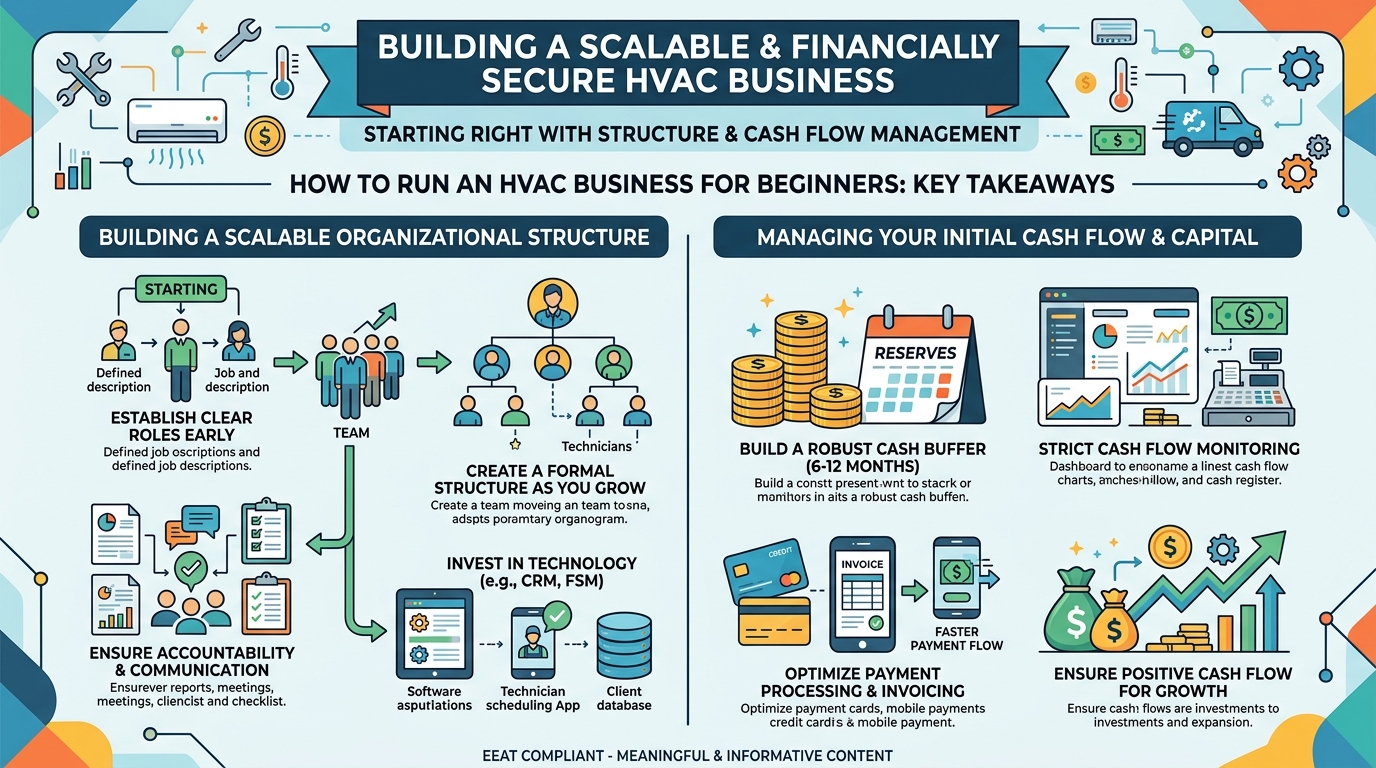
Starting as a solo owner-operator requires you to wear every hat, from lead technician to bookkeeper, but scaling requires a shift in mindset. You should aim to hire your first office manager or dedicated dispatcher once you reach approximately $250,000 in annual revenue or support three full-time technicians. This transition allows you to focus on high-level strategy and sales rather than answering phone calls while you are in a cramped crawlspace.
Documenting your Standard Operating Procedures (SOPs) is the most critical task for beginners who want to avoid operational chaos as they grow. Create a checklist for every process, including how to answer the phone, how to conduct a furnace cleaning, and how to close out a service ticket in your CRM. These documents ensure that your 4th technician provides the same high-quality service as your 1st, which is essential for maintaining your brand reputation in 2026.
Your organizational chart should eventually include a service manager who oversees technical training and a comfort consultant dedicated to system replacement sales. In a small shop of 1-5 employees, you will likely fill these roles yourself, but you must track your time spent on each activity to identify when a new hire is financially justified. Use a simple time-tracking tool to see if you are spending more than 15 hours a week on low-value tasks like parts runs or manual invoicing.
Managing Your Initial Cash Flow and Capital
HVAC is a capital-intensive business, requiring at least $15,000 to $30,000 in initial investment for a reliable service van, basic inventory, and specialized tools like vacuum pumps and recovery machines. You must maintain a cash reserve equivalent to three months of operating expenses to survive the slow shoulder seasons when service calls naturally dip. Many new owners fail because they spend their summer profits on personal upgrades instead of saving for the lean months of October and April.
Set up a separate 'Tax Savings' account and immediately deposit 20-25% of every payment received to avoid a massive bill from the IRS at the end of the quarter. In 2026, staying compliant with state and federal tax codes is easier if you use automated payroll services like Gusto or ADP, which handle tax filings for your small crew. Expect to pay between $45 and $100 per month for these services, which is a small price to avoid expensive filing errors and penalties.
Monitor your 'Days Sales Outstanding' (DSO) metric, which measures how long it takes for you to get paid after a job is completed. Aim for a DSO of less than 2 days by requiring payment upon completion for all residential service work and using mobile card readers for instant processing. For larger installations ranging from $8,000 to $15,000, offer consumer financing through partners like GoodLeap or Greensky to close more deals while getting paid the full amount upfront.
20%
Ideal Net Profit Margin
Most successful small HVAC businesses target a 15-22% net profit after all expenses and owner salary.
Key Takeaway: Transitioning from a technician to an owner requires documenting every process to ensure consistency as you scale from 1 to 10 employees.
How to Run an HVAC Business Guide for Daily Operations?
Optimizing Dispatching and Route Density
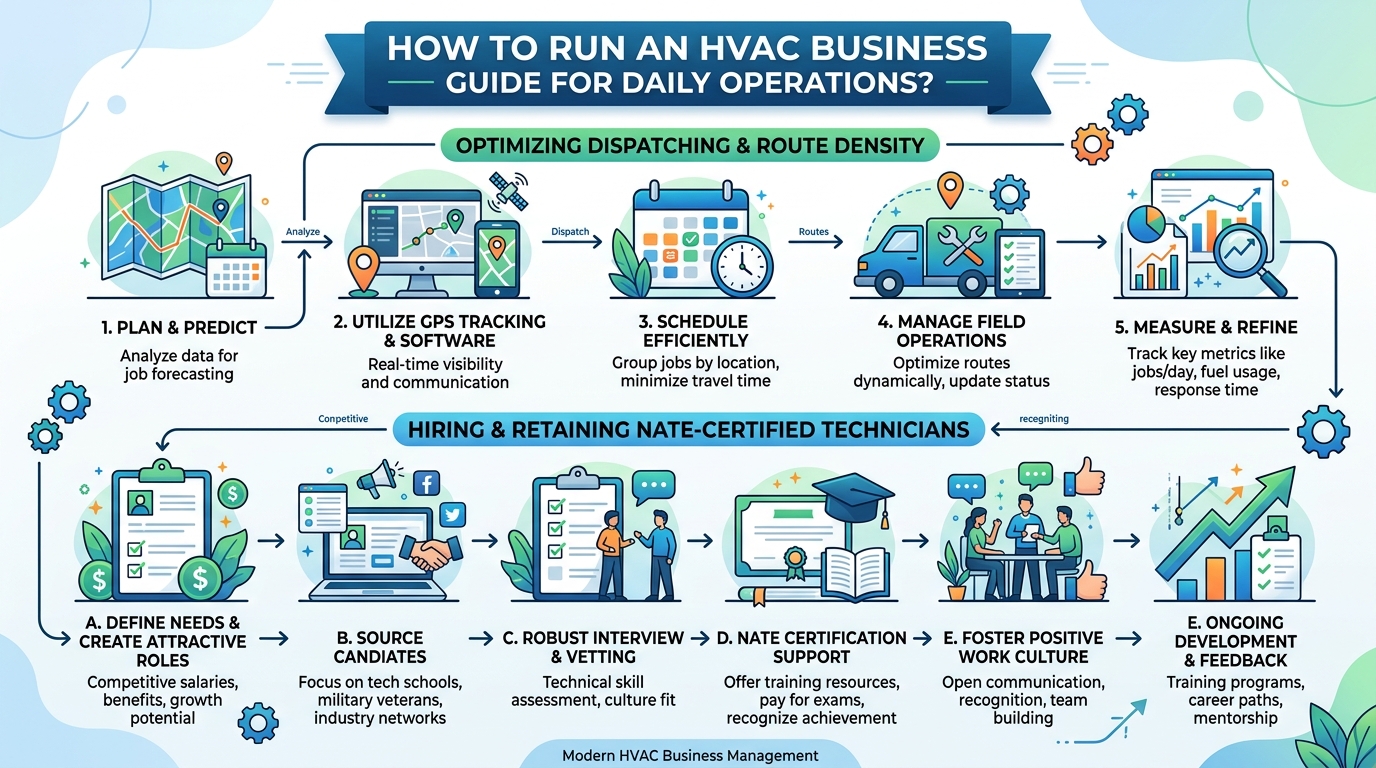
Efficient dispatching is the difference between a profitable day and a wasted afternoon spent sitting in gridlock traffic. Use GPS tracking on your fleet to monitor real-time locations and assign the closest technician to emergency 'no-cool' calls during the peak summer months. By reducing drive time by just 15 minutes per call, a three-truck shop can potentially add one extra service visit per day, generating an additional $40,000 in annual revenue.
Group your maintenance visits geographically to create 'route density,' which minimizes fuel costs and vehicle wear and tear. In 2026, fuel prices and vehicle maintenance costs are expected to account for 5-7% of your total revenue, making route optimization a top priority for small business owners. Software tools like Hulo allow you to visualize your daily appointments on a map, making it simple to drag and drop jobs for the most logical sequence.
Implement a 'morning huddle' that lasts no more than 15 minutes to review the previous day's performance and discuss the current day's schedule. Use this time to check that every van is stocked with common 'truck stock' items like dual capacitors, contactors, and universal igniters to avoid time-consuming trips to the supply house. A well-organized van with a $2,000 inventory of common parts can improve your 'first-time fix rate' from 65% to over 90%.
Hiring and Retaining NATE-Certified Technicians
The labor shortage in the HVAC industry remains a significant challenge in 2026, making technician retention just as important as recruitment. Offer a competitive compensation package that includes a base hourly rate of $25-$45 plus performance-based incentives for lead generation and maintenance agreement sales. Technicians who feel invested in the company's growth are less likely to leave for a $2/hour raise from a competitor across town.
Invest in ongoing technical training and NATE (North American Technician Excellence) certification for your crew to ensure they are prepared for new 2026 equipment standards. High-efficiency heat pumps and inverter-driven systems require a deeper understanding of electronics and refrigerant flow than older, single-stage units. Providing one paid training day per month shows your employees that you value their professional development and helps reduce costly callbacks on complex installations.
Create a positive company culture by celebrating 'wins' and providing a clear path for career advancement within your small organization. Even in a 5-person shop, you can offer benefits like health insurance stipends, 401k matching, and take-home vehicle privileges to attract top talent. Remember that your technicians are the face of your business; happy, well-compensated techs provide better customer service, which directly impacts your bottom line and referral rates.
Pro Tip: Use a 'First-Time Fix' bonus to reward technicians who complete repairs without needing a return visit, reducing your overhead and increasing customer satisfaction.
How Much Should You Charge for HVAC Services in 2026?
Calculating Your True Hourly Burden Rate
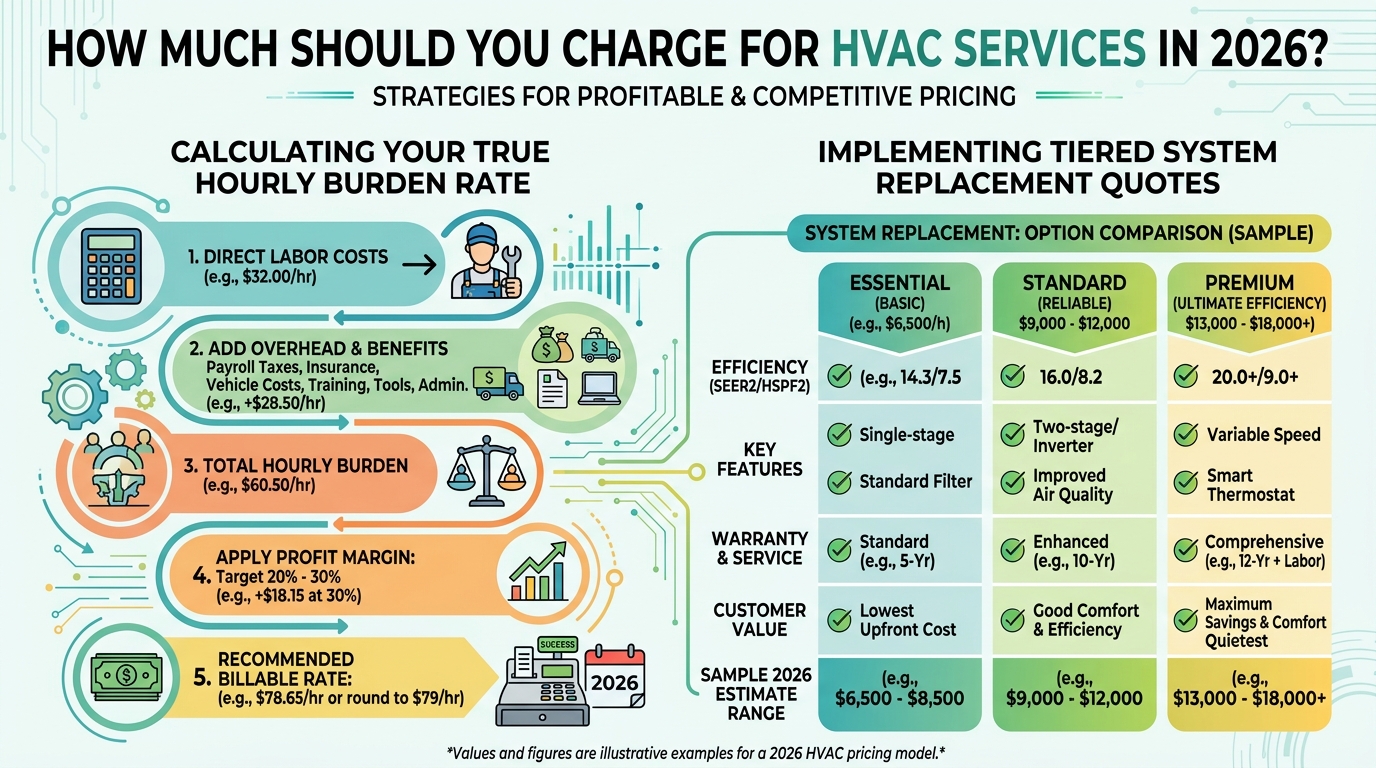
To set profitable prices, you must first calculate your 'burdened' labor rate, which includes the technician's hourly pay plus taxes, benefits, and insurance. For example, a tech earning $35 per hour likely costs the business closer to $55 per hour once you include FICA, workers' comp, and health insurance. If you don't account for this 30-40% 'burden' factor, your pricing will lead to a net loss even if your schedule is completely full.
Add your non-billable overhead costs—such as rent for your shop, marketing expenses, and software subscriptions like Hulo—to your burdened labor rate. Most small HVAC businesses have an overhead burden of $60 to $100 per billable hour, depending on their local market and fleet size. This means your total cost to have a technician on-site for one hour could be as high as $150 before you even add a penny of profit.
Target a gross margin of 45-50% on service labor and 25-35% on equipment installations to ensure your business remains healthy and sustainable. In 2026, a typical residential service call should be priced between $185 and $275 per hour of labor, plus the cost of parts marked up by 2x to 3x. Use a tiered pricing book so your technicians can confidently present options to the customer without having to perform complex math on the fly.
Implementing Tiered System Replacement Quotes
When quoting system replacements, always provide the customer with three distinct options: Good, Better, and Best. A 'Good' option might be a standard 14 SEER2 single-stage system, while the 'Best' option features a 20+ SEER2 variable-speed heat pump with advanced air filtration. Providing choices empowers the customer and often results in a higher average ticket size, as 40% of homeowners will choose the middle or top-tier option.
Include the total cost of ownership in your sales presentation, highlighting the energy savings and rebates available for high-efficiency equipment under the Inflation Reduction Act. In 2026, federal tax credits can cover up to $2,000 for qualified heat pump installations, making premium systems more affordable for your clients. Make sure your quotes clearly outline the specific model numbers, labor warranties, and any included maintenance visits to avoid confusion later.
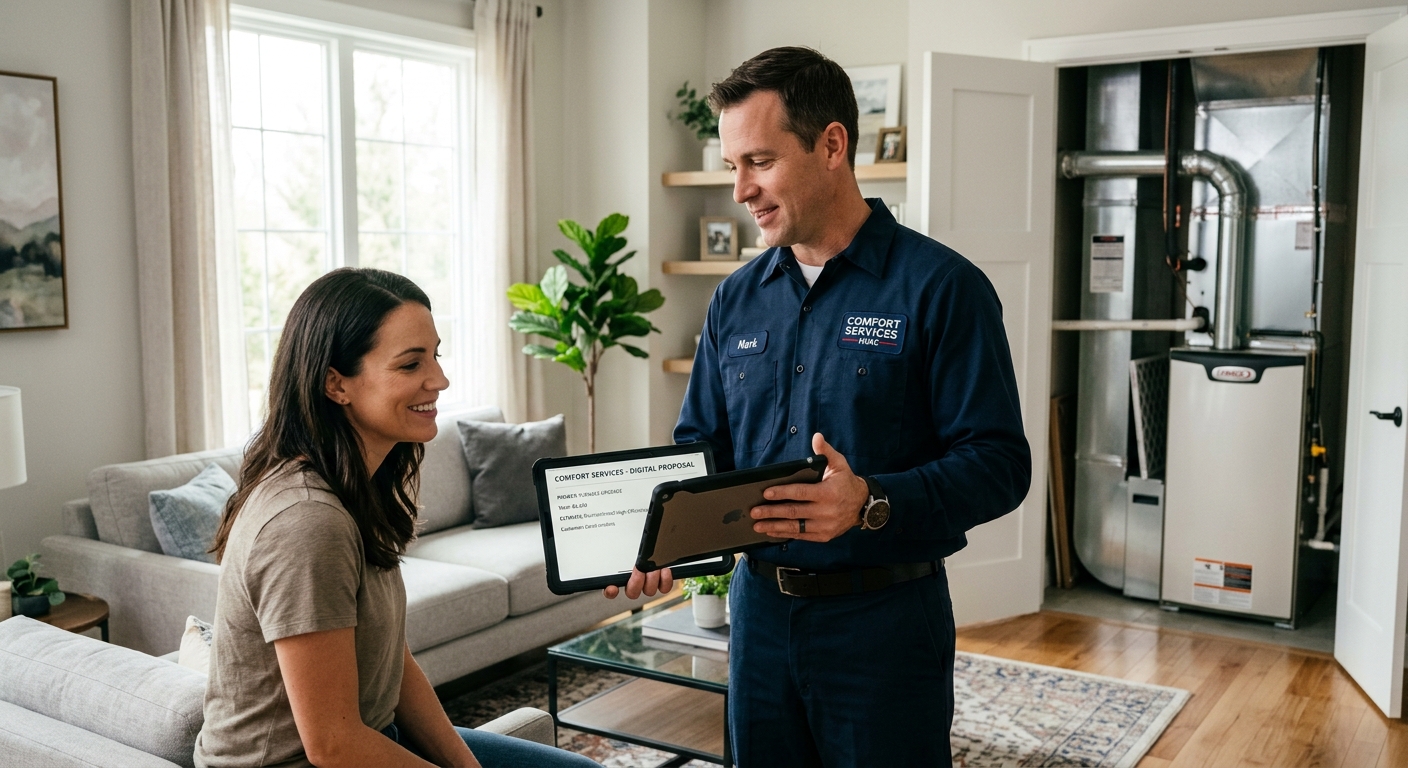
Use digital sales tools to create professional, visual estimates that can be signed and approved on a tablet or smartphone. Estimates that include photos of the existing equipment and clear explanations of the proposed work have a 25% higher closing rate than handwritten carbon-copy forms. By integrating your quoting process with a platform like Hulo, you can automatically follow up on unsigned estimates via email, recovering thousands in potential lost revenue each month.
| Service Type | Average Price Range | Target Gross Margin |
|---|---|---|
| Diagnostic / Trip Fee | $89 - $149 | 60% |
| Standard Tune-Up | $129 - $199 | 40% |
| Capacitor Replacement | $225 - $350 | 70% |
| Blower Motor Repair | $600 - $1,200 | 50% |
| Full System Install | $8,000 - $18,000 | 30% |
2026 HVAC Service Pricing Benchmarks
How to Run an HVAC Business Tips for Maximizing Profit?
Leveraging Maintenance Agreements for Stability
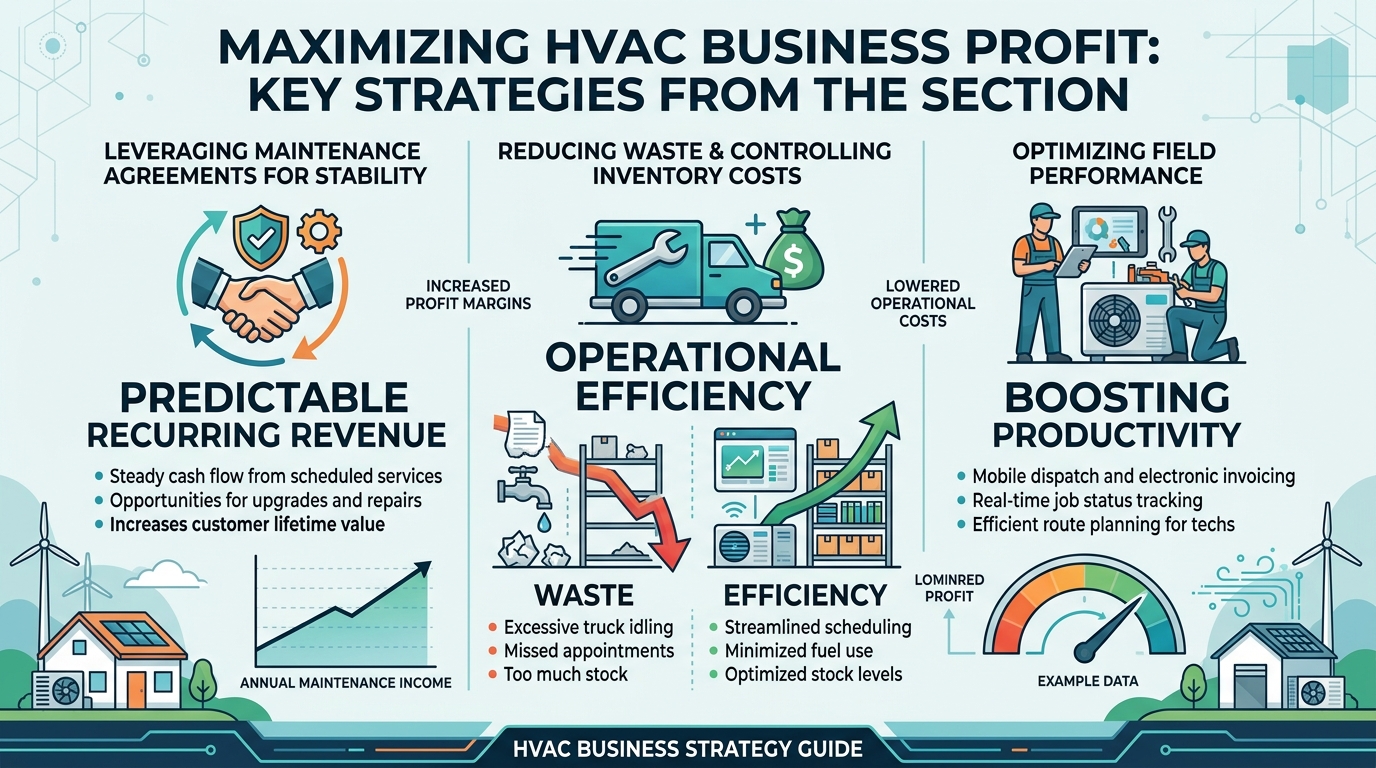
Maintenance agreements, often called 'Service Clubs,' are the lifeblood of a profitable HVAC business because they provide predictable revenue during slow months. Each agreement should generate between $15 and $25 in monthly recurring revenue (MRR), providing a steady stream of cash to cover your fixed overhead costs. Furthermore, maintenance customers are five times more likely to choose your company for a full system replacement when their current unit eventually fails.
Train your technicians to offer a maintenance agreement on every service call by focusing on the benefits of system longevity and lower utility bills. Offer the tech a small commission, such as $20 per agreement sold, to incentivize them to have this conversation with every homeowner. In 2026, top-performing shops aim for a maintenance base that is at least 1,000 members for every three technicians they employ.
Automate the renewal process for your maintenance agreements using credit card 'card-on-file' technology to reduce churn and administrative work. Manually chasing down $200 renewals is a waste of your office manager's time and often results in lost customers who simply forget to pay. Use a software system that sends automated reminders and processes payments on a monthly or annual basis, ensuring your recurring revenue stays consistent year-round.
Reducing Waste and Controlling Inventory Costs
Unmanaged inventory is a 'silent killer' of HVAC profits, often leading to thousands of dollars in parts sitting unused on shelves or disappearing from vans. Implement a 'just-in-time' inventory system where major equipment is ordered only after a job is sold and scheduled for installation. For smaller items, use a bin-replenishment system to ensure you always have the basics in stock without over-ordering and tying up your cash flow.
Conduct monthly inventory audits for every vehicle in your fleet to identify discrepancies and ensure technicians are accurately recording parts used on their digital invoices. In 2026, many supply houses offer integrated ordering systems that sync directly with your field service software, allowing for seamless tracking of every motor and coil. This level of oversight can reduce your annual 'shrinkage' and lost parts costs by 3-5%, adding directly to your net profit.
Monitor your fleet's fuel efficiency and maintenance schedules to avoid expensive emergency repairs and downtime. A single van out of commission for a week can cost your business $5,000 to $10,000 in lost revenue during the peak of summer. Use telematics data to identify aggressive driving habits that increase fuel consumption and wear, and reward your safest drivers with monthly fuel cards or small bonuses.
Key Takeaway: Recurring maintenance agreements are the most effective way to stabilize cash flow and ensure long-term customer loyalty in the HVAC industry.
Ready to put this into action?
Hulo gives you everything to run your hvac business — website, CRM, scheduling, and invoicing. Join the waitlist for V2.
Join the WaitlistHow to How to Run an HVAC Business Using Maintenance Contracts?
Selling the Value of Preventative Care
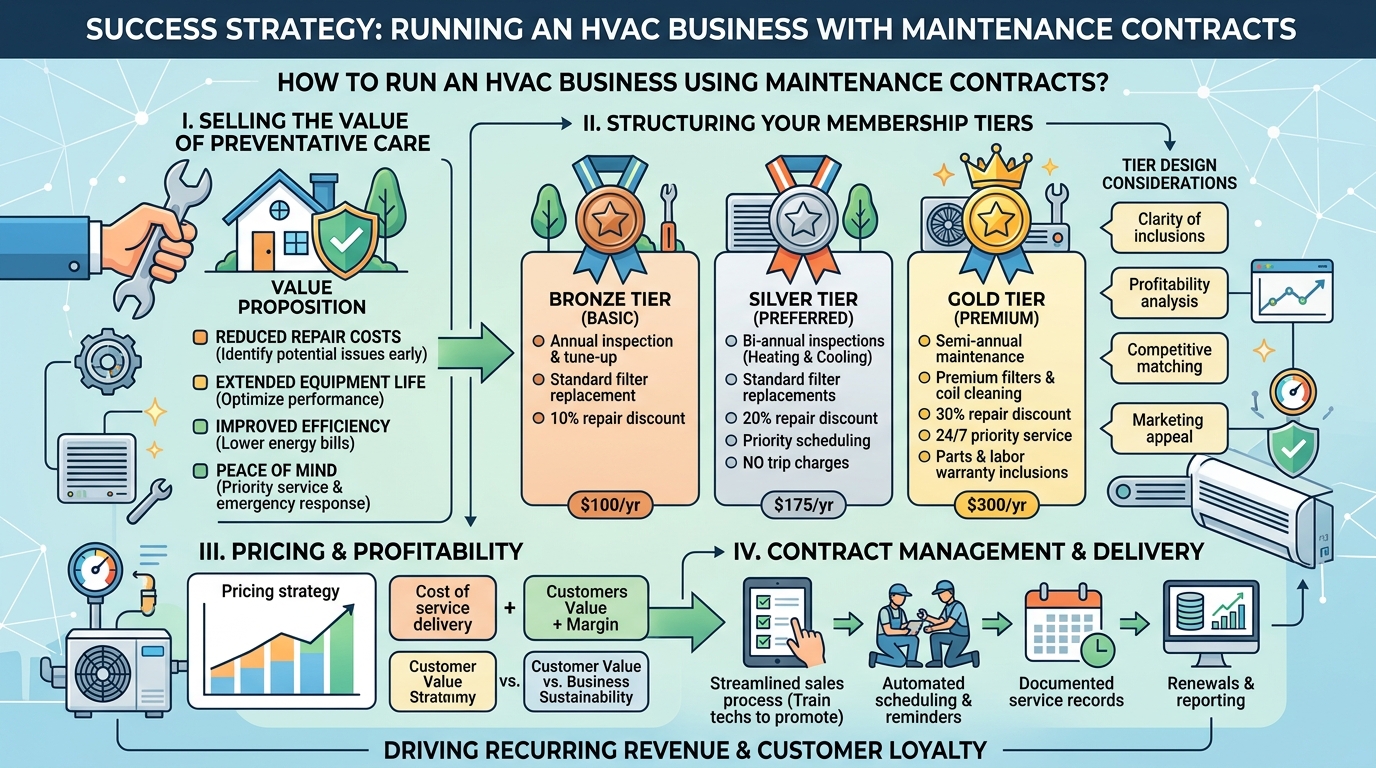
When explaining maintenance contracts to homeowners, focus on the 'peace of mind' and 'warranty protection' rather than just the cleaning service. Most modern HVAC manufacturers require documented annual maintenance to keep their 10-year parts warranties valid, which is a powerful selling point for new installs. Explain that a well-maintained system can last 15-20 years, whereas a neglected one may fail in as little as 10 to 12 years.
Create a detailed checklist for your precision tune-ups that includes checking refrigerant levels, cleaning condensate drains, and inspecting electrical connections. Provide the customer with a digital 'health report' after every visit that includes photos of their system's components and clear recommendations for any necessary repairs. This transparent approach builds trust and makes it much easier to sell the customer on a proactive repair before a major breakdown occurs.
Offer 'priority service' as a key benefit of your maintenance program, promising a response time of 24 hours or less for members during peak season. In a 95-degree heatwave, the assurance that a technician will arrive quickly is often worth the annual cost of the membership alone. This 'front-of-the-line' access creates a sense of exclusivity and value that keeps customers enrolled in your program year after year.
Structuring Your Membership Tiers
Consider offering a multi-tiered membership program to cater to different customer needs and budgets. A 'Silver' plan might include one visit and a 5% discount, while a 'Platinum' plan includes two visits, a 15% discount, and zero diagnostic fees for the year. This 'good-better-best' approach to service agreements allows you to capture more of the market while increasing the total value of your maintenance base.
Include small, high-value perks like free thermostat battery replacements or a complimentary yearly water heater flush to differentiate your plan from local competitors. These low-cost additions make your program feel more comprehensive and increase the perceived value without significantly impacting your profit margins. In 2026, the most successful HVAC businesses are those that provide a 'concierge' level of service to their most loyal customers.
Monitor your 'attrition rate' for maintenance agreements and reach out to customers who cancel to understand their reasons and improve your service. A healthy HVAC business should maintain an annual retention rate of 85% or higher for its service club members. If your rate drops below 75%, it’s a clear signal that your technicians aren't providing enough value during their visits or your pricing has become uncompetitive.
How to Run an HVAC Business 2026: The Tech Stack You Need?
Choosing the Right Field Service Management (FSM) Software
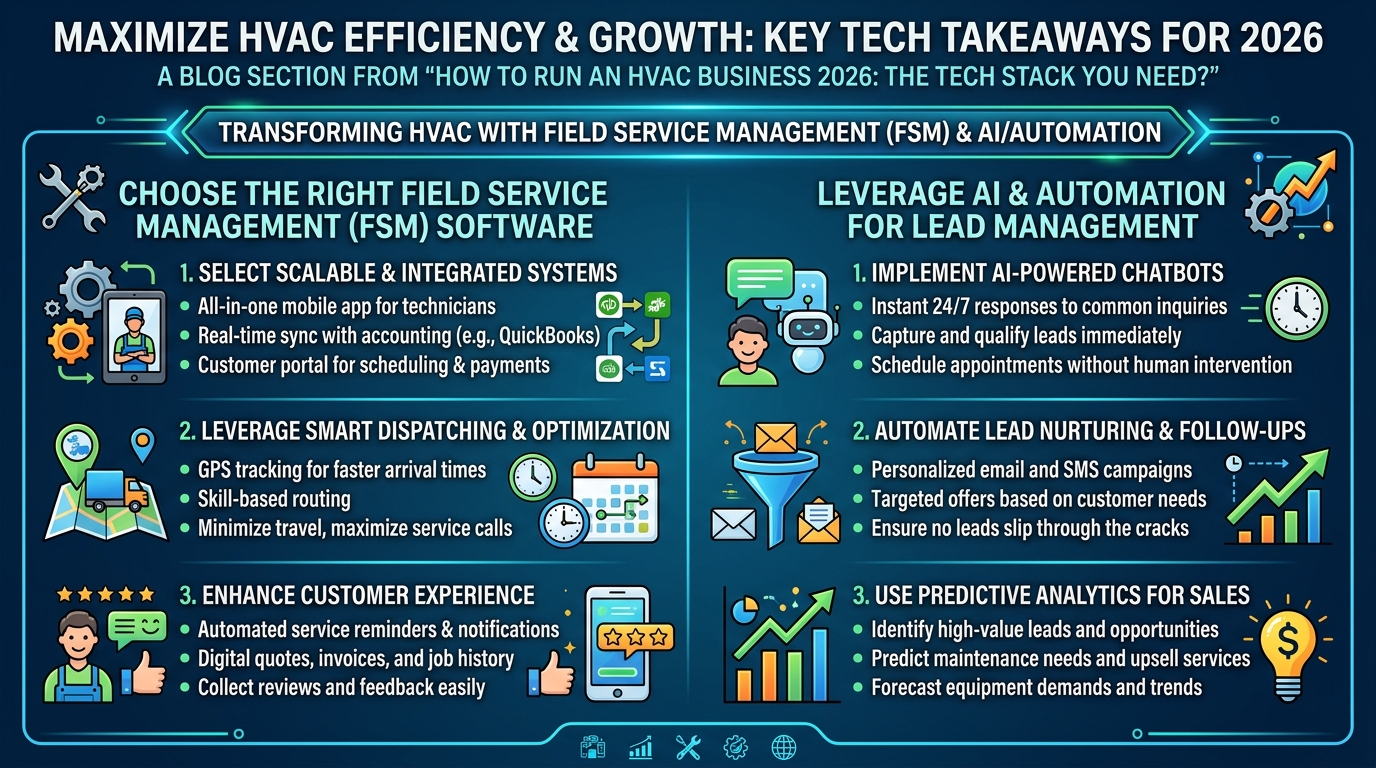
In 2026, running an HVAC business without a modern FSM is like trying to cool a house with a block of ice—it’s inefficient and outdated. Your software should handle everything from lead intake and scheduling to automated invoicing and payment processing in one unified platform. For small shops with 1-10 employees, a streamlined tool like Hulo offers all the essential features for under $50/month, providing a massive ROI compared to enterprise-level systems.
Ensure your chosen software has a robust mobile app that allows technicians to see their daily schedule, access equipment history, and upload photos directly from the field. This real-time synchronization eliminates the need for technicians to return to the office for paperwork, saving hours of drive time and administrative overhead every week. Look for features like 'On My Way' SMS notifications, which significantly improve the customer experience and reduce 'no-show' appointments.
Integration with your accounting software, such as QuickBooks Online, is non-negotiable for maintaining accurate financial records without double-entry. When a technician closes a job and collects payment in the field, the data should automatically flow into your accounting system to update your P&L and balance sheet. This automation ensures that your books are always current, allowing you to make data-driven decisions about hiring or purchasing new equipment.
Leveraging AI and Automation for Lead Management
AI-powered chatbots and automated booking tools are becoming standard for HVAC businesses in 2026, allowing you to capture leads 24/7 without a live receptionist. These tools can answer basic questions about your diagnostic fees and schedule appointments directly into your calendar, ensuring you never miss a lead during nights or weekends. Implementing an automated 'lead follow-up' sequence can increase your conversion rate by 20% by staying in front of customers who requested a quote but didn't book immediately.
Use automated email and SMS marketing to stay in touch with your existing customer base during the slow seasons. Send out 'early bird' tune-up specials in March and September to fill your technicians' schedules before the summer and winter rushes begin. Personalized communication that references the customer's specific equipment and last service date builds a stronger relationship and keeps your brand top-of-mind.
Platforms like Hulo simplify this entire process by combining your website, CRM, and automated marketing tools into a single, affordable package. Instead of paying for four or five separate subscriptions, you can manage your entire digital presence and customer lifecycle from one dashboard. This reduction in 'software bloat' not only saves you money but also reduces the technical complexity of managing your business as you grow.
10+ Hours
Weekly Time Savings
Small HVAC owners save an average of 10-15 hours per week by automating scheduling and invoicing with FSM software.
Wrapping Up
Running a successful HVAC business in 2026 requires a shift from being a master technician to becoming a master of systems and numbers. By implementing flat-rate pricing, recurring maintenance agreements, and an affordable tech stack like Hulo, you can build a scalable and profitable company. Focus on providing a modern, digital-first customer experience to dominate your local market and achieve long-term growth.
Frequently Asked Questions
How much does it cost to run a small HVAC business monthly?
A small HVAC business with 1-2 trucks typically has monthly operating costs between $8,000 and $15,000. This includes van payments ($800-$1,200), fuel ($600-$1,000), insurance ($400-$800), marketing ($1,000-$2,500), and software like Hulo ($50). This does not include technician wages or the cost of goods sold (parts and equipment).
What's the difference between flat-rate and hourly HVAC pricing?
Hourly pricing charges customers for the exact time spent on a job plus materials, which can lead to disputes if a technician is slow. Flat-rate pricing uses a pre-calculated price for specific tasks, ensuring the customer knows the total cost upfront and the business is rewarded for efficiency. In 2026, over 80% of top-rated residential HVAC companies use flat-rate pricing to maintain consistent 50% gross margins.
Do I need a NATE certification to run an HVAC business?
While not legally required to own a business, NATE certification is the industry gold standard for technicians and is highly recommended for credibility. Many high-end equipment manufacturers and utility rebate programs require NATE-certified installers to validate warranties or energy credits. Holding this certification allows you to charge premium rates and reduces your callback rate by ensuring technical proficiency.
How long does a standard HVAC system installation take?
A standard residential split-system replacement typically takes a two-person crew 6 to 10 hours to complete. Complex jobs involving ductwork modifications or high-efficiency heat pump conversions can take 1.5 to 2 full days. Efficient HVAC owners schedule these jobs to start at 7:30 AM to ensure completion within a single business day, avoiding the need for a second trip.
What certifications do I need for HVAC in 2026?
Every technician must have an EPA Section 608 Certification to handle refrigerants, with Universal certification being the most versatile. Additionally, you should be prepared for the transition to A2L refrigerants (like R-454B), which requires specialized safety training and updated recovery equipment. Depending on your state, you may also need a mechanical contractor's license and a separate electrical license for low-voltage wiring.
How do I get paid faster as an HVAC contractor?
The fastest way to get paid is to require payment upon completion of service and use a mobile payment processor like Stripe or Square integrated into your FSM. For larger installation jobs, require a 50% deposit upfront to cover equipment costs and offer 0% interest financing options to the customer. Using automated invoicing through Hulo ensures that the bill is sent and paid before the technician even leaves the customer's driveway.
Is Google Local Services Ads (LSA) worth it for small HVAC businesses?
Yes, LSA is currently the most effective lead generation tool for HVAC, with an average cost per lead ranging from $25 to $100. Because you only pay for actual phone calls or messages from qualified leads, it is much more cost-effective than traditional PPC ads. Being 'Google Guaranteed' also provides a massive trust boost that helps you compete with much larger national HVAC franchises.
How do I calculate the markup on HVAC parts?
Most profitable HVAC shops use a sliding scale for part markups to remain competitive on expensive items while maximizing profit on small ones. For parts costing under $20, use a 4x or 5x markup; for parts between $100 and $500, use a 2x to 2.5x markup. This ensures that a $15 capacitor generates enough revenue to cover the administrative cost of ordering and stocking it.
Stop Wasting Hours on HVAC Paperwork Today
Hulo is the all-in-one software built specifically for small HVAC contractors who need professional scheduling, invoicing, and lead management for under $50/mo. Start your free trial and see how easy it is to manage your entire business from your phone.
Join the WaitlistMore from the Blog
7 Smart Ways to Evaluate Housecall Pro vs Jobber for HVAC Contractors (2026)
Housecall Pro is generally the superior choice for HVAC businesses focusing on advanced sales automation and detailed pe...
11 Expert Facts on How Much Do HVAC Technicians Make for Contractors (2026)
HVAC technicians in 2026 earn an average annual salary of $58,420 to $74,150, with hourly rates typically ranging from $...
11 Smart Ways How to Bid HVAC Jobs for Contractors (2026 Guide)
To bid HVAC jobs accurately, you must first calculate your total overhead, burdened labor rate, and desired profit margi...