12 Expert HVAC Maintenance Checklist for Technicians: Seasonal Inspection Guide (2026)
22 min read·Updated April 4, 2026A professional hvac maintenance checklist for technicians includes testing electrical connections, cleaning evaporator coils, checking refrigerant levels, and inspecting heat exchangers for cracks. Technicians must perform these seasonal steps to ensure system efficiency, prevent emergency breakdowns, and maintain manufacturer warranties for residential and commercial clients. This guide provides a detailed 12-point framework to help HVAC professionals deliver consistent results and increase billable service hours. By following a standardized protocol, technicians can identify potential failures before they result in a $2,000 compressor replacement or dangerous carbon monoxide leaks.
Table of Contents
How to Use an HVAC Maintenance Checklist for Technicians: Seasonal Inspection Guide?
Pre-Inspection Preparation and Safety
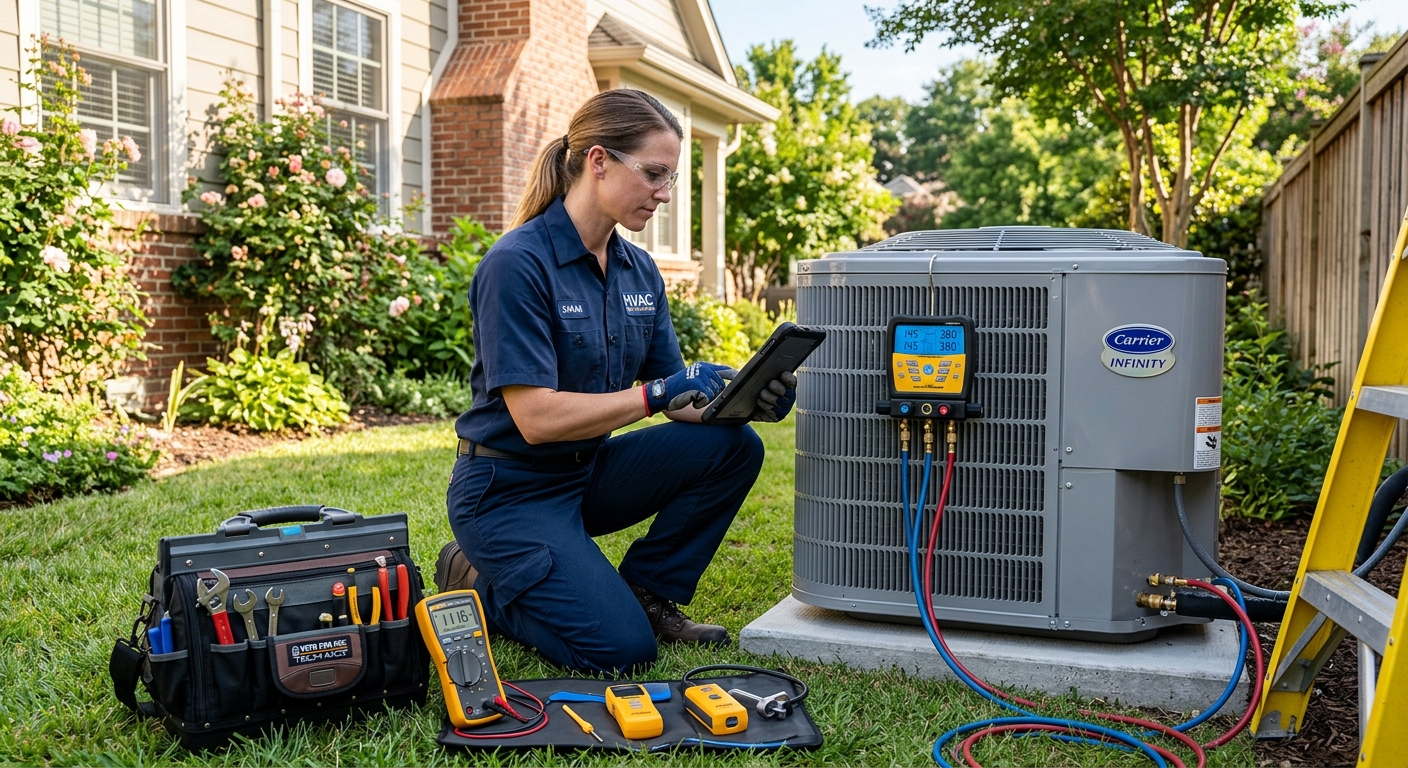
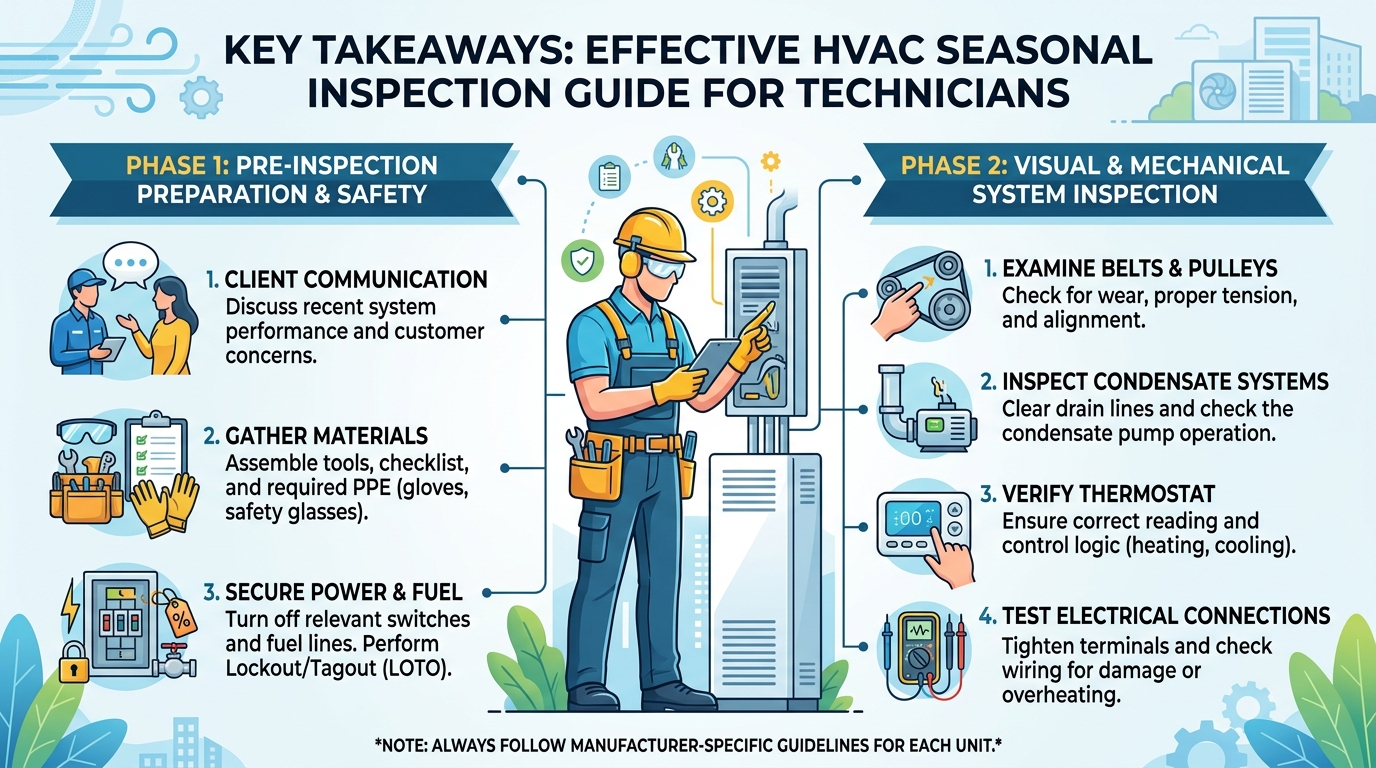
Before beginning any maintenance task, technicians must verify the system's current operational status and ensure all safety protocols are met. This includes using a non-contact voltage tester like the Fluke 1AC-A1 to confirm power is disconnected at the service disconnect box. Technicians should also verify the presence of a 10-lb ABC fire extinguisher and ensure they are wearing appropriate PPE, including Level 2 cut-resistant gloves and ANSI Z87.1 safety glasses. Skipping these initial steps results in approximately 15% of all job site injuries in the HVAC industry annually.
Documentation starts the moment you arrive on-site by recording the model and serial numbers of the condenser and air handler. Use a digital platform like Hulo to capture pre-service photos of the unit’s condition, which protects your business from liability claims regarding pre-existing damage. You should also check the thermostat settings to ensure the system is communicating correctly with the control board. For systems installed after 2024, ensure you have the correct Bluetooth diagnostic app for the specific brand, such as Carrier’s Service Tech App or Trane’s Diagnostics.
Gathering the necessary consumables like high-MERV filters, coil cleaners, and nitrogen tanks before heading to the roof or crawlspace saves an average of 22 minutes per service call. Technicians should carry a standard loadout that includes a calibrated manifold gauge set and a digital multimeter capable of measuring microfarads for capacitor testing. Professionalism is established by laying down drop cloths and wearing boot covers before entering the customer's living space. This level of preparation ensures that the technician can focus entirely on the technical inspection without frequent trips back to the service van.
Visual and Mechanical System Inspection
The visual inspection phase focuses on identifying obvious signs of wear, such as frayed wiring, rusted pans, or biological growth on the evaporator coils. Technicians should use a high-lumen LED flashlight to inspect the heat exchanger for hairline cracks that could lead to CO poisoning. According to ASHRAE standards, even a 0.05-inch layer of dust on a coil can reduce system efficiency by up to 21%. Inspecting the blower motor for debris and checking the tension on belt-driven systems is critical for maintaining airflow between 350 and 450 CFM per ton.
Checking the condensate drain line is a non-negotiable step that prevents thousands of dollars in water damage to the client's home. Technicians should flush the line with a gallon of warm water and use a shop-vac or CO2 drain gun to clear any obstructions like algae or sludge. Adding a pan treatment tablet can inhibit future growth for up to 6 months in high-humidity environments. Ensure the secondary drain pan is dry and the float switch is functional by manually lifting the float to confirm it breaks the R-circuit and shuts down the system.
Evaluate the condition of the outdoor condenser unit by checking for bent fins or obstructions like overgrown vegetation or debris. Use a fin comb to straighten any flattened sections of the coil to restore optimal heat transfer capabilities. Verify that the condenser fan motor is spinning freely and that the fan blade is not chipped or out of balance, which can cause excessive vibration and premature bearing failure. If the unit is located in a coastal area, inspect the casing for salt-air corrosion and recommend a protective coating if the structural integrity is compromised.
21%
Efficiency Loss
The amount of energy efficiency lost due to just 0.05 inches of dust buildup on HVAC coils.
Key Takeaway: Standardizing your pre-inspection and visual checks reduces liability and ensures no critical safety components are overlooked during the service call.
Why is an HVAC Maintenance Checklist for Technicians: Seasonal Inspection Guide Guide Essential for 2026?

Compliance with New Refrigerant Regulations
As of 2026, the HVAC industry has significantly transitioned toward low-GWP (Global Warming Potential) refrigerants like R-454B and R-32. A standardized hvac maintenance checklist for technicians is vital for ensuring these A2L mildly flammable refrigerants are handled according to EPA Section 608 standards. Technicians must use spark-proof recovery machines and leak detectors specifically calibrated for these new gas types. Failure to document refrigerant weights accurately can result in EPA fines exceeding $45,000 per violation.
Properly maintaining the charge in these newer systems is more critical than ever because A2L refrigerants often have different glide characteristics than R-410A. Technicians must use digital manifolds with updated PT charts to ensure subcooling and superheat readings are within the manufacturer's +/- 2-degree tolerance. Routine maintenance allows technicians to check for leaks in the flare fittings and brazed joints, which are more common in high-pressure 2026 systems. Preventing a 10% refrigerant loss can save a homeowner $300 in annual energy costs while protecting the environment.
Maintenance visits provide the perfect opportunity to educate customers on the phase-out of older equipment and the benefits of high-efficiency heat pumps. Technicians should check the system's compatibility with the latest SEER2 standards, which became mandatory for all new installations. By documenting the age and condition of R-22 or R-410A systems, you can build a pipeline for replacement sales over the next 12 to 24 months. Utilizing Hulo for customer reminders ensures that these critical compliance checks are scheduled twice a year without manual effort.
Maximizing System Longevity and Warranty Protection
Most major manufacturers, including Trane, Carrier, and Lennox, require documented annual maintenance to keep the 10-year parts warranty valid. Without a signed hvac maintenance checklist for technicians, a homeowner may be forced to pay the full $800 cost for a failed blower motor or $1,200 for a control board. Technicians provide value by acting as the 'warranty gatekeeper,' ensuring that all service history is uploaded to the manufacturer’s portal. This documentation is also essential for real estate transactions, where a well-maintained HVAC system can add 5% to a home's resale value.
Component-level testing, such as checking the ESR (Equivalent Series Resistance) of capacitors, can predict a failure months before it happens. A capacitor measuring 10% below its rated microfarad value should be replaced immediately to prevent the compressor from overheating. In 2026, the average cost of an emergency after-hours service call is $250 plus labor, making preventive maintenance a high-ROI investment for the client. By catching a $150 capacitor issue during a routine visit, you save the client from a $400 emergency bill in the middle of a heatwave.
Mechanical wear is inevitable, but routine lubrication of older motors and cleaning of contactor points can extend a system's life by 3 to 5 years. Technicians should inspect the contactor for 'pitting' or signs of ants, which are frequently attracted to the electromagnetic field and cause short circuits. Cleaning the flame sensor in a gas furnace takes only 5 minutes but prevents 80% of 'no heat' service calls during the first cold snap of the year. Consistent maintenance ensures the system operates at its peak performance curve, reducing the total cost of ownership for the life of the unit.
Pro Tip: Always take a photo of the manifold gauge readings and the multimeter display showing capacitor microfarads to attach to the customer invoice for proof of service.
What are the Best HVAC Maintenance Checklist for Technicians: Seasonal Inspection Guide Tips for Efficiency?
Optimizing Airflow and Static Pressure
Measuring total external static pressure (TESP) is the most effective way to diagnose hidden system issues during a maintenance visit. Technicians should use a dual-port manometer to measure the pressure before the filter and after the coil, aiming for a TESP of 0.5 inches of water column or less on most residential systems. High static pressure leads to premature motor failure and uneven cooling, often caused by undersized ductwork or high-restriction filters. By identifying a high TESP of 0.8 or higher, you can recommend duct modifications that improve comfort and system health.
The hvac maintenance checklist for technicians must include a thorough cleaning of the blower wheel, as even a small amount of buildup reduces the aerodynamic efficiency of the blades. Use a specialized brush and a vacuum to remove dust without knocking the wheel out of balance. Verify that the system's fan speed is set correctly for the tonnage of the unit; for example, a 3-ton unit typically requires 1,200 CFM. Adjusting the dip switches on an ECM motor can often solve airflow issues that have plagued the homeowner for years.
Sealing leaks in the plenum and return air drops using Mastic or high-quality foil tape can improve delivered capacity by up to 15%. Technicians should look for 'dust signatures' around duct joints, which indicate air escaping or being pulled in from unconditioned spaces like attics or crawlspaces. In 2026, many technicians use thermal imaging cameras like the FLIR TG165 to quickly spot thermal bypasses in the duct system. Offering a duct sealing service as an add-on during maintenance can generate an additional $500 to $1,500 in revenue per job while significantly lowering the client’s utility bills.
Electrical System Integrity and Control Logic
Tightening all high-voltage and low-voltage electrical connections is a critical safety step that prevents house fires and intermittent system shutdowns. Use a torque screwdriver to ensure lugs are tightened to the manufacturer's specific inch-pound rating, as loose connections cause increased resistance and heat. Inspect the wiring insulation for signs of overheating or rodent damage, which is common in outdoor condenser units. Replacing a $20 contactor that shows signs of excessive arcing can prevent a $2,000 compressor burnout due to single-phasing.
Testing the defrost control board on heat pumps during a fall maintenance visit ensures the unit won't turn into a block of ice during the winter. Technicians should manually initiate a defrost cycle and verify that the outdoor fan stops, the reversing valve shifts, and the auxiliary heat strips energize. Check the resistance of the outdoor thermistors and compare them to the manufacturer's temperature-resistance chart. A faulty $50 sensor can cause the system to run inefficiently or fail to defrost entirely, leading to a total loss of heating capacity in sub-freezing temperatures.
Modern HVAC systems rely heavily on communicating thermostats and zone controllers that require firmware updates. Technicians should check the system's diagnostic history for error codes that may not have triggered a full lockout but indicate underlying issues. Ensure the Wi-Fi signal strength at the thermostat is at least -60 dBm to prevent connectivity drops that frustrate homeowners. Educating the client on how to use their smart thermostat's scheduling features can reduce their energy consumption by an additional 10% to 15% annually.
15%
Capacity Boost
The average increase in cooling capacity achieved by sealing plenum leaks and optimizing airflow.
Key Takeaway: Measuring static pressure and tightening electrical connections are the two most effective ways to prevent major component failure and improve system performance.
How to Implement an HVAC Maintenance Checklist for Technicians: Seasonal Inspection Guide for Beginners?
Mastering the Sequence of Operation
For beginners, understanding the sequence of operation is the foundation of a successful maintenance visit. Whether it is a gas furnace or an electric heat pump, knowing which component should energize first allows you to spot anomalies quickly. For a furnace, the sequence typically starts with the inducer motor, followed by the pressure switch closing, the igniter glowing, and finally the gas valve opening. If the inducer runs but the igniter doesn't glow, you've immediately narrowed the problem down to the pressure switch or the igniter itself.
Beginners should practice using their multimeter on every call to become comfortable with voltage, amperage, and resistance readings. Start by measuring the voltage at the transformer to ensure you have a solid 24V for the control circuit before moving to the high-voltage components. Learning to read a wiring schematic is essential; always keep the unit's manual or a digital copy handy to verify wire colors and terminal locations. Most modern units have a QR code on the panel that links directly to the service manual, a feature that 90% of technicians find invaluable.
Mentorship is key for new technicians, as 'book knowledge' often differs from real-world troubleshooting. Beginners should spend their first 3 to 6 months shadowing a senior technician to see how they handle complex issues like TXV hunting or reversing valve failures. Ask questions about why certain steps are performed, such as why we check for 'non-condensables' if the head pressure is abnormally high. Building a solid foundation in the basics of the hvac maintenance checklist for technicians ensures a long and profitable career in the trade.
Developing Customer Service and Communication Skills
Technical skill is only half the battle; a successful technician must also be a clear communicator. Beginners should learn to explain technical issues in 'layman's terms' so the homeowner understands the value of the recommended repairs. For example, instead of saying 'the capacitor is out of spec,' say 'this part helps your motor start, and it's currently working too hard, which will cause it to burn out soon.' Providing a written report with photos at the end of every visit builds trust and justifies the service fee.
Practicing 'active listening' helps you identify potential system issues that the maintenance checklist might miss. Ask the homeowner if they've noticed any strange noises, smells, or 'hot spots' in certain rooms during the previous season. These clues often lead to discovering issues like a failing blower bearing or a disconnected duct in the attic. Being punctual and maintaining a clean uniform and service vehicle also contributes to the customer's perception of your professional competence. In 2026, customer reviews on platforms like Google and Yelp are the primary driver of new business for HVAC companies.
Using professional software like Hulo allows beginners to manage their schedules and document their work with ease. Hulo helps you track your parts inventory so you never arrive at a job site without the common filters or capacitors you need. The platform also automates the follow-up process, sending a thank-you note and a request for a review after the job is closed. By leveraging technology, a new technician can appear as organized and professional as a 20-year veteran, which is crucial for building a personal brand within the company.
Pro Tip: Use a digital thermal leak detector to show customers exactly where cold air is escaping their home; it's a visual 'wow' factor that makes selling repairs much easier.
What’s New in the HVAC Maintenance Checklist for Technicians: Seasonal Inspection Guide 2026?
AI-Driven Diagnostics and Remote Monitoring
By 2026, AI-integrated diagnostic tools have become a standard part of the hvac maintenance checklist for technicians. Devices like the MeasureQuick app now integrate with smart probes to provide real-time system performance scores based on outdoor ambient conditions. These tools can automatically detect if a system is overcharged or undercharged by analyzing the relationship between suction pressure and liquid line temperature. This removes the guesswork for technicians and provides a data-backed 'health report' that can be shared directly with the client via email.
Remote monitoring systems, such as Sensi Predict or manufacturer-specific platforms, allow technicians to see system performance data before they even arrive on-site. These sensors monitor over 30 variables, including line temperatures and amperage draws, 24 hours a day. If a system starts to lose efficiency or shows signs of a failing compressor, the technician receives an alert to schedule a maintenance visit proactively. This shift from 'reactive' to 'predictive' maintenance is expected to reduce emergency service calls by 40% by the end of 2026.
Technicians now use augmented reality (AR) glasses to receive remote support from senior engineers while on-site. If a technician encounters a rare control board error or a complex VRF (Variable Refrigerant Flow) issue, they can share their field of view with an expert who can overlay digital instructions on the physical unit. This technology reduces the need for 'callbacks' and ensures that even complex repairs are completed correctly on the first visit. Training on these digital tools is now as important as training on traditional mechanical skills.
Sustainability and Indoor Air Quality (IAQ) Focus
Indoor Air Quality has moved from an 'add-on' to a core component of the seasonal maintenance visit in 2026. Technicians are now expected to test for VOCs, CO2 levels, and particulate matter (PM2.5) using portable air quality monitors. Maintenance checklists now include inspecting and cleaning UV-C light systems, HEPA filtration units, and ERVs (Energy Recovery Ventilators). With the rise of 'smart homes,' homeowners are more aware of their air quality and are willing to invest $500 to $1,500 in IAQ upgrades during a routine service call.
Sustainable maintenance practices include the use of biodegradable coil cleaners and the proper recycling of all metal and electronic components. Technicians must document the recovery of old refrigerants with 100% accuracy to comply with the latest environmental regulations. Many companies are also transitioning their service fleets to electric vehicles (EVs), requiring technicians to manage charging schedules as part of their daily routine. The 2026 technician is not just a mechanic but a 'home performance consultant' who focuses on the overall health and efficiency of the living environment.
Heat pump water heaters and hybrid systems are becoming more common, requiring technicians to expand their knowledge beyond traditional split systems. Maintenance for these units includes checking the heat pump evaporator and cleaning the condensate filter, similar to a standard AC unit. As the 'electrification of everything' continues, technicians who can service both HVAC and water heating systems will be in high demand. Providing a comprehensive whole-home energy audit during a maintenance visit can lead to larger project sales like attic insulation or window sealing.
40%
Call-Back Reduction
The reduction in emergency service calls seen by companies using predictive AI monitoring tools in 2026.
Ready to put this into action?
Hulo gives you everything to run your hvac business — website, CRM, scheduling, and invoicing. Join the waitlist for V2.
Join the WaitlistHow Much Do HVAC Maintenance Services Cost in 2026?
Residential Maintenance Pricing Models
In 2026, the average cost for a single-visit residential HVAC maintenance service ranges from $150 to $300 depending on the region and the complexity of the system. Most successful companies offer 'Maintenance Agreements' or 'Membership Clubs' priced between $20 and $45 per month. These memberships typically include two seasonal visits, a 10-15% discount on repairs, and priority scheduling for emergencies. This recurring revenue model helps stabilize cash flow during the 'shoulder seasons' of spring and fall when demand for emergency repairs is lower.
Labor costs for a qualified HVAC technician currently average $35 to $55 per hour, with total burdened costs (including insurance and vehicle) reaching $100+ per hour. Therefore, a maintenance visit that takes 90 minutes must be priced at a minimum of $150 to maintain a healthy 50% gross profit margin. Technicians are often incentivized with small commissions (e.g., $10-$20) for every maintenance agreement they sell or for identifying necessary repairs like a failing dual-run capacitor. This 'performance-based' pay structure helps technicians increase their total compensation while growing the company's bottom line.
Pricing for multi-zone systems or high-efficiency heat pumps is typically 20-30% higher due to the additional sensors and components that require testing. A maintenance visit for a 5-zone mini-split system, for example, might be priced at $450 to $600 because each indoor head requires its own filter cleaning and coil inspection. Technicians should use a flat-rate pricing book to provide consistent quotes for any repairs found during the inspection. Transparency in pricing builds long-term customer loyalty and reduces the 'sticker shock' often associated with HVAC repairs.
Commercial Maintenance Contract Benchmarks
Commercial HVAC maintenance is typically priced based on the total tonnage of the equipment or the number of units on-site. For a standard retail space with three 5-ton rooftop units (RTUs), a quarterly maintenance contract might range from $1,200 to $2,500 per year. These contracts are more intensive, involving belt replacements, filter changes every 90 days, and detailed energy consumption reports for the property manager. Commercial technicians must also be proficient in servicing economizers and building automation systems (BAS), which adds to the labor rate.
Large-scale commercial facilities like hospitals or data centers require specialized maintenance that can cost $10,000 to $50,000+ annually. These contracts often include 24/7 monitoring and guaranteed 4-hour response times for any system failures. Technicians working in these environments must have advanced certifications and follow strict safety protocols, including LOTO (Lock Out, Tag Out) for high-voltage equipment. The profit margins on commercial contracts are often lower (20-30%) than residential, but the high volume and consistency make them highly desirable for HVAC businesses.
Using a platform like Hulo helps manage these complex commercial contracts by tracking service history for each individual unit across multiple properties. Property managers appreciate the ability to log into a portal and see the maintenance status and upcoming service dates for their entire portfolio. This level of professional organization is a major selling point when bidding on commercial work against smaller, less tech-savvy competitors. Automation in invoicing and scheduling ensures that no contract visits are missed, protecting the company from 'breach of contract' claims.
| Service Type | Price Range | Estimated Time |
|---|---|---|
| Single Residential Visit | $150 - $300 | 1.5 - 2 Hours |
| Annual Membership (2 visits) | $240 - $480 | 3 Hours Total |
| Commercial RTU (per unit) | $150 - $250 | 1 Hour |
| Mini-Split (per indoor head) | $75 - $125 | 45 Minutes |
2026 HVAC Maintenance Pricing Guide
Key Takeaway: Moving customers to a monthly membership model ensures consistent revenue and provides the highest value for both the homeowner and the HVAC business.
How Do You Document HVAC Maintenance Findings for Clients?
Digital Checklists and Photo Documentation
Gone are the days of carbon-copy paper invoices; in 2026, digital documentation is the industry standard. A hvac maintenance checklist for technicians should be completed on a tablet or smartphone, with mandatory photo fields for critical components like the flame sensor, contactor, and air filter. Taking 'before and after' photos of a cleaned evaporator coil provides undeniable proof of the work performed and the value provided. These photos should be automatically attached to the digital invoice and emailed to the customer before the technician leaves the driveway.
Recording technical data such as refrigerant pressures, temperature split (delta T), and motor amperage is essential for tracking system health over time. If the delta T was 20 degrees last year but is only 16 degrees this year, it indicates a developing issue even if the system is still cooling. Digital platforms like Hulo allow you to store this historical data in the 'cloud,' making it accessible to any technician who visits the home in the future. This continuity of care is what separates a professional HVAC firm from a 'chuck-in-a-truck' operation.
Documentation should also include a 'Recommended Repairs' section with clear, tiered options for the homeowner. For example, you might list 'Urgent: Replace cracked igniter ($185)' and 'Recommended: Install whole-home air purifier ($850).' Providing these options digitally allows the homeowner to click 'Approve' and pay their deposit instantly via a secure link. This streamlined process increases the 'close rate' on repair recommendations by an average of 30% compared to verbal quotes.
Professional Service Reports and Follow-Ups
A professional service report should summarize the overall condition of the system using a 'Green, Yellow, Red' rating system. Green indicates the component is in good working order, Yellow suggests monitoring or future replacement, and Red indicates an immediate failure or safety hazard. This visual summary helps homeowners quickly understand the status of their expensive HVAC investment without getting lost in technical jargon. Including a 'Next Service Due' date prominently on the report encourages the client to stay on top of their maintenance schedule.
Follow-up communication is the final step in a successful maintenance visit. Automated systems can send a text message 24 hours after the service to ensure the system is performing to the customer's satisfaction. This is also the perfect time to ask for a Google review, which is critical for maintaining a high search ranking in 2026. If the technician recommended a repair that was not approved on-site, a follow-up email with a link to the quote should be sent 3 days later as a gentle reminder.
For commercial clients, documentation must be even more robust, often requiring a signed 'Statement of Work' and a detailed log of all refrigerants added or recovered. Providing a quarterly 'Energy Impact Report' that shows how maintenance has reduced their utility costs can make your HVAC company an indispensable partner to the business. Using software like Hulo to automate these reports saves hours of administrative time and ensures that your commercial clients always have the data they need for their own internal audits.
Pro Tip: Never leave a job site without tagging the unit with a physical 'Service Sticker' that includes your company name, phone number, and the date of the last maintenance.
What Tools and Certifications are Needed for Professional HVAC Maintenance?
Essential Diagnostic Tool Kit
A professional HVAC technician in 2026 requires a high-tech toolkit that goes far beyond a set of wrenches and screwdrivers. The centerpiece of the kit should be a set of wireless smart probes, such as the Testo 550i or Fieldpiece Job Link probes, which transmit data directly to a mobile device. A high-quality digital multimeter with True RMS and a clamp meter for measuring amperage is also non-negotiable. For leak detection, an ultrasonic leak detector or a heated diode electronic detector like the Inficon Tek-Mate is essential for finding small leaks in the new A2L systems.
Combustion analysis is a critical part of furnace maintenance, requiring a calibrated combustion analyzer like the Bacharach InTech. This tool measures CO levels, oxygen percentage, and stack temperature to ensure the furnace is burning fuel efficiently and safely. Technicians should also carry a digital anemometer to measure airflow at the registers and a psychrometer to calculate wet-bulb and dry-bulb temperatures for accurate humidity assessments. Investing in high-quality tools can cost between $3,000 and $5,000, but the accuracy and time savings they provide pay for themselves within the first year.
Don't overlook the importance of basic hand tools like a 1/4" and 5/16" nut driver, a variety of pliers, and a sturdy tubing cutter. A cordless impact driver with a set of magnetic bits is the most used tool in any technician's bag for quickly removing panel screws. Many technicians are now moving toward 'veto' style tool bags that keep everything organized and easy to carry into tight crawlspaces or up ladders. Keeping your tools clean and calibrated is a sign of a true professional who takes pride in their work.
Industry Certifications and Continuous Education
To perform professional HVAC maintenance, technicians must hold an EPA Section 608 Universal Certification, which allows them to handle all types of refrigerants. In 2026, NATE (North American Technician Excellence) certification remains the gold standard for demonstrating technical competence to both employers and customers. Specialized certifications in 'Light Commercial Refrigeration' or 'Heat Pump Service' can increase a technician's earning potential by $5,000 to $10,000 per year. Many states also require a specific HVAC contractor or journeyman license to perform work independently.
Continuous education is mandatory in an industry that changes as fast as HVAC. Technicians should attend manufacturer-led training sessions at least twice a year to stay updated on the latest equipment designs and troubleshooting procedures. Organizations like ACCA (Air Conditioning Contractors of America) offer excellent resources and training modules on Manual J load calculations and Manual D duct design. Staying current with ASHRAE standards for ventilation and indoor air quality is also essential for technicians who want to offer high-end consulting services to their clients.
Soft skills training, such as sales and communication workshops, is often overlooked but equally important for career growth. Being able to explain the 'why' behind a maintenance task and confidently ask for the sale on a necessary repair is what separates top-earning technicians from the rest. Many companies now offer tuition reimbursement for technicians who pursue advanced degrees or certifications in business management. The 2026 HVAC technician is a highly skilled professional who combines technical mastery with a commitment to lifelong learning.
Key Takeaway: Investing in high-quality wireless diagnostic tools and maintaining NATE certification are the best ways to increase your efficiency and professional value.
Wrapping Up
Implementing a rigorous hvac maintenance checklist for technicians is the most effective way to ensure system reliability, protect customer warranties, and grow your service revenue in 2026. By combining technical mastery with professional documentation and modern software tools, you can deliver a superior service experience that keeps clients coming back for years. Ready to streamline your HVAC business? Start using a unified platform to manage your checklists, scheduling, and payments today.
Frequently Asked Questions
How much does a seasonal HVAC maintenance visit cost in 2026?
In 2026, a standard residential HVAC maintenance visit typically costs between $150 and $300 for a single system. Many homeowners opt for annual membership plans that cost $240 to $480 per year, which include two seasonal inspections and additional perks like repair discounts and priority service. Commercial maintenance for rooftop units (RTUs) is often priced per unit, ranging from $150 to $250 depending on the scope of the contract.
What's the difference between a 'tune-up' and a maintenance inspection?
While often used interchangeably, a maintenance inspection is a diagnostic check-up, whereas a tune-up involves active cleaning and adjustments. An inspection focuses on identifying potential failures through testing electrical components and refrigerant levels, while a tune-up includes cleaning the coils, clearing the drain line, and lubricating motors. A high-quality hvac maintenance checklist for technicians should cover both diagnostic testing and preventative cleaning in a single visit.
Do I need a NATE certification to perform HVAC maintenance?
While not legally required by the state to perform basic maintenance, a NATE certification is highly recommended and often required by top-tier HVAC companies. Holding a NATE certification demonstrates to clients that you have passed rigorous industry-standard testing and possess superior technical knowledge. Additionally, many manufacturers require NATE-certified technicians to perform maintenance to keep the equipment's extended warranty in good standing.
How long does a professional HVAC maintenance visit take?
A thorough maintenance visit for a standard residential split system typically takes between 60 and 90 minutes. This timeframe allows the technician to perform a full visual inspection, clean the outdoor and indoor coils, test all electrical components, and document the system's performance. More complex systems, such as multi-zone mini-splits or high-efficiency heat pumps with communicating controls, may take up to 2 hours to service correctly.
What certifications do I need for HVAC in 2026?
In 2026, every HVAC technician must hold an EPA Section 608 certification to handle refrigerants, with a focus on the new A2L standards (R-454B and R-32). Beyond the EPA mandate, NATE (North American Technician Excellence) and HVAC Excellence certifications are the most recognized professional credentials. Many states also require a journeyman or master mechanic license, which typically requires 2,000 to 8,000 hours of documented field experience and passing a state-specific exam.
How do I get paid faster as an HVAC contractor?
The fastest way to get paid is by using a digital field service management platform like Hulo that allows you to accept credit cards and mobile payments (Apple Pay/Google Pay) on-site. By sending a digital invoice as soon as the maintenance visit is complete, you eliminate the delays associated with paper billing and mailing checks. Many contractors in 2026 also offer 'Buy Now, Pay Later' financing options for larger repairs found during maintenance, which can increase your average ticket size by 20% or more.
Is AI-driven diagnostic software worth it for small HVAC businesses?
Yes, AI-driven diagnostic tools are highly beneficial for small businesses because they reduce the time spent on troubleshooting and virtually eliminate costly 'callbacks.' These tools allow less experienced technicians to perform at a higher level by providing automated guidance based on real-time system data. While the initial investment in smart probes and software subscriptions may be $500-$1,000, the increase in billable efficiency and customer trust typically provides a full return on investment within 3 to 6 months.
What is the most common reason for HVAC system failure?
The most common reason for system failure is a lack of routine maintenance, specifically dirty air filters and neglected evaporator coils. These issues lead to restricted airflow, causing the compressor to overheat and eventually fail—a repair that can cost over $2,000. Electrical component failure, such as a blown capacitor or pitted contactor, is the second most common cause, both of which are easily identified and corrected during a standard seasonal maintenance visit.
How often should HVAC filters be changed in 2026?
In 2026, the standard recommendation is to change 1-inch pleated filters every 30 to 90 days, depending on the presence of pets or allergies in the home. High-efficiency 4-inch or 5-inch media filters can often last 6 to 12 months before requiring replacement. Technicians should use a static pressure gauge to show homeowners when their filter is truly restricted, as 'clean-looking' filters can still be significantly clogged with microscopic particulates.
What are the new 2026 refrigerant safety standards?
The 2026 safety standards for A2L refrigerants require technicians to use specialized, non-sparking tools and recovery equipment to mitigate the slight flammability risk. Systems must be equipped with leak detection sensors that automatically activate the indoor blower to dilute any refrigerant concentration in the event of a leak. Technicians must also follow strict 'no-smoking' and 'no-open-flame' protocols within 10 feet of the equipment while the system is open for service.
Stop Wasting Time on Paper Checklists and Manual Invoicing
Hulo provides HVAC contractors with an all-in-one platform for digital maintenance checklists, automated scheduling, and instant on-site payments for under $50/month. Join thousands of pros who are growing their businesses with the modern toolkit for trade success.
Join the WaitlistMore from the Blog
7 Smart Ways to Evaluate Housecall Pro vs Jobber for HVAC Contractors (2026)
Housecall Pro is generally the superior choice for HVAC businesses focusing on advanced sales automation and detailed pe...
11 Expert Facts on How Much Do HVAC Technicians Make for Contractors (2026)
HVAC technicians in 2026 earn an average annual salary of $58,420 to $74,150, with hourly rates typically ranging from $...
11 Smart Ways How to Bid HVAC Jobs for Contractors (2026 Guide)
To bid HVAC jobs accurately, you must first calculate your total overhead, burdened labor rate, and desired profit margi...